Adoption of the EU Directive on trade secrets: legal assessments including on whistleblowers

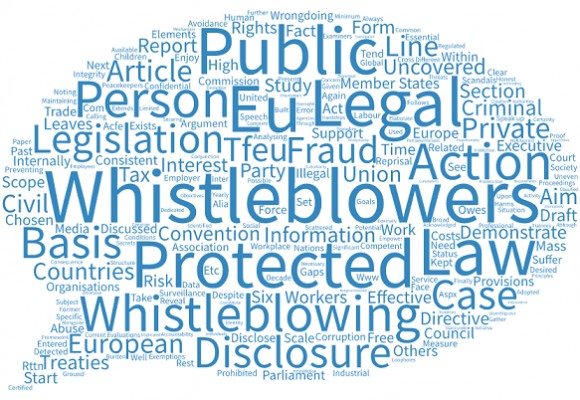
The Academy of European Law (ERA)  based in Trier, organised in Brussels a workshop on “The adoption of the EU directive on trade secrets” . While the workshop was geared at lawyers in private practice and representatives of national and intellectual property officers and ministries, the EFJ as well as EUROCADRES, organising professionals and managers in branches of industry, public and private services and administrative departments, were present as well. Mariano Fernandez-Salas, European Commission, DG Internal Market, gave an overview of the directive explaining also the procedure which started with a Commission proposal in November 2013 and the final publication…
Alternatives for South Eastern Europe Media reforms

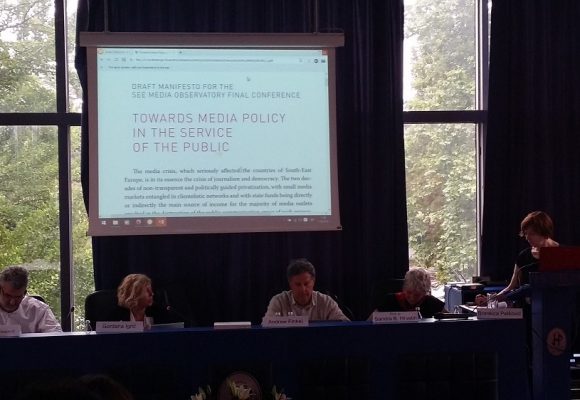
EFJ Steering Committee member Yannis Kotsifos participated on behalf of the EFJ in the final regional conference of the SEE Media Observatory, in Novi Sad (Serbia), on  June 13. A thorough analysis of factors determining the involvement of editors in achieving media integrity throughout the countries of SE Europe, along with other important findings of multiple research studies  were presented. “Why media in the region don’t serve democracy?” was the main question throughout this 4 years project, with 10 countries involved, said   Brankica Petković, Peace Institute, Ljubljana, SEE Media Observatory project Coordinator, in the opening session of the conference “Alternatives: Media…

Irish government must restore freelance rights for collective barganing

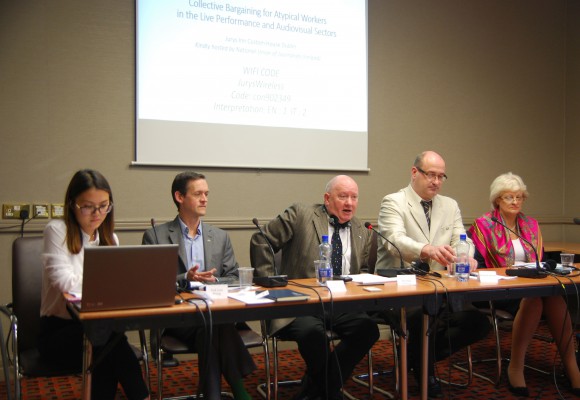
The European Federation of Journalists (EFJ), joining its affiliate in Ireland the National Union of Journalists, is welcoming the decision of the International Labour Organisation (ILO) to challenge Ireland’s failure to treat freelance workers in accordance with the rights enshrined in the organisation’s convention. Following a complaint by the Irish Congress of Trade Unions (ICTU) the Irish government faces questions at the ILO assembly in Geneva about the treatment of freelance workers, who are denied the right to be collectively represented by unions as a result of the actions of the former Competition Authority in Ireland. The complaint was lodged…

#newsocracy: Safeguarding journalism & exploring owner influence.

(Dublin, 3rd June, 2016) The conference discussed the current state of journalism in Ireland and Europe and was hosted by MEP Nessa Childers from Ireland. Renate Schroeder outlined the threats on the independent status of journalists in Europe expressing great concern about the precarisation in the media as well the increasing attacks from both political and economic forces. Losing trust in journalism with journalists who no longer have time to check information or self-censor because of fear to lose the work or be attacked is the main challenge today, she told  about 100 participants in Dublin. NUJ Ireland General Secretary…

Commission VP Ansip backs call for investigation on fair remuneration in EU copyright review

The Creators Conference 2016 concluded on Tuesday 31 after a productive day of panels, interviews and speeches by prominent artists, experts and policy makers discussing the current issues faced by the European creators’ community and the cultural and creative industries. The Authors’ Group welcomed European Commission Vice-President Andrus Ansip in charge of the Digital Single Market for a keynote speech in which the Commissioner confirmed the “need to look closer at the conditions for remunerating creators and getting a fair share of the value generated”. Vice-President Ansip also stressed the “follow the money approach” and “widening access to content” for consumers…

Nordic Freelance Conference: The Significance of Independent Voices

The Norwegian Freelance Journalist Union (NJ Frilans) hosted the Nordic Freelance Seminar, which is held once a year,  in Ilsetra, Norway on 20-22 May. The over 100 participants were freelance journalists from EFJ affiliates in Finland, Denmark, Sweden and Norway. The aim of the seminar was  networking and sharing experience, discussing recent trends both regarding ever more precarious working conditions for freelances and new technological tools to advance storytelling and journalism by getting closer to the audience. Frank Aarebrot, professor of comparative politics at the University of Bergen in his opening speech adviced the community to demand public funding to…

Croatia: Attack on well-known journalist Ante Tomić

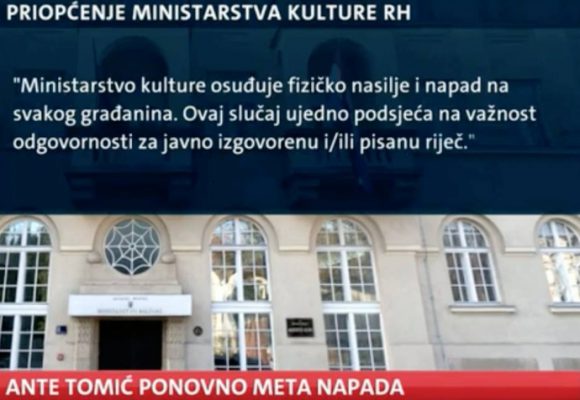
The European Federation of Journalists together with its affiliate in Croatia, the Croatian Journalists’ Association (CJA) condemns the verbal and physical attack on Ante Tomić, well-known journalist and writer, in the very center of Split. CJA congratulated the police for its quick response arresting two attackers. Meanwhile, however, the Culture Ministry responded with a quite unusual and disgraceful statement in which it seemed to give legitimacy to the attackers, report Croatian media on April 3, 2016. The Ministry sent this official statement: “The Ministry of Culture condemns physical violence and attacks on all citizens. At the same time, this case…

EFJ: Media requires urgent reforms in Macedonia before elections

The EFJ sent the following letter  to Enlargement Commissioner Johannes Hahn: Dear Commissioner Hahn, On behalf of the European Federation of Journalists (EFJ), representing over 300.000 journalists across Europe, and our affiliates in Macedonia, the Association of Journalists of Macedonia (ZNM) and the Trade Union of Macedonian Journalists and Media workers (SSNM), we are writing to you with continued grave concerns over the state of media freedom in Macedonia. As you know, since 2015, Macedonia is in a deep political crisis after the opposition boycotted the Parliament and published the wiretapping scandal. The opposition in the subsequent months published a…

Digitisation at the workplace

On 23 February, the ETUC organised a workshop on digitisation for its members at national level and the European industry federations including the EFJ. Esther Lynch, ETUC Confederal Secretary explained the challenges and methods regarding the recognition of employment relationship for digital workers and the different definitions of worker and employee throughout the European Union. She asked whether the ETUC should advocate for a Directive for online platform workers. While online work in the medical sector for example is heavily regulated, most other sectors lack complete regulation. Lynch said when it comes to freelance journalists it may be more useful…

Turkish journalist Füsun Erdogan visits the EFJ/IFJ offices

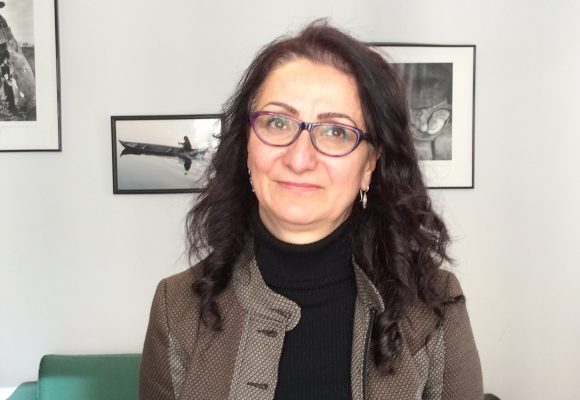
Turkish journalist Füsun Erdoğan visited the IFJ/EFJ offices today to share the latest developments of her trial to be set in Ankara, Tukey’s capital on 23 March. On 2 November 2013, Füsun Erdogan was given a life sentence and charged with being a member of an alleged terrorist organisation. Her trial in the appeal court will take place on 23 March. The IFJ and the EFJ will ask the Turkish government to ensure a fair trial and set the journalist free. Founder of the radio station Özgür Radyo (Radio Free), Erdogan has often defended political, religious and ethnic minorities. On…

Improving social rights for atypical workers in culture and media sector

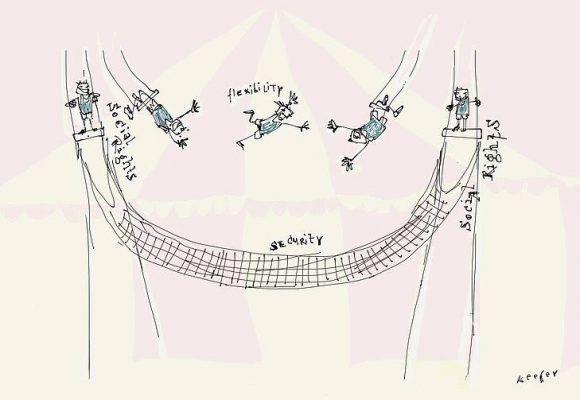
On 26-27 January, FIA (Actors’ Unions), FIM (musicians), UNI-Europa (media, entertainment & art) and the EFJ organised a workshop in Ljubljana and discussed how to better protect those categories of workers who do not enjoy any social and legal  protection. MEP Tanja Fajon gave a video key note speech reminding participants that all EU Member States are committed to provide social security for all workers, and that we all have to defend the European social model. She referred to the EP report on social protection for all including self-employed workers. The report asks the European Commission and Member States to…

Italian journalists protest against attacks on press freedom in Turkey

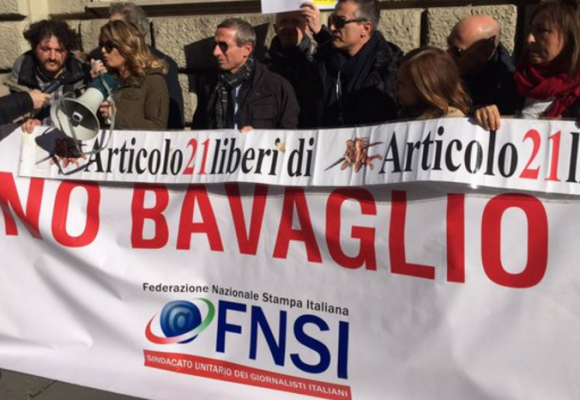
The Italian National Press Federation (FNSI, EFJ-IFJ affiliate) together with USIGRai, Articolo 21, RSF Italy, Amnesty Italy and other press freedom groups organised a demonstration today (21/01/2016) in front of the Turkish embassy in Rome  to protest against grave attacks on press freedom in Turkey. This includes the ongoing prosecution of journalists Ceyda Karan and Hikmet Cetinkaya in Turkey for publishing the cover of the French satirical magazine Charlie Hebdo. The two journalists working for the daily Cumhuriyet are accused by 11 plaintiffs (including family members of the Turkish President Recep Tayyip Erdogan) of “deliberately willing to humiliate the religious values of the big part…

Time Out Lisboa terminates contract with freelance journalist following payment claim

The European Federation of Journalists (EFJ) has backed a case of a Portuguese freelance journalist whose contract with Time Out Lisboa was terminated because he stood up for his rights to claim payment for his work. The journalist who is also a member of the board at the Portuguese Union of Journalists (SJ) has been working for the last eight years as a freelance journalist Time Out Lisboa. However, the journalist was recently informed by the management of Time Out Lisboa that they will not continue working with him.  The journalist believed that the reason for the termination was due to…

The Polish media law is signed: our letter to EU Commissioner Oettinger

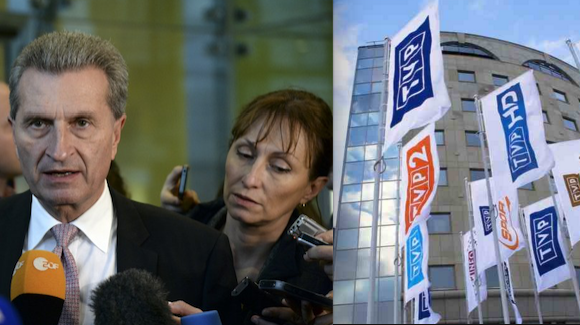
Poland’s president Andrzej Duda has signed today a controversial state media law. Prior to the next weekly meeting by the college of Commissioners on 13 January, 2016 in which the European Commissioners will discuss both the developments of the Constitutional Court and the media law in Poland, the European Federation of Journalists (EFJ) has sent the following letter to Commissioner Günther Oettinger. Commissioner Günther Oettinger, responsible for the digital economy and society, said on Sunday Poland should be put under the EU’s rule of law supervision, a three-step procedure consisting of a Commission assessment, a Commission recommendation and a follow-…

Webinar on authors’ rights for freelance journalists in Europe

Join us for a webinar (web conference) on Feb 10, 2016 at 12:00 PM GMT. Register now! If freelance journalists provide input to newsrooms , the question is always: Can I re-use the post also elsewhere with other clients with a different target audience? The question of which rights are established with reference to a journalistic work/contribution is regulated by intellectual property right /copyright law. Therefore, knowledge of the correct use of authors’ rights/copyright not only at national level but worldwide is crucial for freelance writers. Freelance journalist Mike Holderness works in London and is a long time activist in…