European Federation of Journalists

openMedia, investigating press freedom

Title of the project : openMedia, investigating press freedom
Lead Applicant
: openDemocracy

Partner organisations : EFJ, Index on censorship, King’s College London

The recently launched openMedia project aims to investigate and expose commercial interference in editorial decisions. The project is run by openDemocracy with the European Federation of Journalists (EFJ) as a partner alongside the Index on Censorship and King’s College London.

The project believes that there has not been enough of a concerted, ongoing spotlight on the extent and effects of commercial influence over the media, despite the dangerous consequences it poses for press freedom. For now, the project focuses on 47 countries across Europe but also has ambitions to expand.

Despite the recent launch, the project is adamant that it is not a response to the “fake news” hype of the past year or so. Rather, the project responds to scandals of commercial sponsors influencing media content; for example the Daily Telegraph’s suppression of investigations into its advertiser HSBC; and allegations that Buzzfeed deleted articles which advertisers found unfavourable.

According to the project, this power dynamic can suppress investigations of banks, pharmaceuticals, agriculture, fossil fuel giants, energy companies and other big businesses.

In addition, the project recognizes how for many readers, “sponsored content” is difficult to distinguish from genuine news content. The project therefore aims to clarify the commercial interests apparent in media to readers, and as part of the project, King’s College London will develop digital tools to help readers be better informed about news sources.

The findings of the project will be used to campaign for greater transparency and press freedom in news organisations and to empower journalists to advocate for transparency.

In order to do this, openMedia is currently conducting a confidential and anonymous survey of journalists across Europe, asking about their own working practices and experiences of commercial pressure inside newsrooms. The survey is available in English here and in many other languages here.

Actions

New EU report calls for permanent European fund for journalists

The European Parliament issued at the request of its LIBE Committee a new report on the safety of journalists and the fighting of corruption in the European Union. Led by Professor Tarlach McGonagle, the study concludes that journalists’ working conditions are deteriorating and calls for the creation of a permanent European fund for journalists in the framework of the next EU Multiannual Financial Framework (MFF 2921-2027). The European Federation of Journalists (EFJ) strongly supports this proposal. The dramatic dismantling of media pluralism in Hungary, in some cases with the help of EU funds, shows that it is high time for…

In Hungary EU funds are used to finance pro-government media

The political interference at Index, one of the last independent news outlets in Hungary, requires a strong reaction from the leaders of the European Union. The move contravenes the EU Charter of Fundamental Rights, which is a legally binding charter. The EU should feel responsible: issued on Thursday, the EU Media Pluralism Monitor (MPM2020) states that “EU-funds are constantly used to finance pro-government media and spread anti-EU messages” in Hungary. Inaction on behalf of the EU leaders allows Hungarian Prime Minister Viktor Orbán to tighten his authoritarian grip. Yesterday, the European Federation of Journalists (EFJ) together with its Media Freedom Rapid…

Hungary media freedom crackdown: our letter to EU leaders

To the consideration of Ursula von der Leyen, President of the European Commission, Charles Michel, President of the European Council, and Heiko Maas, Federal Foreign Minister on behalf of Germany’s presidency of the Council of the EU Media Freedom Rapid Response (MFRR) partners are profoundly concerned about the latest media freedom attacks in Hungary, which follow only days after the EU Summit, where Prime Minister Viktor Orbán praised the rule of law situation in his country.   Dear President von der Leyen, Dear President Michel, Dear Federal Foreign Minister Maas, Media Freedom Rapid Response (MFRR) partners are profoundly concerned by…

Hungary: journalists at Index resign, EU must take action

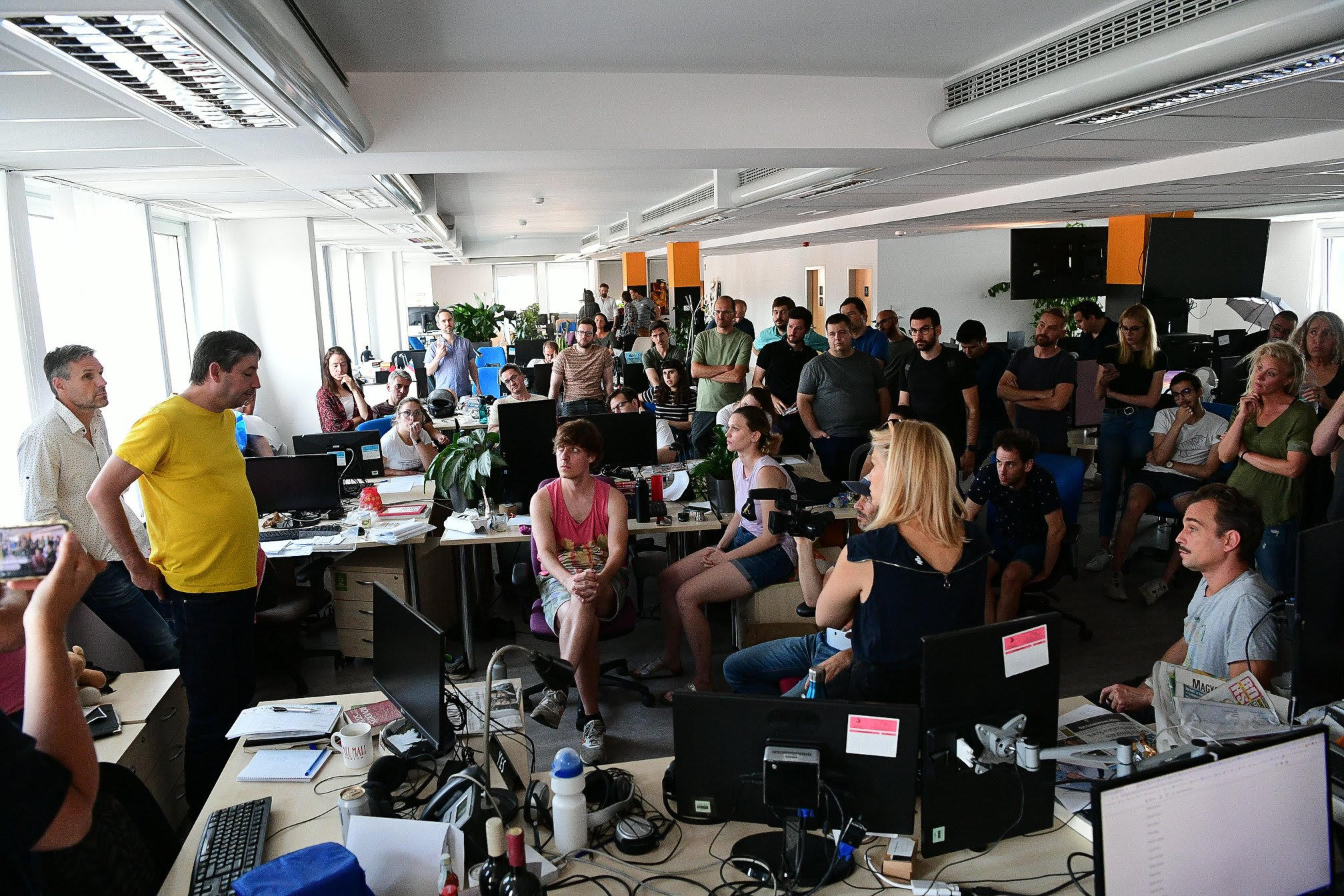
Thousands of people took to the streets in Budapest on Friday evening to demonstrate against the attacks on Hungary’s biggest independent news portal “Index”. The European Federation of Journalists (EFJ) welcomes this protest march and calls on European leaders to protect media freedom in Hungary. The editorial board and more than 70 journalists at “Index” have resigned, two days after its editor-in-chief Szabolcs Dull was fired amid claims of political interference. On Friday, three leading editors and more than 70 others said they were ending their employment there, because board president Laszlo Bodolai had refused to reinstate the chief editor. The…

MPM2020: poor working conditions for journalists in 13 European countries

The 2020 Media Pluralism Monitor (MPM2020) confirms mounting harassment against journalists, media outlets face increasing economic uncertainty, as online media sphere fails to reinforce pluralism. The report points out a deteriorating situation regarding the standards and protection of the journalistic profession. Croatia, the United Kingdom, Bulgaria, Hungary, Spain, Romania, Slovakia, Albania, Italy, Slovenia, Malta, Ireland and France score as being at medium risk and Turkey as high risk for this indicator. The sub-indicator on journalists’ working conditions scores an alarming high risk in 13 countries: Albania, Bulgaria, Croatia, Greece, Hungary, Italy, Lithuania, Portugal, Romania, Slovenia, Spain, Turkey and the United Kingdom. The European University Institute (EUI)…

Journalists unions demand transparency and a fair share for journalists in Google’s deals with publishers

After years of resisting demands to pay for news, Google said in a surprise announcement on 25 June it had reached deals with a number of news publishers around the world. The European and International Federations of Journalists (EFJ/IFJ) and their affiliates demand transparency on the deals and assurances that journalists will receive their share. Deals between Google and news publishers were signed in several countries, including Australia, Brazil, and Germany, and were part, the tech giant said, of a “new experience that would focus on high-quality content and help participating publishers monetize it.”  No details were made available, but the agreements…