European Federation of Journalists

openMedia, investigating press freedom

Title of the project : openMedia, investigating press freedom
Lead Applicant
: openDemocracy

Partner organisations : EFJ, Index on censorship, King’s College London

The recently launched openMedia project aims to investigate and expose commercial interference in editorial decisions. The project is run by openDemocracy with the European Federation of Journalists (EFJ) as a partner alongside the Index on Censorship and King’s College London.

The project believes that there has not been enough of a concerted, ongoing spotlight on the extent and effects of commercial influence over the media, despite the dangerous consequences it poses for press freedom. For now, the project focuses on 47 countries across Europe but also has ambitions to expand.

Despite the recent launch, the project is adamant that it is not a response to the “fake news” hype of the past year or so. Rather, the project responds to scandals of commercial sponsors influencing media content; for example the Daily Telegraph’s suppression of investigations into its advertiser HSBC; and allegations that Buzzfeed deleted articles which advertisers found unfavourable.

According to the project, this power dynamic can suppress investigations of banks, pharmaceuticals, agriculture, fossil fuel giants, energy companies and other big businesses.

In addition, the project recognizes how for many readers, “sponsored content” is difficult to distinguish from genuine news content. The project therefore aims to clarify the commercial interests apparent in media to readers, and as part of the project, King’s College London will develop digital tools to help readers be better informed about news sources.

The findings of the project will be used to campaign for greater transparency and press freedom in news organisations and to empower journalists to advocate for transparency.

In order to do this, openMedia is currently conducting a confidential and anonymous survey of journalists across Europe, asking about their own working practices and experiences of commercial pressure inside newsrooms. The survey is available in English here and in many other languages here.

Actions

Spain: EFJ/IFJ back RTVE’s decision not to broadcast football Super Cup in Saudi Arabia

The European and International Federation of Journalists (EFJ/IFJ) strongly support the decision of the Spanish Radio and Television Public Service (RTVE) to not broadcast the matches of the football Spanish Super Cup that will be held in Saudi Arabia next January. The competition, organised by the Spanish Federation of Football, is a national trophy that will be played abroad. The EFJ and the IFJ joined the Spanish affiliates Federacion de Asociaciones de la Prensa Espanola (FAPE), Federacion de Sindicatos de Periodistas (FeSP) and Federacion de Servicios a la Ciudadania de CC.OO (FSC-CC.OO) in backing the public broadcaster to not give…

German expert exchanges collective bargaining strategies with Romanian journalists

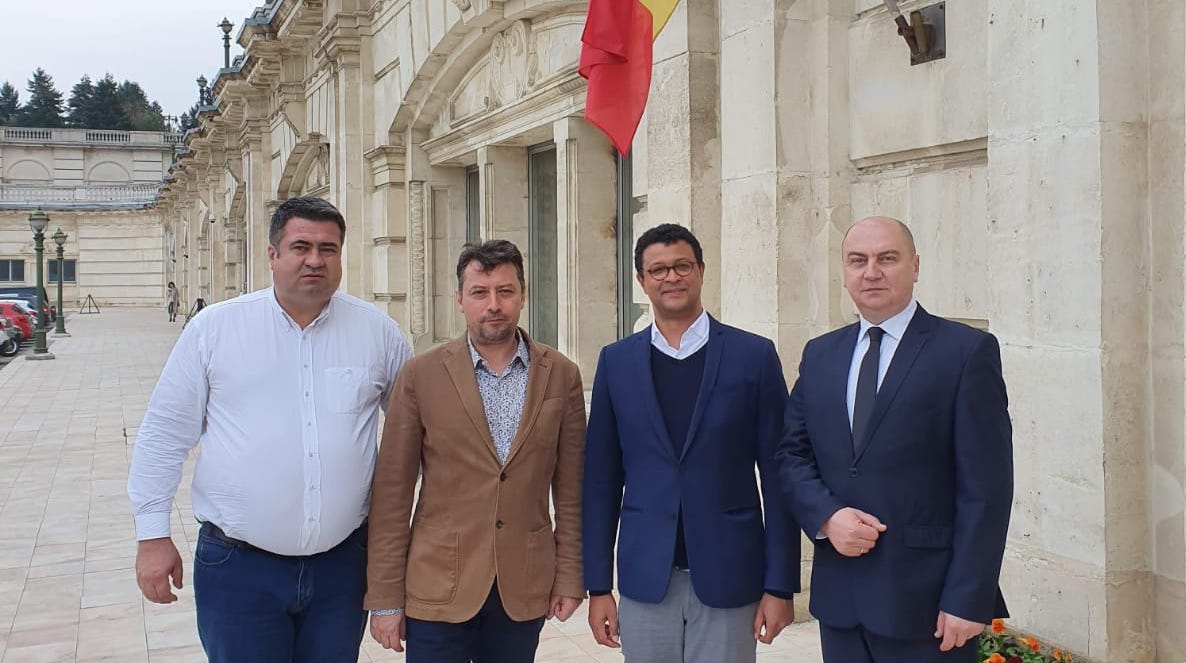
Collective bargaining and agreement play a key role in improving the working conditions of journalists. International solidarity and exchange of good practices sometimes can be very helpful for the national negotiation. Thanks to the EU-funded Managing Change in Media‘s project framework, the European Federation of Journalists (EFJ) sent the collective bargaining expert Dennis Amour from its Germany affiliate to support journalists in Romanian (FAIR-MediaSind) for an Expert Exchange Visit. Lawyer and journalist, Dennis Amour, director of the Collective Bargaining Department of the Union of Journalists in Bavaria (BJV) spent two days ( 28 & 30 October) in Bucharest with leaders of…

New solutions for old problems: International organisations to scrutinize press freedom in Austria

Shortly before the collapse of the ÖVP-FPÖ coalition government in May this year, the independence of Austria’s public broadcaster ORF seemed seriously threatened. Government’s attempts to eliminate license fees, if successful, would make the ORF dependant on the government for budgetary decisions. This, in turn, would increase the risk of interference by government’s representatives in editorial decisions. Direct attacks against journalists, both online and offline, also reached unprecedented levels under the recent ÖVP-FPÖ government, raising concerns about media freedom in Austria. At the same time, journalists’ ability to access information about the government’s work was seriously affected by the government’s…

DJV-NRW Journalists’ Congress: Europe needs journalism

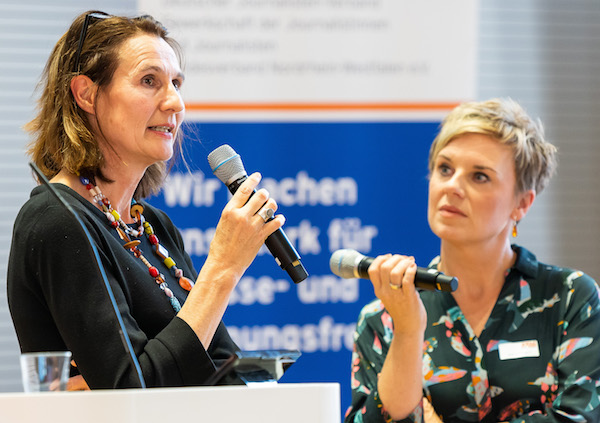
“Stand up for free independent media, Europe needs journalism”, says Renate Schroeder, Director of the European Federation of Journalists (EFJ), with a passionate appeal to politicians and media representatives at the start of the 16th Journalists’ Day of the regional association of the Deutscher Journalisten-Verband of North Rhine Westphalia in Dortmund. The German Journalists’ Association (DJV-NRW) has invited about 500 women journalists* to the meeting under the motto “The future of journalism – now or never”. In his welcoming speech, Chairman Frank Stach invoked the innovative spirit of the early journalists and publishers and encouraged all members and journalists’ students,…

European conference calls for more awareness raising through education and media to counter hate speech

The fight against hate speech should take place in schools and in the media. This was the starting point of the EU-funded project Silence Hate, which ended with a European conference organised by the European Federation of Journalists (EFJ) on Monday 18 November in Brussels.  After two years and 5 national workshops in schools; 15 young journalists trained, 10 journalistic pieces produced (available online); and one module for journalists on how to report migration and counter hate speech; the final event concluded that the awareness raising work should be continued in a more systematic way.  “Journalists have an obligation to…

EFJ to visit Hungary with press freedom coalition this week

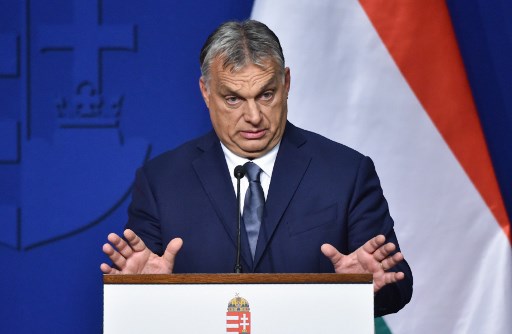
A coalition of six international press freedom organisations and journalists’ organisations will carry out a three-day mission to Hungary from November 25 to 27 to examine current developments related to the state of press freedom and media capture in the country. The mission will meet with Hungarian journalists and civil society groups. It will also hold discussions with the international spokesperson of the Hungarian government, Zoltán Kovács, as well as the newly elected mayor of Budapest, Gergely Karácsony. Numerous reports have documented how Hungarian Prime Minister Viktor Orbán has successively silenced critical voices in the country while at the same…