European Federation of Journalists

openMedia, investigating press freedom

Title of the project : openMedia, investigating press freedom
Lead Applicant
: openDemocracy

Partner organisations : EFJ, Index on censorship, King’s College London

The recently launched openMedia project aims to investigate and expose commercial interference in editorial decisions. The project is run by openDemocracy with the European Federation of Journalists (EFJ) as a partner alongside the Index on Censorship and King’s College London.

The project believes that there has not been enough of a concerted, ongoing spotlight on the extent and effects of commercial influence over the media, despite the dangerous consequences it poses for press freedom. For now, the project focuses on 47 countries across Europe but also has ambitions to expand.

Despite the recent launch, the project is adamant that it is not a response to the “fake news” hype of the past year or so. Rather, the project responds to scandals of commercial sponsors influencing media content; for example the Daily Telegraph’s suppression of investigations into its advertiser HSBC; and allegations that Buzzfeed deleted articles which advertisers found unfavourable.

According to the project, this power dynamic can suppress investigations of banks, pharmaceuticals, agriculture, fossil fuel giants, energy companies and other big businesses.

In addition, the project recognizes how for many readers, “sponsored content” is difficult to distinguish from genuine news content. The project therefore aims to clarify the commercial interests apparent in media to readers, and as part of the project, King’s College London will develop digital tools to help readers be better informed about news sources.

The findings of the project will be used to campaign for greater transparency and press freedom in news organisations and to empower journalists to advocate for transparency.

In order to do this, openMedia is currently conducting a confidential and anonymous survey of journalists across Europe, asking about their own working practices and experiences of commercial pressure inside newsrooms. The survey is available in English here and in many other languages here.

Actions

Being a female journalist in Europe

By Marta Sánchez Esparza – @martasesparza What is the status of women journalists in the European Union? Under what conditions do they work? How can they achieve work-life balance? Are their rights to freedom of expression being respected? Do they work on equal terms as their male colleagues? The situation varies greatly from one country to another. The stars of the European flag do not shine the same way for women journalists in the 28 states of the Union. It is not the same to be a reporter in Germany compared to one in the former Yugoslavia, or in the…

Over 30 best practices collected during ‘Managing Change in the Media’ project

More than 60 participants from 23 European countries attended the final conference on ‘how to manage change in the media’ from the unions’ and newsrooms’ perspectives. It took place in Thessaloniki, Greece, on 10-11 October 2019. Co-organised by the European Federation of Journalists (EFJ) and its affiliate in Thessaloniki, the Journalists’ Union of Macedonia and Thrace Daily Newspapers (ESIEMTH), the conference concluded a two-year project (2017-2019) whose objective was to help journalists’ organisations in adapting practices to the news industry and in strengthening their union capacity, through a series of five workshops (see below). The exchange of best practices and…

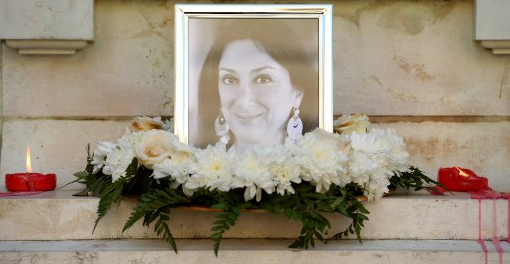
EFJ and international organisations demand an end to impunity two years after the assassination of Daphne Caruana Galizia

Two years after the assassination of journalist Daphne Caruana Galizia in Malta, on 16 October 2019, we, the undersigned international free expression, anti-corruption, and journalists’ organisations, once again demand an end to impunity for this heinous attack. Six of our organisations, including the European Federation of Journalists (EFJ), took part in an international freedom of expression mission to Malta one year ago, where, at the highest levels of government, we raised our profound concerns about this case and the broader worrying free expression environment in Malta – which has fallen 30 places over the past two years and is now…

Two years since the assassination of Daphne Caruana Galizia

The European and International Federations of Journalists (EFJ and IFJ) joined today their Maltese affiliate, the Institute of Maltese Journalists (IGM), in standing with those fighting for justice, two years after the assassination of Daphne Caruana Galizia. IFJ and EFJ associate themselves with IGM’s press release issued today: “It has been two years since the day Daphne Caruana Galizia was brutally murdered in a horrific attack on freedom of speech. Two years since a fellow journalist was killed because someone feared what she had to say and used the threat of murder as a tool to censor the Maltese press.…

Catalonia: EFJ and IFJ demand an investigation into police violence against journalists

[UPDATE] The number of journalists victims of some type of aggression while covering the different demonstrations this week in Barcelona rises to 59. On Tuesday 15, in Tarragona, a protester tore the shirt first a journalist and then pulled Canal Reus’ editor Ariadna Escoda’s hair. In Lleida, the journalist of the Catalan News Agency (ACN), Laura Cortés, was wounded in the leg by the impact of an object. In Barcelona, a photojournalist from eldiario.es, Sònia Calvó, freelance photojournalist Xavi Hurtado, journalist Quico Sallés from El Món, three photographers who prefer to remain anonymous, and a French reporter reported to have been…

The Netherlands: the travel restriction law threatens media freedom

The European Federation of Journalists (EFJ) joins its Dutch affiliate Nederlandse Vereninging van Journalisten (NVJ) in condemning a new law under which Dutch citizens travelling to an area “controlled by terrorist groups” must request permission from the justice ministry. This new regulation threatens the freedom to inform, EFJ said, calling on the Dutch senate to make an exception for journalists or to withdraw the bill. The bill, proposed by the Dutch Minister of Justice and Security Ferdinand Grapperhaus (our picture), was approved by the Lower House on 10 September. Under the proposed law, failing to request the justice ministry’s permission before travelling…