European Federation of Journalists

openMedia, investigating press freedom

Title of the project : openMedia, investigating press freedom
Lead Applicant
: openDemocracy

Partner organisations : EFJ, Index on censorship, King’s College London

The recently launched openMedia project aims to investigate and expose commercial interference in editorial decisions. The project is run by openDemocracy with the European Federation of Journalists (EFJ) as a partner alongside the Index on Censorship and King’s College London.

The project believes that there has not been enough of a concerted, ongoing spotlight on the extent and effects of commercial influence over the media, despite the dangerous consequences it poses for press freedom. For now, the project focuses on 47 countries across Europe but also has ambitions to expand.

Despite the recent launch, the project is adamant that it is not a response to the “fake news” hype of the past year or so. Rather, the project responds to scandals of commercial sponsors influencing media content; for example the Daily Telegraph’s suppression of investigations into its advertiser HSBC; and allegations that Buzzfeed deleted articles which advertisers found unfavourable.

According to the project, this power dynamic can suppress investigations of banks, pharmaceuticals, agriculture, fossil fuel giants, energy companies and other big businesses.

In addition, the project recognizes how for many readers, “sponsored content” is difficult to distinguish from genuine news content. The project therefore aims to clarify the commercial interests apparent in media to readers, and as part of the project, King’s College London will develop digital tools to help readers be better informed about news sources.

The findings of the project will be used to campaign for greater transparency and press freedom in news organisations and to empower journalists to advocate for transparency.

In order to do this, openMedia is currently conducting a confidential and anonymous survey of journalists across Europe, asking about their own working practices and experiences of commercial pressure inside newsrooms. The survey is available in English here and in many other languages here.

Actions

Greece: union representative dismissed at Alpha 989 radio station

Journalists at Greece’s Alpha 989 radio station are to meet to consider action following the “unfair, illegal and abusive” dismissal of their union representative. The International and European Federations of Journalists have pledged their support to Greek affiliate JUADN following the sacking of Georgia Ioannidou. The union had given the radio station’s board a deadline to reinstate Georgia, who is also a board member of JUADN, but the company failed to act. In a statement the union said: “Our colleague has been targeted for being a union representative and her persistence in taking up issues with the personnel department such…

EFJ and IFJ condemn murder of journalist Pavel Sheremet in Ukraine

A prominent journalist specialising in relations between Russia and Ukraine, Pavel Sheremet, has been murdered today by a car bomb in Kiev. The International Federation of Journalists and European Federation of Journalists, have joined affiliates in Ukraine and Russia, in condemning the killing. Pavel Sheremet, who worked for the Ukrainskaya Pravda newspaper and radio Vesti died when the car he was driving exploded shortly after it started, according to the Ukrainian Prosecutor’s Office. He was heading to the radio’s office to host his morning show. Some reports claim the car belonged to his employer, Alyona Pritula, the founder and chief editor of…

France: parliament voted to restrict journalists’ protection of sources

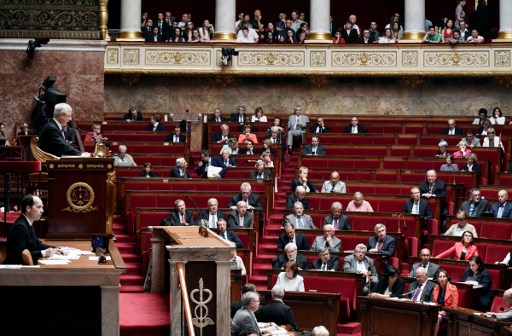
The European Federation of Journalists (EFJ) joined its French affiliates, the Syndicat national des journalistes (SNJ) and the Syndicat national des journalistes-CGT (SNJ-CGT), to denounce the last-minute amendment voted on Monday 18 July by the National Assembly, to restrict journalists’ protection of sources, only a few days following the Nice attack. Submitted a few hours before the new reading of the proposal to strengthen the freedom, independence and pluralism of the media, the amendment foresees to restrict the protection of journalists’ sources when they violate the “secret of national defence” and “the fundamental interests of the Nation.” This extension is considered “indispensable” because of…

Turkey: International community must take a strong stand against freedom violations

Attacks targeting the media in Turkey have led the International and European Federations of Journalists (IFJ/EFJ) to alert the Council of Europe about a series of new press freedom violations. The federations are calling on the International and European communities to take concrete steps against the Turkish government’s assaults on fundamental human rights that are contrary to international and European conventions. Mustafa Cambaz, a photojournalist for the Turkish Daily Yeni Safak was killed during the attempted coup in Turkey on 15 July. In the early hours of Saturday 16 July, Turkish soldiers who attempted to overthrow the government seized control…

EFJ Focus July 2016

The EFJ newsletter, EFJ Focus, is available in English, French and German.   EDITORIAL Dialogue with publishers I was invited by the European Magazine Media Association to attend a conference about the evolution of media and threats to press freedom on 30 June in Wroclaw, Poland. Following the conference, I also held several informal meetings with other publishers in the media and engaged in dialogue on issues of common interests.We share some common interests with publishers such as the increasing threats to press freedom while we have our differences such as collective bargaining. But we all face big challenges and it requires us to work together whenever possible. Such as…

A photojournalist killed and media occupied in Turkey: press freedom was targeted

Mustafa Cambaz, photojournalist for the Turkish daily Yeni Safak was killed by soldiers during the attempt coup in Turkey, last night, in the Cengelkoy neighborhood of Istanbul. Soldiers took control of the state broadcaster TRT, the private broadcasters CNN-Turk and Kanal D, and the daily newspaper Hurriyet. In the Ankara studios of TRT, news anchor Tijen Karas was forced to read a statement at gunpoint. Several journalists were attacked during the clashes. In Istanbul, civilians protesting the coup beat Selçuk Şamiloğlu, a photojournalist for Hurriyet and the Associated Press. Following the attempted coup, the Information Technologies and Communications Authority (BTK, the…