European Federation of Journalists

IFJ-EFJ Regional Development Fund

Czech Republic


The European Federation of Journalists (EFJ) signed an agreement on 18 December 2014 with the Union of Journalists and Media Workers of Czech Republic (OSNPM) in order to investigate the working conditions of Czech journalists and media workers. The project is implemented with the cooperation of Judith Reitstatter, from the Austrian union GPA-djp.

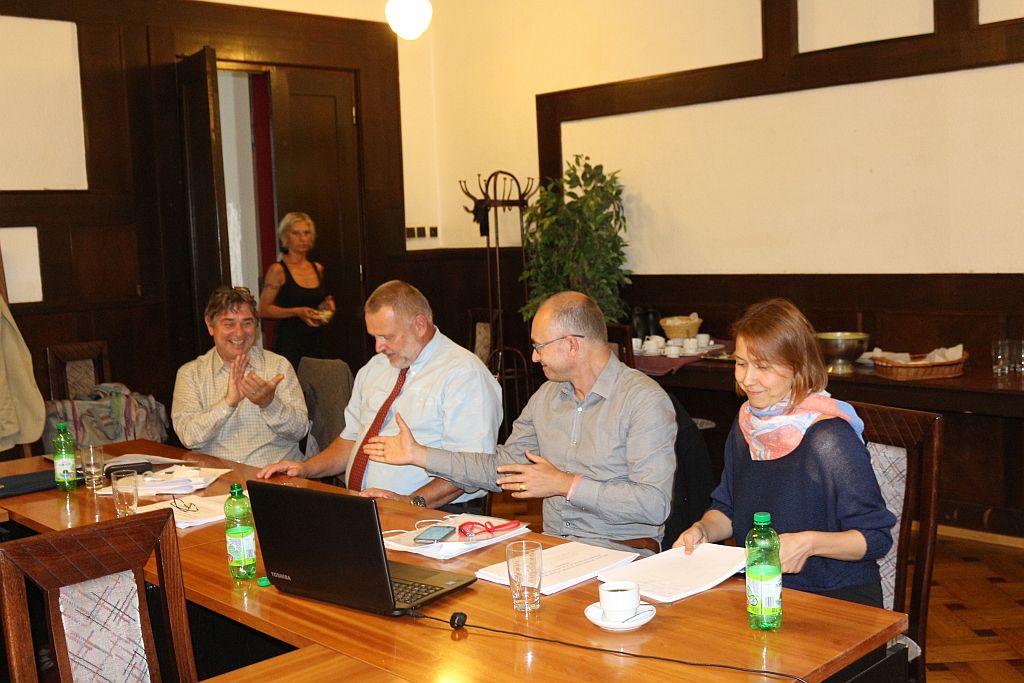
The online survey was launched on 19 May 2015. Around 2,500 journalists and media workers were invited to participate to the survey. The EFJ, OSNPM and GPA-djp analysed together the main outcomes of the survey during a round table conference, on 19 August 2015, in Prague.

The questionnaire focus mainly on labour rights. “This area is underestimated by the Czech media, journalists themselves and their employers as well,” explains Zdeněk Kučera, chairman of OSNPM.

“Over the past 25 years, journalists’ attention was focused primarily toward freedom of speech, access to information, relations with media ownership and the development of media houses. These are very serious topics. However, journalists’ status remained grossly underrated. A specific problem is the status of freelance journalists, which are increasingly numerous, particularly in regional media.”

The main findings of the survey are available on the EFJ website, here.
FOCUS EFJ

Side event of our project: a high school magazines national competition (Nejinspirativnější středoškolský časopis 2015). Here are the winners (picture credit: F. Cakl):

Czech

Contact details: OSNPM, e-mail: odborovy-svaz-novinaru@seznam.cz, website: http://www.odborovysvaznovinaru.cz


Slovakia

The European Federation of Journalists (EFJ), its Austrian union GPA-djp and the Slovak Union of Journalists (Slovenský syndikát novinárov) organized a meeting in Vienna, on 30 October 2014. Trade unionists and media students from both countries met in GPA-djp offices, in Vienna. The discussion on media convergence was launched by Dr. Roman Hummel, from the university of Salzburg.

Contact details: Judith Reitstaetter, judith.reitstaetter (at) gpa-djp.at


Estonia

The European Federation of Journalists (EFJ), the Estonian Union of Journalists (Eesti Ajakirjanike Liit, EAL) and the Union of Journalists in Finland (Suomen Journalistiliitto, UJF) agreed on 6 February 2015 to jointly implement the project “Workshops to Strengthen Journalists’ organisation in Estonia”.

The main objective of the project is to strengthen journalists’ organisation in Estonia, through three activities:

  • a freelance workshop in Helsinki,
  • a radio & TV negotiators workshop in Helsinki,
  • an authors’ rights seminar in Tallinn.

An action plan will be proposed for the next period.

Contact details: Juha Rekola, Juha.Rekola (at) journalistiliitto.fi, and Helle Tiikmaa, helle (at) eal.ee


Actions

Ukraine: “The most pressing need is safety equipment”

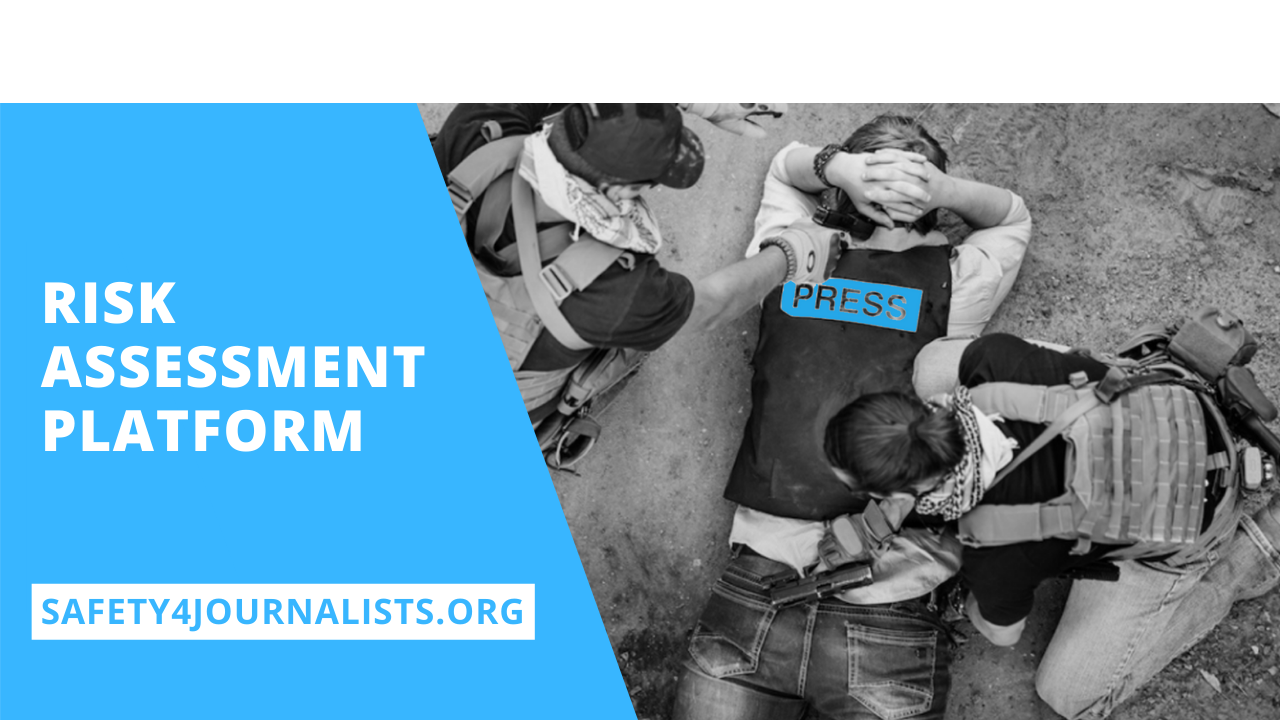
At the beginning of the war in Ukraine and the bombing of major cities, the IFJ and the EFJ launched a special Safety Fund to support journalists in need in the country through their affiliates IMTUU and NUJU as well as journalists trying to flee Russia. Ernest Sagaga is the head of IFJ Safety and Human Rights Department. He tells us about the use of the fund and the IFJ/EFJ work to support journalists in the region. 1. There has been a massive show of solidarity by journalists across the globe to support media professionals in need in Ukraine. Can you describe the type…

Ukraine: cameraman Viktor Dedov was killed by Russian bombing in Mariupol

The National Union of Journalists of Ukraine (NUJU) confirmed on 23 March that Ukrainian journalist Viktor Dedov died on 11 March in Mariupol after his flat was bombed. The European Federation of Journalists (EFJ) sends its condolences to the family and friends of the journalist. The EFJ once again calls on the Russian occupier to stop the bombing of civilian targets in Ukraine. Viktor Dedov was the chief operator of the Ukrainian television station Sigma-TV. He was at home when two shells hit his apartment. The second mortally wounded Dedov. The family was unable to bury the journalist because another…

Slovenia: assault on critical voices and trade union rights at RTV

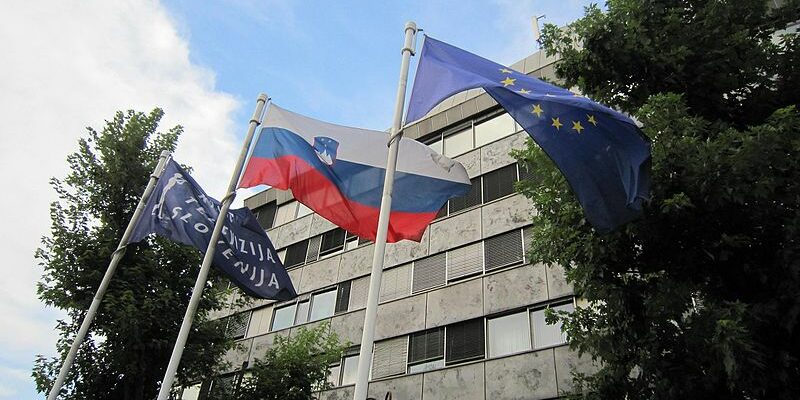
The European Federation of Journalists (EFJ) expressed concern over the recent move by the Programming Council of public service broadcaster RTV in Slovenia intending to restrict criticism made by the journalists’ trade union representative about the public broadcaster. The EFJ affiliate in Slovenia, the Union of Slovenian Journalists (SNS), denounced a violation of trade union rights and freedom of expression. On 17 March 2022, the Programme Council of RTV, the public broadcaster’s governing body in charge of media content, adopted the following decision: “Based on the explanations of the management of RTV Slovenia, the Programming Council hereby concludes that the:…

New censorship law in Russia: first case of criminal prosecution of a journalist

Russian authorities said Tuesday they had launched a criminal case against a popular journalist for alleging that the Russian army deliberately shelled a maternity hospital in Mariupol, Ukraine. Alexander Nevzorov is the first prominent reporter to be probed for spreading alleged “false” information about the Russian army under new Russian legislation. The European Federation of Journalists (EFJ) condemns this judicial action and the state censorship that prevents journalists from doing their work in Russia. Alexander Nevzorov, 63, is a veteran Russian journalist and a former member of the Russian parliament, as an independent deputy. “Nevzorov published deliberately false information about the…

Civil society recommendations for an ambitious rule of law report in 2022

The European Federation of Journalists (EFJ) joined civil society, media and journalist organisations committed to the EU’s efforts to champion the rule of law in Europe to provide advice for strengthening the 2022 rule of law reporting cycle with a civil society statement. This followed other efforts to strengthen the process. As the reporting cycle has entered its third edition, we welcome progressive improvements such as the inclusion of country-specific recommendations. These recommendations are key to ensuring follow-up actions to the reports, thereby strengthening their impact and accountability on national-level and EU-wide reforms on the rule of law. To this…

CASE coalition published new report on the nature and impact of SLAPPs in Europe

The Coalition Against SLAPPs in Europe (CASE) has launched a new report entitled “Shutting out criticism: How SLAPPs threaten European democracy”   based on data collected about 570 abusive lawsuits in 29 countries over the last 10 years. The first-ever comprehensive study aims to identify the scale, nature, and impact of SLAPPs in Europe. Initiated by wealthy and powerful litigants, Strategic Lawsuits Against Public Participation (SLAPP) is an abusive legal system attempting to intimidate and silence public watchdogs through lengthy and expensive litigation that drains a target’s resources and chills critical voices. This form of legal harassment is one of the…