European Federation of Journalists

IFJ-EFJ Regional Development Fund

Czech Republic


The European Federation of Journalists (EFJ) signed an agreement on 18 December 2014 with the Union of Journalists and Media Workers of Czech Republic (OSNPM) in order to investigate the working conditions of Czech journalists and media workers. The project is implemented with the cooperation of Judith Reitstatter, from the Austrian union GPA-djp.

The online survey was launched on 19 May 2015. Around 2,500 journalists and media workers were invited to participate to the survey. The EFJ, OSNPM and GPA-djp analysed together the main outcomes of the survey during a round table conference, on 19 August 2015, in Prague.

The questionnaire focus mainly on labour rights. “This area is underestimated by the Czech media, journalists themselves and their employers as well,” explains Zdeněk Kučera, chairman of OSNPM.

“Over the past 25 years, journalists’ attention was focused primarily toward freedom of speech, access to information, relations with media ownership and the development of media houses. These are very serious topics. However, journalists’ status remained grossly underrated. A specific problem is the status of freelance journalists, which are increasingly numerous, particularly in regional media.”

The main findings of the survey are available on the EFJ website, here.
FOCUS EFJ

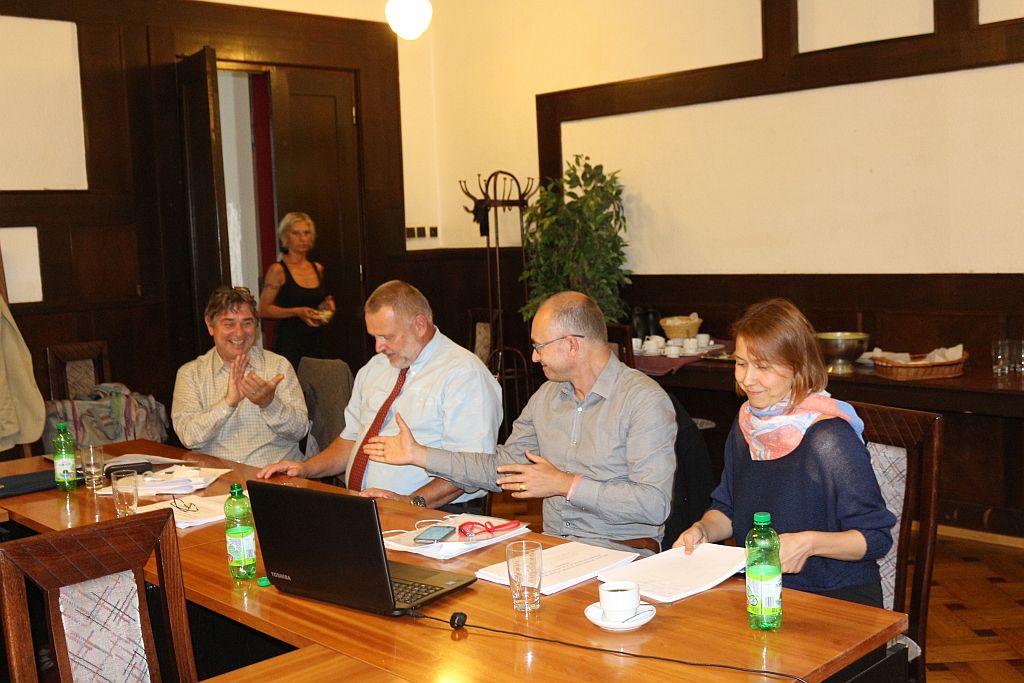
Side event of our project: a high school magazines national competition (Nejinspirativnější středoškolský časopis 2015). Here are the winners (picture credit: F. Cakl):

Czech

Contact details: OSNPM, e-mail: odborovy-svaz-novinaru@seznam.cz, website: http://www.odborovysvaznovinaru.cz


Slovakia

The European Federation of Journalists (EFJ), its Austrian union GPA-djp and the Slovak Union of Journalists (Slovenský syndikát novinárov) organized a meeting in Vienna, on 30 October 2014. Trade unionists and media students from both countries met in GPA-djp offices, in Vienna. The discussion on media convergence was launched by Dr. Roman Hummel, from the university of Salzburg.

Contact details: Judith Reitstaetter, judith.reitstaetter (at) gpa-djp.at


Estonia

The European Federation of Journalists (EFJ), the Estonian Union of Journalists (Eesti Ajakirjanike Liit, EAL) and the Union of Journalists in Finland (Suomen Journalistiliitto, UJF) agreed on 6 February 2015 to jointly implement the project “Workshops to Strengthen Journalists’ organisation in Estonia”.

The main objective of the project is to strengthen journalists’ organisation in Estonia, through three activities:

  • a freelance workshop in Helsinki,
  • a radio & TV negotiators workshop in Helsinki,
  • an authors’ rights seminar in Tallinn.

An action plan will be proposed for the next period.

Contact details: Juha Rekola, Juha.Rekola (at) journalistiliitto.fi, and Helle Tiikmaa, helle (at) eal.ee
 

Actions

Greece: Journalists must be free to report on refugees

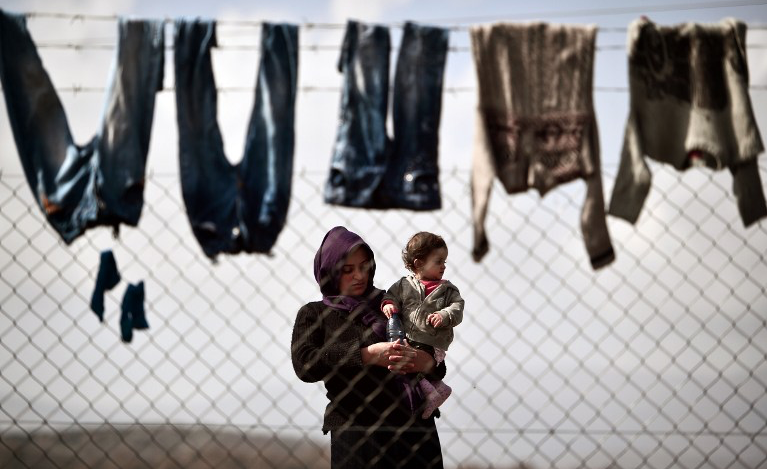
The Pan-Hellenic Federation of Journalists’ Unions (PFJU, EFJ-IFJ affiliate) expresses its opposition to unprecedented ban to journalistic research and reporting aspects of the urgent situation regarding refugee attempted by a new “directive” issued by the Greek ministry of Immigration Policy. According to this directive, “both on the Islands and on the mainland of Greece, television crews and journalists will not be granted license to enter the premises where refugees are hosted until further notice”. PFJU calls on the Greek government to withdraw the decision immediately, since no state of emergency can justify any restriction of individual and social rights constitutionally…

EFJ: Media requires urgent reforms in Macedonia before elections

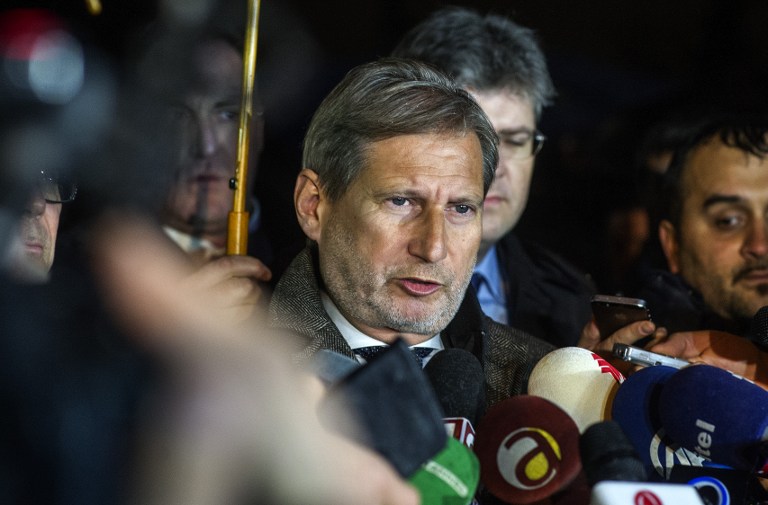
The EFJ sent the following letter  to Enlargement Commissioner Johannes Hahn: Dear Commissioner Hahn, On behalf of the European Federation of Journalists (EFJ), representing over 300.000 journalists across Europe, and our affiliates in Macedonia, the Association of Journalists of Macedonia (ZNM) and the Trade Union of Macedonian Journalists and Media workers (SSNM), we are writing to you with continued grave concerns over the state of media freedom in Macedonia. As you know, since 2015, Macedonia is in a deep political crisis after the opposition boycotted the Parliament and published the wiretapping scandal. The opposition in the subsequent months published a…

Two arrested journalists released in Turkey after 92 days

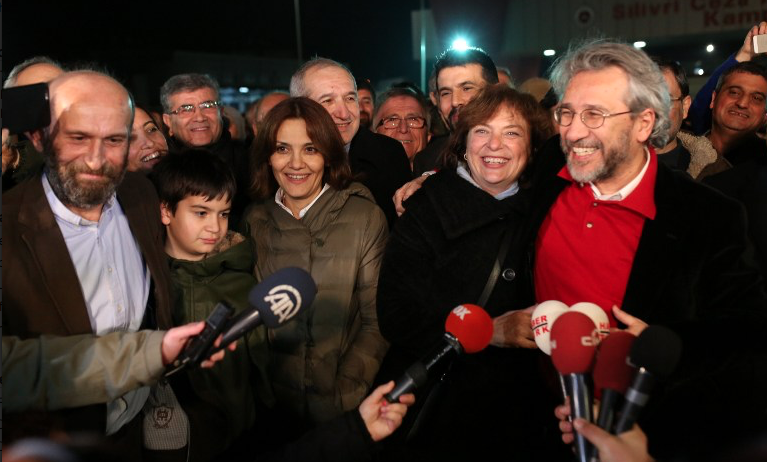
The European and International Federations of Journalists (EFJ-IFJ) warmly welcomed today Turkey’s Constitutional Court ruling on February 25 stating that the rights of Cumhuriyet newspaper journalists Can Dündar and Erdem Gül have been violated and underlining the lack of justification to jail them following the publication of several articles. The ruling refers to the violations of Article 19 (“right to personal liberty and security”), Article 26 (freedom of expression) and Article 28 (press freedom) of Turkey’s Constitution. Dündar and Gül were arrested on 26 November 2015 after the newspaper’s reporting and footage of the content of trucks belonging to the National Intelligence Agency.…

Freedom of the media more important than ever

by Mogens Blicher Bjerregård – EFJ President The truth is the first victim of a conflict, and right now, we have such victims in Europe. Most recently, the amendment in the Polish media law turning publish service media into more state control. As well, the record list counts the Hungarian media law removing the self-regulation system, public service media under attack in Spain and more dramatically, journalists beaten and jailed in bunches in countries like Turkey and Azerbaijan. More state control of the media will allow more hate speech leading to propaganda as seen during the conflict between Russia and…

Digitisation at the workplace

On 23 February, the ETUC organised a workshop on digitisation for its members at national level and the European industry federations including the EFJ. Esther Lynch, ETUC Confederal Secretary explained the challenges and methods regarding the recognition of employment relationship for digital workers and the different definitions of worker and employee throughout the European Union. She asked whether the ETUC should advocate for a Directive for online platform workers. While online work in the medical sector for example is heavily regulated, most other sectors lack complete regulation. Lynch said when it comes to freelance journalists it may be more useful…

Greek journalists denied access to cover police operation against refugees

The Journalists’ Union of Macedonia and Thrace Daily Newspapers (ESIEMTH, EFJ affiliate) is reporting another incident of journalist and his TV crew being removed from the camp build for refugees in Idomeni (Greece) that occurred early morning on February 23, 2016. At around 05:30, the Greek police asked the TV crew including journalist Aphroditi Spilioti (member of ESIEMTH), a cameraman and a sound engineer working for the private broadcaster Αlpha Channel to leave the camp “for safety reasons”. The crew did move outside the perimeter of the refugee camp at Idomeni where they could possibly still have a view on…