EFJ welcomes European Parliament’s call for an EU regulatory framework that protects copyright in the age of AI

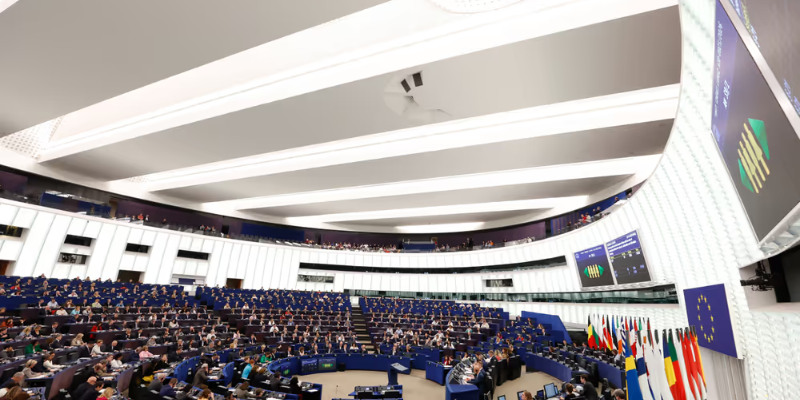
Today the European Parliament adopted the report on “copyright and generative artificial intelligence” drafted by MEP Axel Voss (by 460 votes to 71, 88 abstentions). The European Federation of Journalists (EFJ) welcomes this first step as a sign of political will to strengthen and make fairer the copyright framework protecting journalists from the unauthorised use of their work in AI training and content generation. Until now, AI companies have been relying on journalistic content without seeking consent, providing remuneration, or ensuring transparency about how such material is used. This practice not only undermines journalists’ intellectual property rights but also threatens…
European Court: holiday pay for freelancers and bogus self-employed

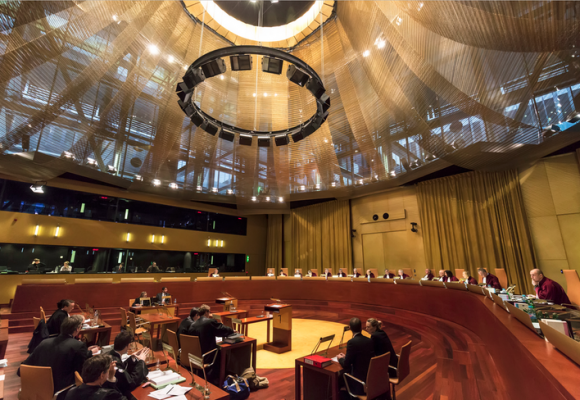
On 29 November 2017, the European Court of Justice ruled in favour of paid annual leave for self-employed and bogus self-employed workers. Now, anyone who has been bogus self-employed can demand additional payment for annual leave. Article 7 of Directive 2003/88/EC of the European Parliament and Council of 4 November, 2003, provides 4 weeks of paid annual leave for every worker, and the European Court has said that this must not be thwarted by employers. The case came to the European Court after a British case in which Mr King, retiring after 13 years of employment, sought to recover payment…

Belarus: harrassment against freelance journalists on the rise

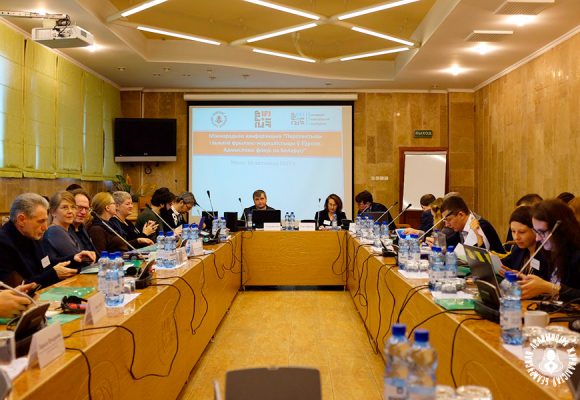
On 16 November 2017, the Belarus Association of Journalists (BAJ) in cooperation with the International Federation of Journalists (IFJ) and European Federation of Journalists (EFJ), organised a one-day meeting in Minsk focusing on “The Perspectives and challenges for freelance journalism in Belarus and Europe”.  Around 40 journalists, including media lawyers, EFJ/IFJ affiliates and the EU Delegation to Belarus, discussed how to best put the desperate issue of freelance journalism at the heart of local and national authorities in Belarus and the European Union. Renate Schroeder from the EFJ, Michael Hirschler from the German Journalists’ Association (DJV), and other colleagues from the EFJ’s Freelance Expert Group (FREG)…

Study recommends EU action to protect atypical workers

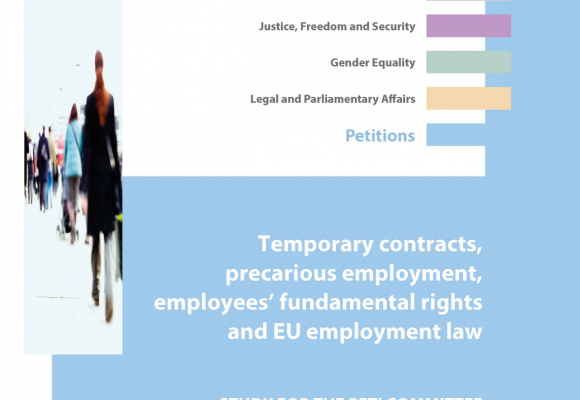
A recent study explored ‘Temporary contracts, precarious employment, employees’ fundamental rights and EU employment law‘, commissioned by the European Parliament’s Policy Department for Citizens’ Rights and Constitutional Affairs at the request of the Committee on Petitions. The findings have implications for journalists, as atypical and precarious employment has been tied to media industries and digitisation. The study emphasises that precarious employment is a fundamental rights issue of enormous weight and significance within the EU’s normative order. Some groups, such as women and younger workers, are more affected by precarious employment. Self-employment, which affects many freelancers and journalists, is discussed in…

Incentivising media rights and plurality by supporting good practices in Western Balkans and Turkey

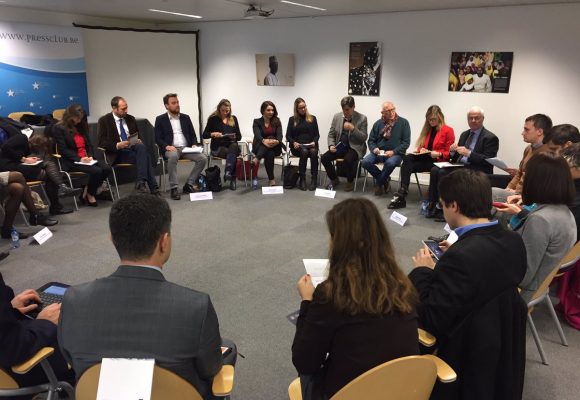
“How to improve the precarious state of journalism in South East Europe and Turkey” was the topic of a press conference held by the European Federation of Journalists (EFJ) on 14th November 2017 at the Press Club Brussels. The press conference took place in the framework of the EFJ project, Building Trust in Media in South East Europe and Turkey – a project supported financially by UNESCO and the European Union. Andris Kesteris, principal advisor at DG for Neighbourhood and Enlargement Negotiations (NEAR) at the European Commission and Tarja Turtia, UNESCO Programme Specialist, attended the event to hear representatives of…

Contracts and collective bargaining for all: “Social Europe”

The European Federation of Journalists (EFJ), along with the European Trade Union Confederation (ETUC) and other European trade union organisations, submitted on 6 November its position on the 2nd phase consultation on the revision of the Written Statement Directive (931/55/EC) trying to extend the right for a written contract and social protection to self-employed workers. The EFJ, along with the ETUC, request in their response that Member States should ensure that all workers (including self-employed workers) have the right to fair remuneration in accordance with national law, collective agreements or practice at the appropriate level in conformity with national industrial…

Studies find precarious employment tied to digitalisation and the gig economy

The grey area between employment and self-employment, symptomatic in the media sector, has been highlighted by two recent studies focusing on online work and the “gig economy”. The separate 2017 studies, one by Eurofound (the European Foundation for the Improvement of Living and Working Conditions) and the other by Heyes and Hastings from the University of Sheffield, suggest a precarious status of employment for ever more workers. This precarity is tied to digitalisation and the “gig economy”. The study by Eurofound focuses on digital platform work. The most reliable estimate of this type of work among European Union member states is from the United Kingdom, where…

EFJ-IFJ statement on article 11 of the draft copyright directive on copyright in the digital single market

The EFJ-IFJ are concerned about the rampant reproduction and making available of extracts or the entirety of journalists’ and other creators’ works online by third parties without authorisation or remuneration. Journalists’ contributions to press publications and informing citizens must be recognised and duly protected and remunerated. Their authors’ rights, namely their economic and moral rights, including the right to integrity and paternity, must be duly acknowledged. Freedom of contracts too often results in contractual arrangements where journalists are forced to sign away their rights. These so-called buy-out contracts should be outlawed and there shall be no presumption of transfer of…

EFJ’s reaction to President Juncker’s State of the Union Speech

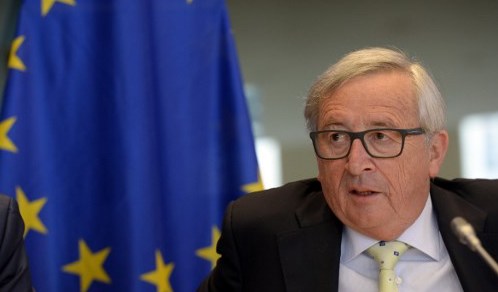
Jean-Claude Juncker, President of the European Commission, has made his State of the Union speech outlining his vision for the future of Europe. Commenting on the State of the Union speech, the European Federation of Journalists (EFJ) welcomes his commitment to address the social dimension of the digital single market in particular in the area of social and workers’ rights. In his speech, President Juncker said: “In a Union of equals, there can be no second class workers. Workers should earn the same pay for the same work in the same place.” Ricardo Gutiérrez, EFJ General Secretary said: “We welcome…

Public service media in Bosnia and Herzegovina closer to sustainable funding

Public service media in Bosnia and Herzegovina (BiH) has signed an agreement with the electric company Elektroprivreda – JP EP on the collection of TV license fee through the electricity bills starting this month. With this agreement, the Radio and Television of Bosnia and Herzegovina (BHRT) will be provided with a steady income of independent funding and will be able to start investing in new technology and programming. The other domestic electric companies will be offered the same contract and the BHRT expects a positive outcome. The European Federation of Journalists (EFJ) along with the European Broadcasting Union (EBU) welcomes…

Slovenia to reform labour laws enforcing contractual obligations

The Slovenian government has recently introduced two draft labour laws on employment and labour inspection. The main changes concern giving the labour inspectors more authority to act, especially when the employer fails to pay the salary of employees, accelerate the process whereby the unemployed take up employment again and make employment contract termination more flexible. “Precarious conditions are becoming more and more common, not just in Slovenia, but also in Europe,” said Anja Kopač Mrak, the Slovenian minister of Labour, Family, Social Affairs and Equal Opportunities at the voting session of the draft labour laws at the beginning of this…

EFJ responds to EU consultation on access to social protection

The European Federation of Journalists (EFJ) has responded to a consultation launched by the European Commission calling for equal access and treatment of freelance and atypical workers in journalism. The consultation on ”a possible action addressing the challenges of access to social protection for people in all forms of employment” has identified a number of issues facing the so-called ”atypical workers”. In journalism, these atypcial workers are characterised by the work of freelance journalists who mostly are precarious due to the existing gap in social protection and wage. The EFJ welcomed the consultation and the challenges identified by the Commission.…

EFJ responds to EU consultation on Written Statement Directive

The European Federation of Journalists (EFJ) has responded to the consultation on the Written Statement Directive that obliges employers to inform employees their rights and conditions applicable to the contract or employment relationship. The consultation was launched by the European Commission within the framework of the European Pillar of Social Rights. The EFJ welcomes the consultation looking into improved protection for workers especially the so-called atypical workers who are in precarious working conditions. Here is the EFJ’s response.

Safe and reform public service media in Bosnia and Herzegovina

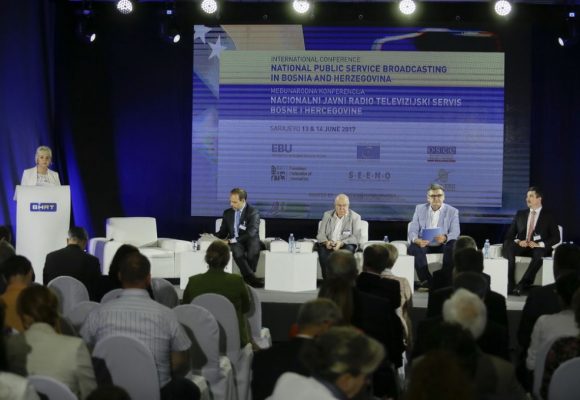
An international conference on public service media (PSM) in Bosnia and Herzegovina has concluded with an agreement that the failure of PSM in the country would be unacceptable. Public service media in Bosnia and Herzegovina (BiH) is under threat of imminent collapse due to insufficient and unsustainable funding and the authorities’ inability to make the necessary reforms to the media law. More than 100 participants from parliament, government, regulatory authorities, the media, the international community and the civil sector met in Sarajevo to discuss the importance of PSM. Organised by the Radio and Television of Bosnia and Herzegovina (BHRT) in…

Ireland: Unions celebrate victory over competition authority

Irish freelance workers will be allowed the right to collective bargaining. On the evening of 31 May, the Irish Parliament adopted the Labour Party proposed Competition Amendment Bill 2016, which aims to introduce exemptions from competition law for certain self-employed workers. Since a competition ruling was handed down thirteen years ago, agreements  negotiated with  artists unions on minimum tariffs  have been considered as breaches of competition  law. To avoid the competition law a union has to prove either that its members are false independent workers (in a subordinate relationship, obliged to follow instructions,  do not share the same business risks…

Global Rights Index 2017: Europe shows greater respect for trade unions

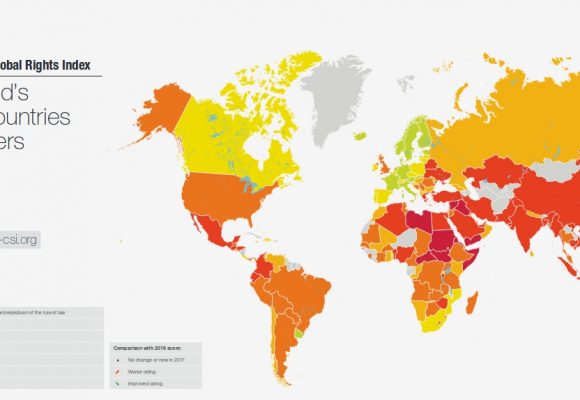
The International Trade Union Confederation (ITUC) released this year’s Global Rights Index report, providing an insight into workers’ rights violations around the world. It rates 139 countries from one to five according to 97 indicators to determine where workers’ rights are best protected in law and in practice. Following the report, the worst countries for workers in Europe are Turkey, Belarus, Greece, Ukraine, Bosnia and Herzegovina, Romania, Serbia and the United Kingdom. The number of countries experiencing physical violence and threats against workers has risen by 10 percent in just one year. In Europe, however, trade unions have greater respect…

Call on BiH authorities to save national public service media

The Bosnia and Herzegovina public service broadcaster (BHRT), the EFJ affiliate, the Bosnia -Herzegovina Journalists Association (BHN), the European Broadcasting Union (EBU), the European Federation of Journalists (EFJ), and the South East Europe Media Organisation (SEEMO) call on Bosnia and Herzegovina authorities to undertake urgent measures to save national public service media (PSM) in BiH. The above mentioned organisations urge BiH authorities to ensure political consensus about the importance of existing independent and professional national PSM in BiH, to find sustainable solutions for the funding of PSM, to undertake immediate amendments of the existing legislation and support the national public…