EFJ welcomes European Parliament’s call for an EU regulatory framework that protects copyright in the age of AI

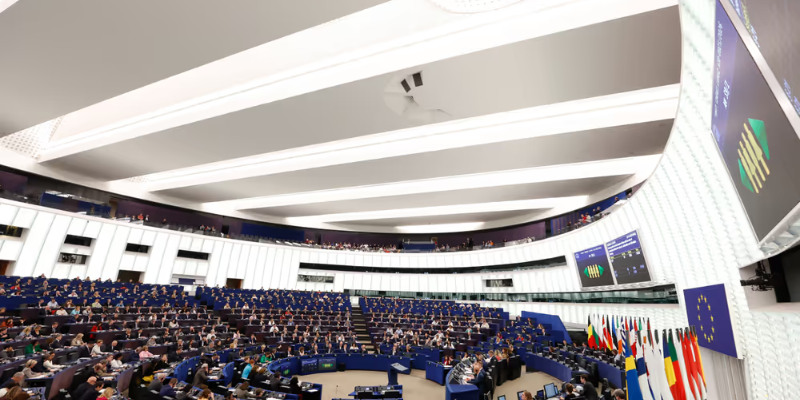
Today the European Parliament adopted the report on “copyright and generative artificial intelligence” drafted by MEP Axel Voss (by 460 votes to 71, 88 abstentions). The European Federation of Journalists (EFJ) welcomes this first step as a sign of political will to strengthen and make fairer the copyright framework protecting journalists from the unauthorised use of their work in AI training and content generation. Until now, AI companies have been relying on journalistic content without seeking consent, providing remuneration, or ensuring transparency about how such material is used. This practice not only undermines journalists’ intellectual property rights but also threatens…
Media Against Hate: Humanity, accuracy and accountability are key principles when covering migration

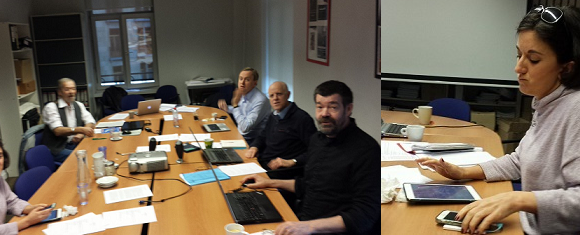
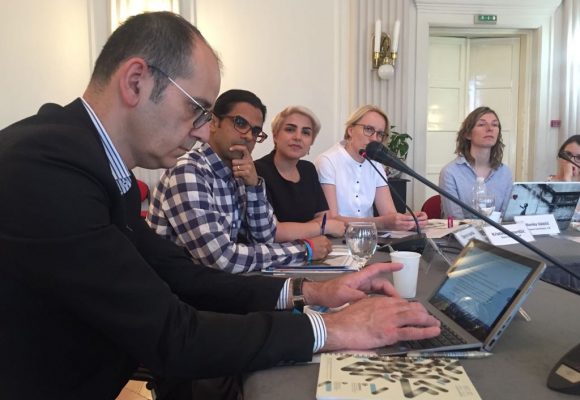
Twenty-five journalists from 12 countries gathered in Zagreb (Croatia) on 26 and 27 May to attend a workshop on the theme “Reporting Refugees, Migrants, Ethnicity” co-organised by the European Federation of Journalists (EFJ) and the Croatian Journalists’ Association (CJA). Journalists gathered at the workshop on reporting refugees in Zagreb. #mediaagainsthate pic.twitter.com/KhrkjXHR6I — Gašper Andrinek (@Caspersek) May 26, 2017 Croatia had little contact with migrants from the Middle East until 2015. But the country is now welcoming some migrants and the media, as well as the population, are experiencing some difficulties in dealing with it. The participants, all working on migration issues in their own countries, were given…

Cyprus : Basin-Sen signs a new collective agreement at Kibris Postasi

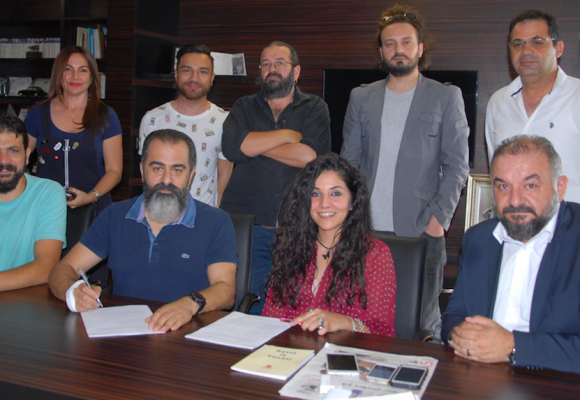
Basin-Sen (Turkish Cypriots’s Press Workers’ Trade Union, an EFJ-IFJ affiliate) announced the signature of a new collective agreement with Northern Cyprus’ biggest online daily newspaper Kibris Postasi. “This is a very important step taken by Kibris Postasi newspaper as this gives a momentum and is seen as an example to repeat for the entire press workers. We thank the managers of the newspaper for this output and we want to thank all the journalists and media workers for standing for the social rights. As Basin-Sen, we will be working to achieve similar results through collective bargaining in other media outlets”, said Canan Onurer,…

New survey: who are the freelancers of Europe?

The number of independent workers is growing rapidly within the European labour market and behind what has become the standard label for self-employed professionals lies a wide range of different work scenarios. Who are the freelancers of Europe, how do they live and work in the different countries of the EU, what are their needs, expectations and how do they deal with the uncertain, precarious nature of freelance work? i-WIRE is the first Europe-wide survey of freelancers that will try to answer some of those questions. The EFJ encourages its affiliates and freelancers of Europe to fill out the questionnaire.…

Workers’ Day: Media Freedom requires decent working conditions for journalists

“There can be no press freedom if journalists exist in conditions of corruption, poverty or fear”… On this Workers’ Day, the European Federation of Journalists (EFJ) strongly encourage journalists to share the motto of the International Federation of Journalists (IFJ). Guaranteeing fair and decent working conditions to journalists is a precondition for media freedom. The study “Journalists under pressure” published on 20th April by the Council of Europe, based on a sample of 940 journalists reporting from 48 countries, shows that journalists in Europe are often exposed to serious pressure in their work, including intimidation and violence. As a consequence, many…

EFJ’s plea to save Public Service Media in Bosnia and Herzegovina

The European Federation of Journalists (EFJ) has initiated a call backed by the international community, including the EBU (European Broadcasting Union), to save public service media (PSM) in Bosnia and Herzegovina (BiH). Urgent measures need to be taken to secure adequate and sustainable funding for PSM in BiH. It has been almost a year since the previous model for collecting the licence fee – through telephone bills –  expired. The two telecoms operators in BiH, Bhtelecom and M:tel, have been voluntarily collecting the fee for PSM ever since but this is now under threat and, this month, the amount of funding collected via this…

EU copyright directive: Licensing and remuneration of journalists

Better contracts, more transparency in payments and a fair share of remuneration for journalists: these are on top of the agenda for the European Federation of Journalists (EFJ) in the latest consultation on the EU copyright directive. The EFJ is putting forward important amendments to the proposed new rights for internet publishers. “We have heard many speeches in which EU Commissioners and Members of the European Parliament have emphasised the need for pluralistic European content online. They have acknowledged that achieving this means that the value gap between authors and those who profit from their work must be closed,” says…

Organising and collective bargaining focus for EFJ Freelance Expert Group

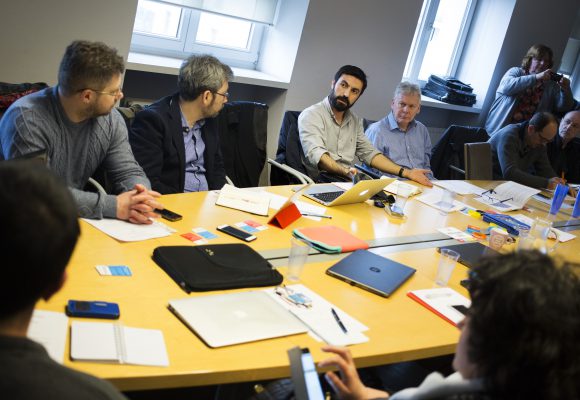
“In each company we need to first deal with the staff workers, and find out about their main challenges at work. We need to map the company, the sector and then also map the situation of staff , freelances, agency and all workers “, said Erkan Ersoy, Director of Organizing  in UNI SCORE (Strategic Campaigns, Organising, Research + Education) who was invited to the Freelance Expert Group meeting to discuss how to apply the UNI organising strategy at company level to freelance journalists. Other tips include: Choose the most ethical media company to start with; Map: find out about pay…

CoE Commissioner Nils Muižnieks urges to strengthen public service broadcasting in Kosovo

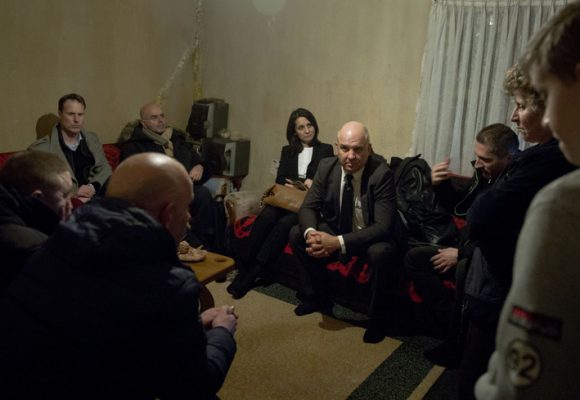
The Council of Europe Commissioner for Human Rights, Nils Muižnieks, is encouraging Kosovo authorities to safeguard media freedom in the country following his four-day mission to Kosovo. The European Federation of Journalists (EFJ) and the Journalist’s Association of Kosovo (AGK) welcome the preliminary conclusions. In his report, the Commissioner recommends to strengthen Kosovo public service media, urging “the authorities to establish a sustainable, appropriate and transparent funding of the public service broadcasting organisation and to secure its editorial independence and institutional autonomy.” The Law on the Radio Television of Kosovo (RTK), the public service broadcaster, is currently being amended by the…

Turkey’s RTÜK becomes a permanent censorship institution

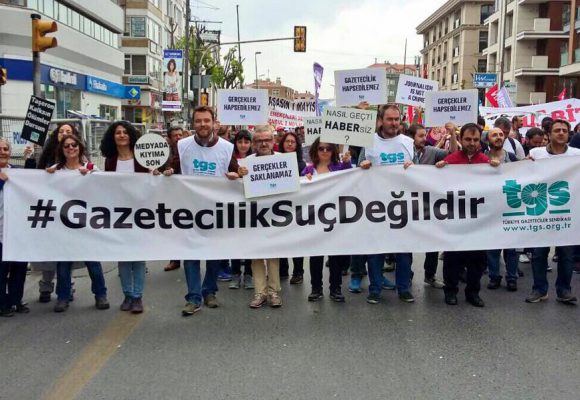
The European Federation of Journalists (EFJ) has today backed its affiliate Turkish Journalists Association (TGC) in condemning new restrictions imposed on broadcasters by governmental decrees number 680 published on 06/02/2017. The Executive Board of the Turkish Journalists Association (TGC) announced that the restrictions imposed on broadcasting by Radio and Television Authority (RTUK) officials represents a direct intervention to the profession of journalism and aims at making censorship as a permanent institution. “The legislative decree has made amendments to the law that regulates Radio and television broadcasts in Turkey. According to these amendments, the broadcasts of any radio or television outlet…

Authors’ rights: expert group discussed new EU directive

The EFJ Authors’ rights expert group convened in Brussels on 6 February. The main issue on the agenda included the new EU directive proposal on copyright in the digital single market and its implication for authors. Following a proposal from the European commission, the draft directive is being discussed in the European Parliament and within national member states. It needs a concrete response from journalists’ unions on several points. One of the most positive move in the draft text is the introduction of reporting obligations for those who have been licensed or transferred journalistic works, ie media employers. While the…

Request for EU Support for Public Service Media in Balkan

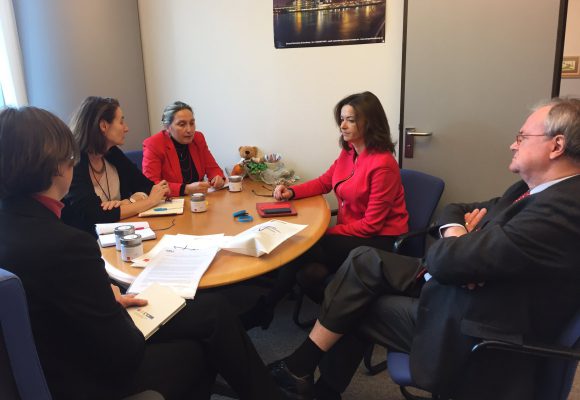
On 1st and 2nd February, the European Federation of Journalists (EFJ) and the European Broadcasting Union (EBU)  had a series of meetings with members of the European Parliament to discuss the urgency of supporting public service media and independent journalism in the accession countries. The lack of financial independence, outdated technologies as well as increasing political control, not only in Hungary and Poland but in all accession countries  affects the compatibility of public media outlets. Out of all Balkan countries only Serbia and Macedonia fully digitalised their production, although they still have most of their products in analogue format. The…

Ukrainian radio faces uncertainty after license issues

The future of the Ukrainian broadcasting company “Radio Vesti” is uncertain after the National Council for Television and Radio Broadcasting of Ukraine delays the prolongation of their licenses in Kiev and Kharkov. The company sent the required documents on time in order to renew the licenses, which will expire on February 13 and 19, 2017 respectively. Nonetheless, the National Council isn’t certain on prolongation of the licenses due to the beneficiary issues. Officially the beneficiaries of the broadcasting company are Denis Mozgovoy from Avdeevka and Tatiana Alexandrova from Donetsk, however, the National Council believes that the information is not clear…

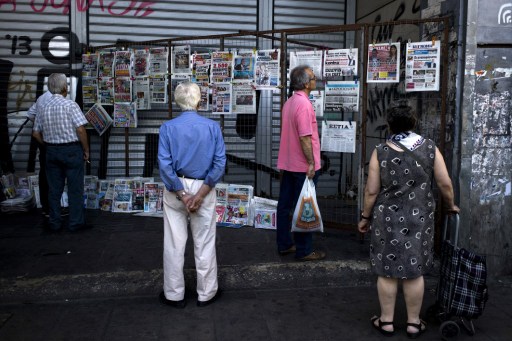
Greece: oldest newspapers cease publication following collapse of the most powerful media group

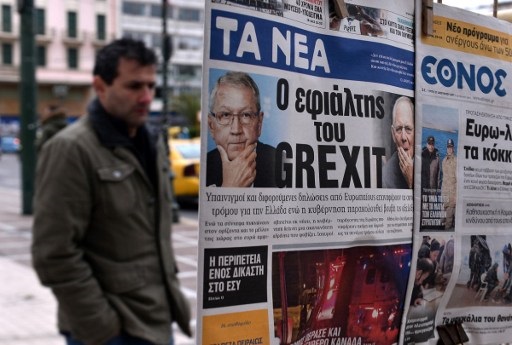
The two oldest newspapers in Greece, To Vima and Ta Nea, were among the publications which were supposed to cease publication last weekend. On Saturday , the media group which owns them, Lambrakis Press Group (DOL), announced the end of their publications “within days due to financial reasons.” The International and European Federation of Journalists (IFJ and EFJ), together with their Greek affiliates, are asking for time to negotiate a long term solution. As a result, over 500 media workers, including 250 journalists, most of whom are members of the IFJ/EFJ Greek affiliate JUADN (Journalists’ Union of Athens Daily Newspapers),…

Greece: stop threats against media pluralism!

The International and European Federations of Journalists (IFJ and EFJ) have strongly backed calls by Greek journalists to prevent banks forcing the closure of the country’s oldest newspapers and threatening up to 500 jobs. The IFJ and EFJ have backed demands from their Greek affiliate, the Journalists’ Union of Athens Daily Newspapers (JUADN), to stop the banks foreclosing on the Lambriakis Press Group (DOL) loans.  The group, which owns the oldest national newspapers To Vima and Ta Nea, is facing serious trouble after the banks threatened to call in their loans. Over 500 media workers, including 250 journalists, most of…

EFJ welcomes European Parliament’s resolution on #Socialpillar

By adopting the draft report on “A European Pillar of Social rights” by Rapporteur Maria João Rodrigues (S&D, PT), the European Parliament adopted the principle of equal treatment saying that  “All workers should have their basic rights guaranteed, whatever their form of employment and contract”. This is one of the main demands the EFJ puts in the response to the Social pillar consultation, which had been initiated by the European Commission, see We thank the rapporteur and the European Parliament for extending the notion of social rights including the right for collective bargaining and joining a union to all workers…

Azerbaijan: Survey about the social conditions of journalists

The Journalists’ Trade Union of Azerbaijan published a report on social conditions of journalists in the country in 2016. Overall 51 media outlets took part in the survey, among them national newspapers, information agencies, news portals and TV channels. One of the big issues stated in the report was the lack of individual labour contracts in Azerbaijan.  The media companies prefer to sign short-period contracts, in the best cases 60% of employees had labour contracts, whereas 40-45% had no legally binding documents and relied on verbal agreements. The application of health insurance is extremely low (less than 5% ). The…