European Federation of Journalists

openMedia, investigating press freedom

Title of the project : openMedia, investigating press freedom
Lead Applicant
: openDemocracy

Partner organisations : EFJ, Index on censorship, King’s College London

The recently launched openMedia project aims to investigate and expose commercial interference in editorial decisions. The project is run by openDemocracy with the European Federation of Journalists (EFJ) as a partner alongside the Index on Censorship and King’s College London.

The project believes that there has not been enough of a concerted, ongoing spotlight on the extent and effects of commercial influence over the media, despite the dangerous consequences it poses for press freedom. For now, the project focuses on 47 countries across Europe but also has ambitions to expand.

Despite the recent launch, the project is adamant that it is not a response to the “fake news” hype of the past year or so. Rather, the project responds to scandals of commercial sponsors influencing media content; for example the Daily Telegraph’s suppression of investigations into its advertiser HSBC; and allegations that Buzzfeed deleted articles which advertisers found unfavourable.

According to the project, this power dynamic can suppress investigations of banks, pharmaceuticals, agriculture, fossil fuel giants, energy companies and other big businesses.

In addition, the project recognizes how for many readers, “sponsored content” is difficult to distinguish from genuine news content. The project therefore aims to clarify the commercial interests apparent in media to readers, and as part of the project, King’s College London will develop digital tools to help readers be better informed about news sources.

The findings of the project will be used to campaign for greater transparency and press freedom in news organisations and to empower journalists to advocate for transparency.

In order to do this, openMedia is currently conducting a confidential and anonymous survey of journalists across Europe, asking about their own working practices and experiences of commercial pressure inside newsrooms. The survey is available in English here and in many other languages here.
Actions

Spain: no more press conferences without questions!

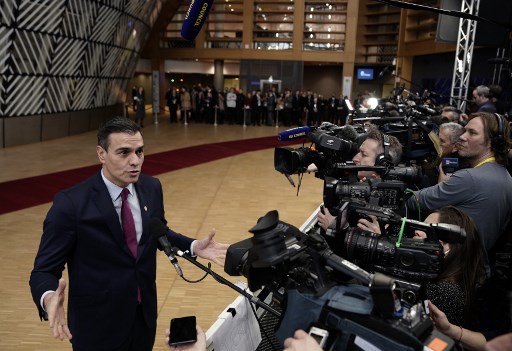
The European Federation of Journalists (EFJ) joined today its Spanish affiliates FSC-CCOO and FAPE in condemning the increasingly common practice of no-questions-asked press conferences, in Spain. On Wednesday, Pedro Sanchez (our picture), secretary general of the PSOE and candidate for investiture as president of the Government, invited journalists to attend a press conference, after confirming the King’s order to try to form a government and thus be invested president. Sanchez only allowed two questions, which was strongly criticized by journalists present. The Spanish Secretary of State for Communication, Miguel Ángel Oliver criticized journalists covering la Moncloa, the seat of government,…

Gender equality in public service media: guidelines for building a gender-balanced workplace

Public service broadcasters have the capacity to shape public’s perception on gender roles and are leading the way in building gender-balanced workplaces. As public services they have the duty to reflect the societies they are informing. Many of them made gender equality a top priority in their workplaces which led to a change in their culture. The European Broadcasters Union (EBU) has published a new report, ‘All Things Being Equal’, in where it shares their members’ own experience and good practices on equal opportunities, equal pay – gender pay gap in the EU is 19% -, work/life balance or protection…

North Macedonia: EFJ welcomes initiative aiming to strengthen self-regulation

The European Federation of Journalists (EFJ) welcomed today the registry on self-regulation of online media in North Macedonia, which was announced yesterday by the Council of Media Ethics (CMEM) together with the Association of Journalists of Macedonia (AJM). “We believe that journalists’ organisations should promote for the public benefit high ethical standards in journalism, based on five principles: truth and accuracy, independence, fairness and honesty, humanity, and accountability,” said EFJ General Secretary Ricardo Gutiérrez. “That is why the EFJ supports this professional initiative aiming to strenghten media self-regulation in North Macedonia.” The initiative will promote self-regulation of online media by…

MEPs call on the immediate resignation of Maltese Prime Minister

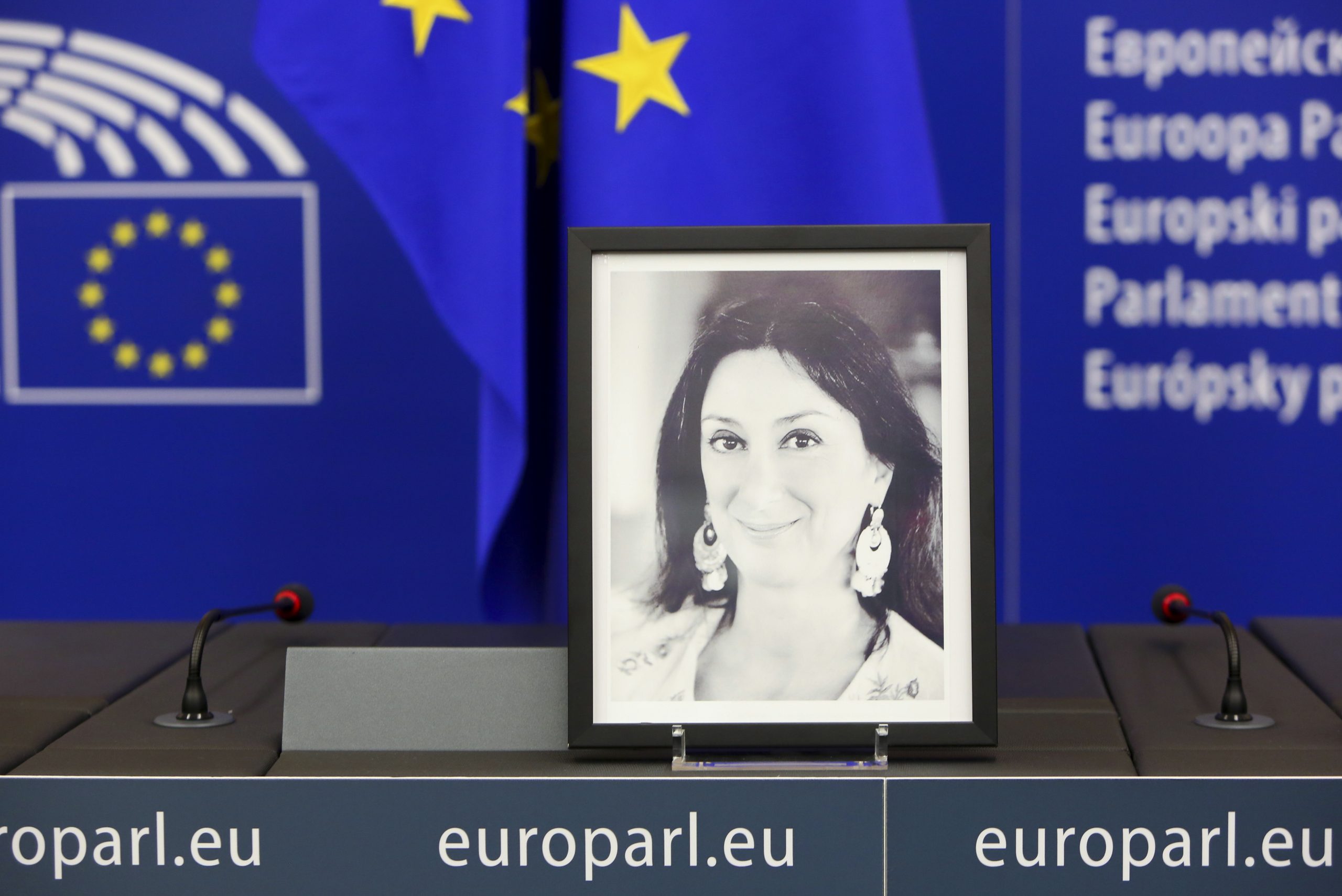
Several Members of the European Parliament (MEP) urged Maltese Primer Minister, Joseph Muscat, to resign “now”. In a resolution adopted on 18 December, the European Parliament expressed its concern about the “integrity and credibility” of the investigations related to the murder of Daphne Caruana Galizia. It stressed that “any risk of compromising the investigations (…) must be excluded by all means” and warned that this risk will persist for “as long as the Prime Minister remains in office”. MEPs also called on the new Commission “to enter into dialogue with the Maltese Government in the context of the Rule of Law Framework…

Invitation to the European Forum on self-regulation in the digital age (Brussels, 21-22 January 2020)

The Belgian Press Council (Conseil de déontologie journalistique – CDJ) invites you to a European interactive forum on the occasion of its 10th anniversary, to take place in Brussels on 21-22 January 2020. It will bring together media, journalists, press councils, journalists’ unions and associations and will address challenges of journalistic self-regulation in the digital age. Press councils and self-regulatory mechanisms – usually tripartite involving journalists, media representatives and the civil society – plays an ever-important role in upholding standards in journalism while preventing state intervention through media regulations. The forum will raise awareness about the added-value of self-regulation and…

EFJ calls on EU leaders to demand the resignation of Maltese Prime Minister

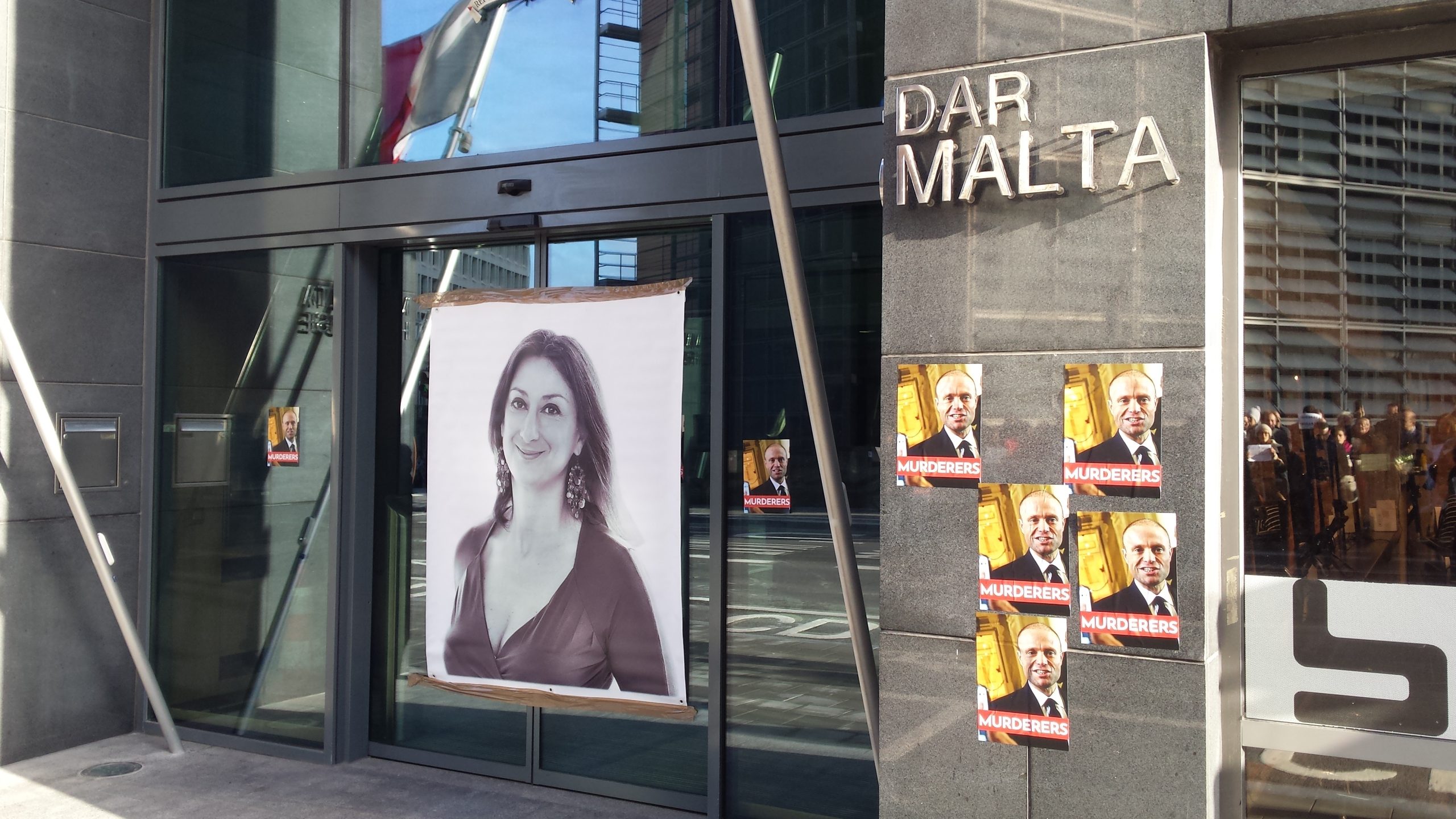
The European Federation of Journalists (EFJ) and International Federation of Journalists (IFJ) joined today the “Europe stands with Malta” demonstration in front of the Maltese Permanent Representation in Brussels, to stand in solidarity with the people of Malta demanding the immediate resignation of the Maltese Prime Minister following his office being implicated in the assassination of investigative journalist Daphne Caruana Galizia. Several speakers, including Andrew Caruana Galizia, Maltese MEP David Casa, Tom Gibson (Committee to Protect Journalists), Ricardo Gutiérrez (European Federation of Journalists), Oliver Money-Kyrle (International Press Institute) and Alice Stollmeyer (Defending Democracy), spoke out against injustice and impunity in…