Czech Republic: Public media funding bill raises concerns over compatibility with EMFA

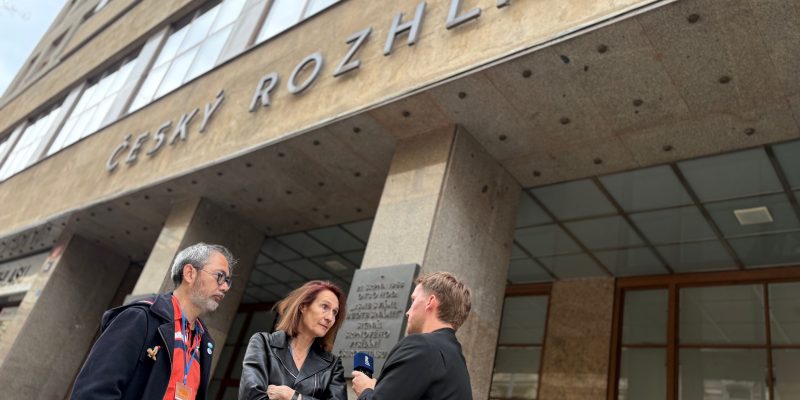
A new government bill which would overhaul the funding model for the Czech public media risks financially weakening the broadcasters, eroding safeguards for their financial independence and violating European Media Freedom Act (EMFA), the undersigned Media Freedom Rapid Response (MFRR) partners, the European Federation of Journalists (EFJ) and other media freedom, journalist and freedom of expression organisations warn today. Our organisations call on the European Commission to closely assess this bill regarding its compatibility with Article 5 of EMFA and to ensure that no reforms are undertaken which threaten the financial, editorial or institutional independence of the Czech public media.…

EU Copyright Directive is a step in the right direction but still needs to be improved

The first copyright law reform in the EU in almost two decades is designed to give authors, artists, musicians, journalists and publishers a better chance of being paid when their work appears on the internet. A final draft of the new EU Copyright Directive was approved on Wednesday night in Strasbourg. It now needs approval by EU governments at meeting that is likely to be next week and will then be voted on by the European Parliament in March or April. “The Directive offers improved rewards for all authors, including reporters, feature writers and photographers. It is not perfect –…

Open letter: Making whistleblowing work for Europe

The EU is poised to take a momentous step and adopt a new directive to protect whistleblowers across Europe. This could have a dramatic impact on the capacity and ability of whistleblowing to work in all our interests. We know that protecting those who speak up in the public interest saves lives, protects our environment, reveals and stops corruption, and stems the huge financial losses to business and governments that result from failures to address wrongdoing. It is vital that an EU Directive on the protection of whistleblowers protects the free flow of information necessary for responsible exercises of institutional…

New copyright directive makes a mockery of journalists’ authors’ rights

After months of speculation, EU institutions last night agreed the wording of a proposed Directive on Copyright in the Digital Single Market, which risks journalists being deprived of their authors’ rights and denied ‘’proportionate remuneration’’ for the work they do. The new proposal does introduce the principle of an appropriate and proportionate remuneration for all authors, including journalists, place transparency obligations on publishers and open up the possibility of alternative dispute mechanisms which could avoid lengthy and expensive court cases. It also allows authors to be represented by their unions in that process. The International and the European Federations of…

Resolution Turkey: The myth of domestic legal remedy

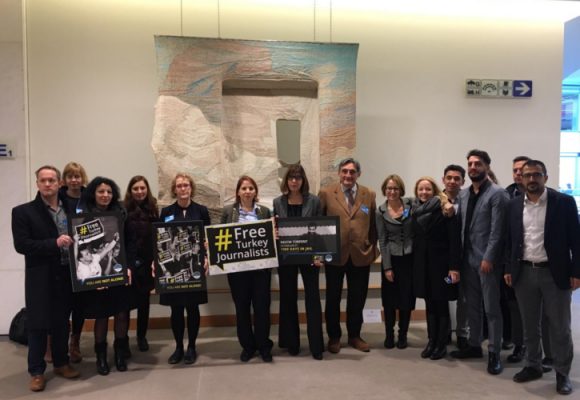
Nearly 50 MEPs join the resolution supported by the EFJ calling for restoration of rule of law and release of Turkey’s journalists. MEP Rebecca Harms (centre) at a roundtable on press freedom in Turkey at the European Parliament in January 2019 A total of 47 MEPs and 14 press freedom and free expression organizations, including the EFJ, and Green MEP Rebecca Harms have joined a resolution underscoring the lack of effective domestic legal remedies for journalists targeted in Turkey’s media crackdown. The resolution follows a roundtable held under Chatham House Rules on January 29, 2019, at the European Parliament on…

Report: Urgent action needed to protect press freedom in Europe

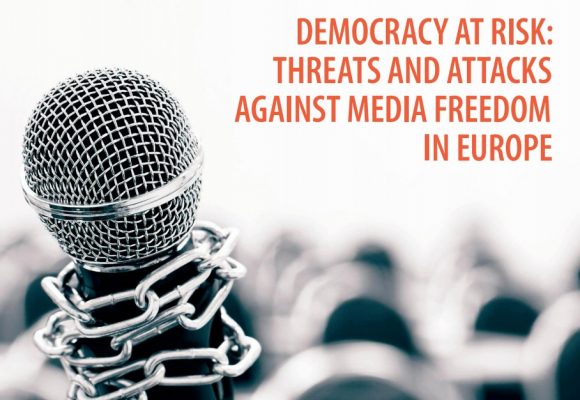
Press freedom in Europe is more fragile now than at any time since the end of the Cold War. That is the alarming conclusion of a report launched today by the 12 partner organizations of the Council of Europe Platform to promote the protection of Journalism and safety of journalists. The report, “Democracy at Risk”, analyses media freedom violations raised to the Platform in 2018. It provides a stark picture of the worsening environment for the media across Europe, in which journalists increasingly face obstruction, hostility and violence as they investigate and report on behalf of the public. The 12 Platform partners…

The Charter on journalists working conditions (full document)

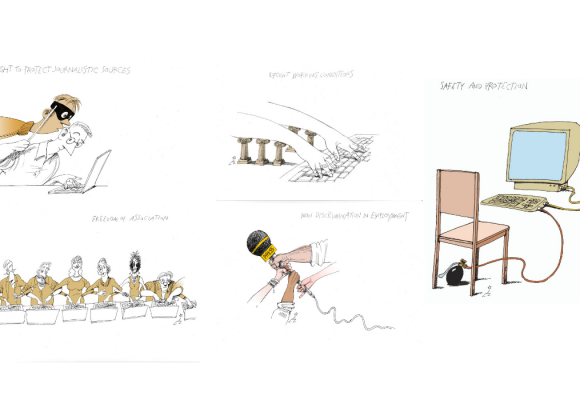
The EFJ Charter on Journalists Working Conditions is a guideline on working conditions, signed on 12 February 2019 in Belgrade (Serbia), by 14 journalists’ organisation representatives affiliated to the European Federation of Journalists and leading journalists’ unions from Western Balkans and Turkey. The Charter is open for signature to all journalists organisations, private or public media companies or authorities willing to commit to improve the working conditions and reinforce the labour rights of journalists and media workers in Europe, to fight against censorship and to promote free access to information and sources. The Charter contains 10 articles condensing the main principles affecting the working relationship between journalists,…

EFJ to launch a new Charter on Journalists Working Conditions

On February 12, 2019, the European Federations of Journalists (EFJ)’s labour rights expert group (LAREG) members will officially launch a new Charter on journalists working conditions during a press conference organised in Belgrade at : speakers : members of the labour rights expert group (LAREG+) in EU, Western Balkans and Turkey Subject : Launch of EFJ Charter on journalists working conditions Date : Tuesday 12 February 2019 at 10:00 am Location : Press centar UNS, street Kneza Mihaila 6, Belgrade language : English and Serbian registration : free access (no accreditation required for journalists) contact : mehmet@europeanjournalists.org / camille@europeanjournalists.org    …

France: Mediapart secret sources threatened by police search attempt

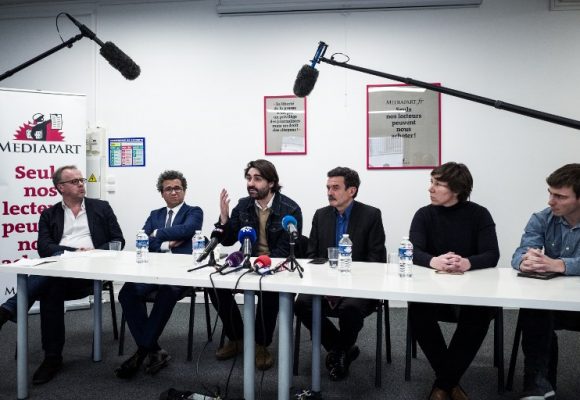
On February 4, 2019 around 11 a.m., under the pretext of Mediapart having breached the privacy rights of Alexandre Benalla, the Paris Prosecutor’s office sent two prosecutors and three policemen to search its offices. The attempted search clearly targeted the “recording and listening devices” to uncover the sources of the last revelations, audio recordings, between Alexandre Benalla and Vincent Crase. Fabrice Arfi and Michaël Hajdenberg both heading the investigative journalism pool at Mediapart opposed the search in the absence of its President and founder, journalist Edwy Plenel. As a rule, during a preliminary enquiry, the media has the right to refuse entry…

In the UK and France, freelance journalists stand up for their rights to fairer, better and faster pay

Both in France and the UK, freelance media workers have joined forces to tackle the unlawful working practices of media owners. They demand the end of payment on publication, to be paid for all their work, not just on the basis of what has been published, only after it has been published. They also expect to receive payments promptly, instead of enduring huge delays and being left out of pocket. Media workers are under pressure from employers who are cutting editorial budgets, slashing jobs and undermining trade union organisations. Many journalists have been forced into what we call “fake freelance”…

Copyright Directive: IFJ/EFJ reject the Romanian compromise

The International and European Federations of Journalists (IFJ/EFJ), the world and Europe’s largest journalists’ organisations, call on EU Institutions to reject provisions and proposals that aim to restrict or obliterate journalists’ remuneration, ahead of final negotiations on the Directive on Copyright in the Digital Single Market (DSM). It is with great dismay and disbelief that the IFJ and the EFJ have read the EU Presidency’s latest proposals regarding journalists’ remuneration in the context of the draft legislation. While floating a possible compromise idea of an “appropriate and proportionate” remuneration for authors in Recital 39Y and presumably in Article -14, the…

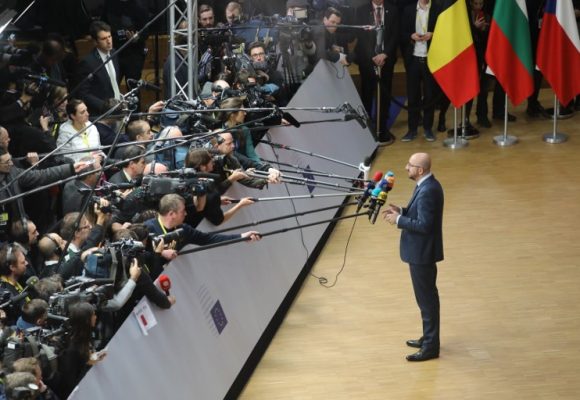
Belgium enforces largely opposed €50 security check fee to cover the EU

The Belgian government passed a bill  or “Taxe Michel” forcing media workers (journalists and technicians), residing in Belgium or Belgian, to pay a mandatory €50 fee for the security screening document it delivers to authorize access to EU events. It debuted at last October’s EU Summit. The Belgian Union of Journalists (AJP) opposed the law 6 months ago to no avail. About 1000 journalists, either Belgian or residing in Belgium, will be forced to pay the fee. Belgium has now started billing journalists or their employers and the European Federation of Journalist joins the AJP ‘s recommendation to refuse to…

France: “No media should be a scapegoat” appeal

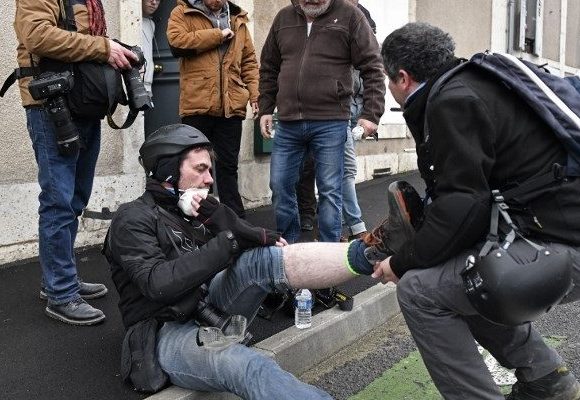
French journalists ‘safety is being increasingly threatened amid tensions covering the Gilet Jaunes (Yellow Vests) demonstrations across France. From insults and menaces to physical injuries, journalists are under attack from both demonstrators and the police. Publishers face the threat of their newspapers being blocked. Invectives on social media are on the rise. Amid a climate of defiance towards the media, anti-media rhetoric is commonplace in French society. The French media industry addressed these concerns publicly in an open letter in French newspapers on 15 January 2019 which was co-signed by the European Federation of Journalist (EFJ) together with its French…

Ukraine: physical assaults against female journalists rise by 50% in 2018

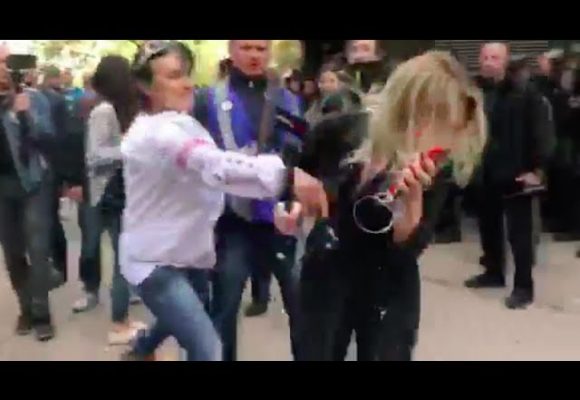
The National Union of Journalists of Ukraine (NUJU) released its 2018 “Ukraine’s Journalists Physical Safety Index”. The situation has worsened for journalists since last year with 86 attacks in 2018, with a notable rise of attacks on female journalists, from 23 in 2017 to 37 in 2018. Sergiy Tomilenko, NUJU President explains: “Such a dramatic increase in aggression against female journalists is due to the unacceptable impunity from prosecution assailants enjoy. Impunity from prosecution after attacking media workers is one of our most prevalent issues.” It is best illustrated by what happened to Donbas war reporter Natalia Nagora. Working for…

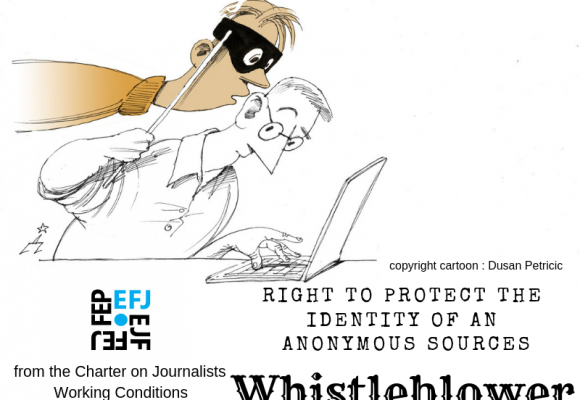
Whistleblowers: EU Council wants to limit reporting to authorities and media

Update (16.04.2019): the European Parliament approved the directive in plenary session with 591 votes in favour, 29 against and 33 abstentions. The Council of the European Union adopted on Friday 25 January its general approach on the protection of whistleblowers. The trilogue between the three European institutions has started with the aim to find a compromise before the next European elections. The political agreement between the 28 Member States determines under what conditions whistleblowers can report breaches of EU law to be granted protection against retaliation. It foresees that a whistleblower must, as a rule, first make a report inside his/her…

Grenoble: arson ravages France Bleu Isère radio

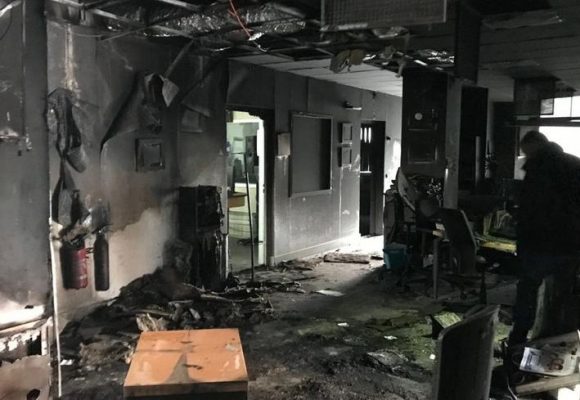
UPDATE (30-01-2019) – French Anarchist blog has claimed arson on both Radio Bleu Isère and an Haute-Jarrie telecoms relay tower, last night, in a strategy of systemic attacks on French Media in the region. Sunday night around 2:30 a.m., France Bleu Isère radio studios and offices were set on fire after arsonist(s) broke in. The police found enough evidence to immediately start a criminal investigation. The Editor-in-Chief of the French public regional station, Léopold Strajnic, told the police he had not received any threats prior to the attack. In the current climate, the European Federation of Journalists (EFJ) vigorously condemns another attack…

Sweden: Freelance journalists successfully obtain fee rise

The freelance section of the Swedish Union of Journalists (SJ) obtained a fee rise agreement with several big Swedish newspaper publishers. Agreements were reached thanks to a joint effort of individual freelance journalists, the Swedish Freelance Section of the Swedish Union of Journalists, Frilans Riks, and the local trade union branches at the publishing companies. The SJ issued its recommended new fees for freelance journalists last November to come into effect in 2019. Two Morning papers: Sydsvenska Dagbladet and Helsingborgs Dagblad will be implementing a two percent yearly increase, the first raise since a substential raise in 2015. Sweden’s biggest…