Czech Republic: Public media funding bill raises concerns over compatibility with EMFA

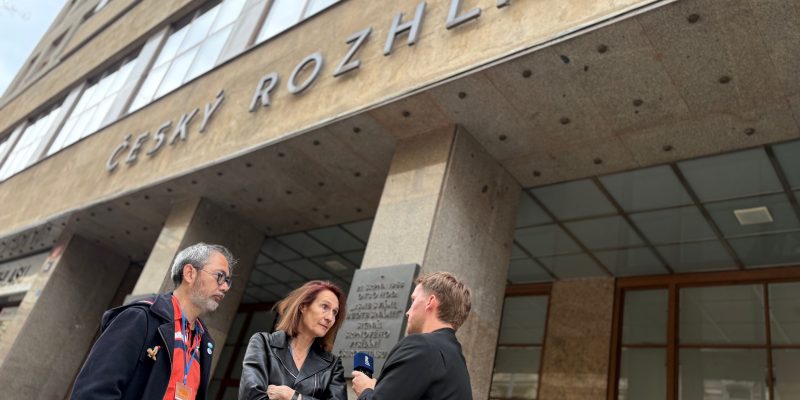
A new government bill which would overhaul the funding model for the Czech public media risks financially weakening the broadcasters, eroding safeguards for their financial independence and violating European Media Freedom Act (EMFA), the undersigned Media Freedom Rapid Response (MFRR) partners, the European Federation of Journalists (EFJ) and other media freedom, journalist and freedom of expression organisations warn today. Our organisations call on the European Commission to closely assess this bill regarding its compatibility with Article 5 of EMFA and to ensure that no reforms are undertaken which threaten the financial, editorial or institutional independence of the Czech public media.…


How to build a culture of safety in the media?

On 4 and 5 July 2022, the European Federation of Journalists (EFJ) is holding the workshop “How to build a culture of safety in the media? Media safety policy and safety training” at the Museum of Image and Sound in Hilversum, the Netherlands. The two-day workshop aims to share best practices on the culture of safety in media by examining existing media policy and initiatives as well as the safety awareness among unions and journalists. The event will be organised in partnership with the Dutch Journalist Association(NVJ) and the Museum of Image and Sound and funded by the European Commission.  …

Stars4Media 3rd edition: exchange and training programme call for application out

The third edition of the Stars4Media exchange and training programme is now open for media professionals from different EU countries who wish to develop new editorial products or test innovative ideas. The call for application will run until 30 June 2022. The programme is co-financed by the European Union, through the Creative Europe scheme, and implemented by a consortium of four partners: Vrije Universiteit Brussel (VUB), the project coordinator, Europe’s MediaLab (Fondation EURACTIV), the World Association of News Publishers (WAN-IFRA) and the European Journalism Center (EJC), in partnership with the European Federation of Journalists (EFJ). Building on the experience and…

French journalist for BFM TV Frédéric Leclerc-Imhoff killed in Ukraine

French BFM TV journalist Frédéric Leclerc-Imhoff was fatally injured today while covering the evacuation of civilians from the cities of Severodonetsk and Lyssychansk in Ukraine. His colleague Maxime Brandstaetter was slightly injured in the attack. The European Federation of Journalists (EFJ) expresses its condolences to the family and relatives of Frédéric Leclerc-Imhoff. The Luhansk regional governor said on 30 May in the afternoon that the Russians shelled a car that was on its way to pick up ten civilians. Frédéric Leclerc-Imhoff was sitting in the car covering the evacuation operation when a piece of shrapnel pierced the armoured vehicle and hit…

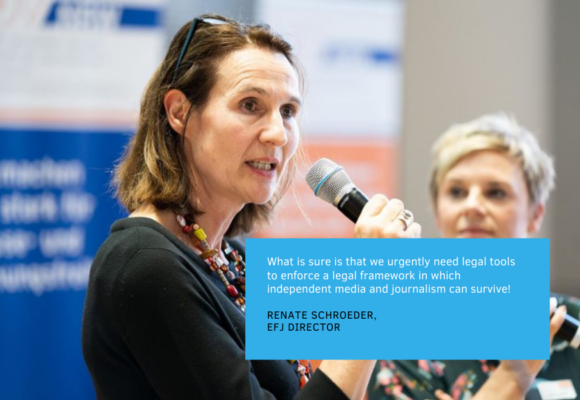
Renate Schroeder: Why we need a strong Media Freedom Act in Europe

This article by Renate Schroeder, EFJ Director was originally published on Vecer on 27 May 2022. Have you heard about the dire state of media freedom in Europe or in your country? Does this mean anything to you? Once a year, on World Press Freedom Day (3rd of May) we celebrate journalists’ vital contribution to democracy. We also draw attention to the increasing pressures, threats and attacks they face and call for their protection and support for the freedom, independence and pluralism of the media.   The death of 10 journalists and media workers in Ukraine since the start of the…

EFJ warns that EU legislation to prevent child abuse online would undermine protection of journalistic sources

The European Commission published on 11 May a proposal to fight against child sexual abuse online. According to the draft regulation, messaging applications would be required to scan all private communications, including encrypted messages. The European Federation of Journalists (EFJ) is concerned that the legislation could jeopardise the fundamental protection of journalistic sources. The European Commission’s proposal requires providers of electronic communications services “to detect, report and remove” child sexual abuse on the internet on both “public-facing” and “private interpersonal” communications services. According to the European Digital Rights (EDRi), the automatic scanning of everyone’s private communications is disproportionate and interferes with the right to…

Italy: Concern after authorities search Rai 3 editorial office and home of journalist

The European Federation of Journalists (EFJ) joined the partner organisations of the Media Freedom Rapid Response (MFRR) in expressing serious concern over the searches carried out by police at the offices of Rai 3’s investigative programme ‘Report’ and the home of investigative journalist Paolo Mondani. We urge the Italian Anti-Mafia Investigative Directorate (DIA) to provide assurances that the confidentiality of journalists’ sources will not be jeopardised and to reaffirm its respect for the principles of press freedom. The MFRR joins the Federazione Nazionale Stampa Italiana, the Unione Sindacale Giornalisti Rai and the Ordine Dei Giornalisti in raising alarm about the heavy-handed actions…

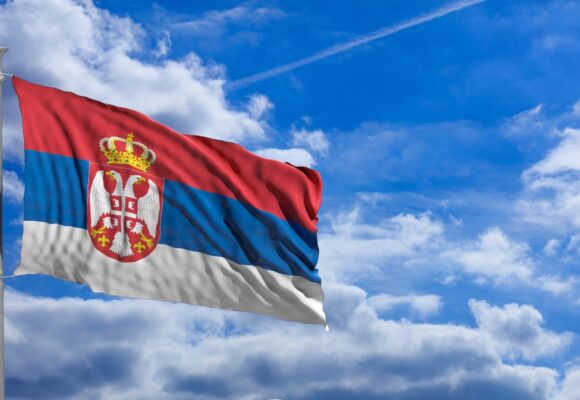
Serbia: Tendering process of national FTA TV licences must be open and transparent

The European Federation of Journalists (EFJ) joined the Media Freedom Rapid Response (MFRR) and the Independent Journalists’ Association of Serbia (NUNS) in expressing concerns about the lack of a transparent process for the allocation of national free to air (FTA) TV licences in Serbia and of a Development Strategy for radio and audiovisual media services. On 15th April 2022, Serbia’s Regulatory Electronic Media (REM) opened a tendering call for four national TV licences, which were reduced from the five frequencies previously available. We believe that the current allocation process lacks transparency. Broadcast frequencies are a limited resource that should be…

Ukraine: photojournalist Ihor Hudenko died in February

The Ukrainian photojournalist Ihor Hudenko, who had lost contact with his friends and family while in Kharkiv on 26 February, died on that day, according to his colleague, journalist Oleg Peregon. The city and its surroundings have been the site of intense fighting since the start of the invasion of Ukraine by the Russian Federation. On 24 February, shortly after the start of the invasion, Hudenko posted original photos and video of abandoned Russian tanks on his personal Facebook page. The journalist worked at the local TV broadcaster Glavnoe until 2016, and since then had made documentary films and contributed to…

RTV SLO Logo

Slovenia: Journalists at public broadcaster RTV voted for strike action

On Monday 23 May, Radiotelevizija Slovenija (RTV)’s unions’ committee will hold a strike to protest against the serious threat to the existence of public service broadcasting and its employees. The European Federation of Journalists (EFJ) supports the decision taken on 12 May with a majority of 96% of the voters among the Committee of Journalists’ Unions of RTV.  While on several occasions, EFJ denounced a violation of trade union rights, serious concerns over press freedom deterioration in Slovenia were also expressed in the  last Media Freedom Rapid Response report. In a press release the RTV strike unions’ committee, denounced the…

Media Freedom Rapid Response III (MFRR) will continue for 18 months

The European Federation of Journalists (EFJ) is pleased to announce that the consortium running the Media Freedom Rapid Response (MFRR) – consisting of the European Centre for Press and Media Freedom (ECPMF), ARTICLE 19 Europe, Free Press Unlimited (FPU), International Press Institute (IPI), Osservatorio Balcani Caucaso Transeuropa (OBC Transeuropa), and the EFJ – has been granted €1.95 million in funding for 18 months from the European Commission to continue its work to defend and support press and media freedom throughout all EU member states, candidate countries, and Ukraine. In 2020 and 2021, the consortium – which also included the Institute…

Turkey 2021 Media Monitoring Report: 80% of journalists think their work is increasingly worthless

The Turkish Association of Journalists (GCD) recently published its Annual Media Monitoring Report documenting the state of press freedom in Turkey for the year 2021. The report, funded by the Media 4 Democracy project, addresses a number of topics such as journalists’ safety and censorship, disinformation, the new internet regulation, the situation of imprisoned journalists and journalists’ current professional satisfaction. According to the Media Monitoring Report, “in 2021, no steps were taken for the betterment of the conditions troubling freedom of expression and the press in Turkey.” In particular, the decision to withdraw from the Istanbul Convention, to not implement the European…

Montenegro: SMCG launched new video series on collective bargaining

The Trade Union of Media of Montenegro (SMCG) just launched a new video series called “Dvije sindikalne” (“Couple of words on unions” in English) discussing the working conditions in Montenegrin media and the work of the unions. The project is part of the national actions carried in the framework of the COVID Recovery Fund project, which is funding capacity-building activities developed by European Federation of Journalists (EFJ) affiliates. Each of the ten episodes will offer insights into the trade union world. Using a combination of traditional and new journalistic formats, SMCG approaches the theme of working conditions from a new…

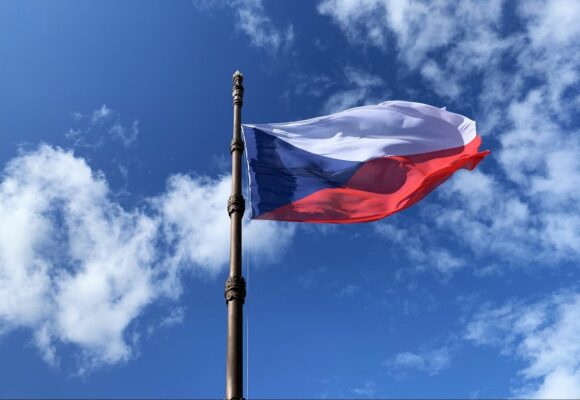
Czech Republic: Independence of public broadcasters must be insulated against future attacks

The European Federation of Journalists (EFJ) joined its partner organisations of the Media Freedom Rapid Response (MFRR) today in demanding a boost in press freedom to drive legislative reform for public service media in Czech Republic. Press freedom in the Czech Republic has undergone a welcome boost since the government of Prime Minister Petr Fiala came to power. The undersigned media freedom and journalists organisations today urge the new administration to use this momentum to push forward with amendments which will strengthen the institutional independence of Česká televize (Czech Television) and Český rozhlas (Czech Radio). Under the previous government, Czech Television came under…

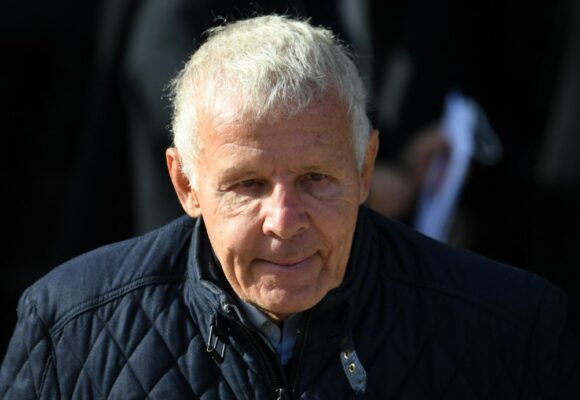
French TV news presenter faces allegations of rape

Twenty women have accused French journalist Patrick Poivre d’Arvor, also known as PPDA, of sexual harassment and abuse, including rape. The European Federation of Journalists (EFJ) calls on media companies to take the necessary preventive measures, especially with regard to freelancers, who are more exposed to the risk of sexual abuse. On Tuesday, the investigative website Mediapart interviewed 18 women openly accusing one of France’s best-known television news presenters, PPDA, 74, of sexual harassment and abuse – including rape. A further two alleged victims were named and filmed talking of their encounters with the television star separately. The majority of…

UK Court dismissed most of the defamation case against newspaper Realtid

The London Court decided on 11 May 2022 to dismiss most of the charges in a defamation case against the business news website Realtid, initiated by Swedish businessman Svante Kumlin. The European Federation of Journalists (EFJ) welcomed the court’s decision recognising that the defamation claim could not be tried in the British courts. The disputed articles were published in October and November 2020. In these articles, Realtid investigated the financing and financial dealings surrounding Kumlin’s company, Eco Energy World. During the investigation, the firm’s lawyers threatened to sue the journalists for defamation so that they would not continue their work.…

New podcast on media ethics: A case for the press council 

The press councils from Belgium, Finland and Germany released a joint podcast exploring two important cases that show what reporting standards like truthfulness and the protection of victims mean for everyday life reporting. The two episodes are available on Spotify and Apple Podcasts. Truthfulness, human dignity and corrections of mistakes: these are the main standards followed by most professional media in Europe. But what do these standards mean for everyday reporting? For example, how do journalists cover accidents and human tragedies without hurting the victims’ dignity? And how do they differentiate themselves from disinformation via social media?  The first episode entitled ‘A traffic…