Serbia: Ministers for European Affairs must urgently draw a red line on media freedom

EU Member States must show political leadership and join calls for the suspension of EU funds to Serbia to prevent the spiral of violence against journalists from escalating into deadly attacks, the European Federation of Journalists (EFJ) and nine undersigned organisations said on Friday in a series of letters sent to a group of Ministers for European Affairs across Europe. The organisations highlight the shocking numbers of physical, legal and online attacks against journalists as recorded on international monitoring platforms since November 2024, a level of persistent violence against media that is rare in any EU member state or candidate country. Since the…
Albania: EFJ/IFJ urge Parliament to reject online media law

UPDATE (19 December 2019): On 18 December, the Albanian parliament approved two controversial media laws, known as the “anti-defamation package”. 82 MPs voted in favour of the law, 13 against and 5 MPs abstained. We condemn these media law changes, which if they come into force, will result in the replacement of self regulation of online media with state regulation. Cosmetic changes made at the very last minute do not address all the concerns raised by the European Union, the Council of Europe (CoE) and CoE’s Human Rights Commissioner Dunja Mijatovic. We urge the president not to decree these changes as…

Albanian authorities pursue highly problematic media laws despite public outcry

We, the undersigned organisations, reiterate our call on the Albanian parliament not to approve the draft media laws known as the “defamation package.” Should the draft laws enter into force, they would introduce mandatory registration requirements for online media and create an administrative body with the power to fine, shut down online media and block foreign online media – all without a court order. They would also introduce state regulation of online media, which is contrary to international best practice guidelines on self-regulation. We note that the proposals are not in line with best practices on self-regulation and would have an adverse…

Turkey: Journalist found unconscious with brain haemorrhage

Turkish journalist İdris Özyol who had been beaten up in May was found unconscious in the street in Antalya on 2nd December and rushed to hospital where he was diagnosed with a brain haemorrhage. The EFJ and IFJ join the Progressive Journalists’ Association (CGD) and Disk Basın-İş in calling for a full investigation into the case and demanding the government act to ensure journalists’ safety. İdris Özyol, who is known for his criticism of government’s policies, writes for local daily Akdeniz’de Yeni Yüzyıl in the southern province of Antalya. On 15 May 2019, he was attacked by three assailants in front of his…

Call for proposals for Press and Media Councils in the European Union

The European Federation of Journalists together with its partners is seeking project proposals on initiatives to support activities of existing media self-regulation bodies. The objective of this call for financial support is to strengthen the capacities of self-regulatory bodies through support for their initiatives (1) on advocating, promoting and improving media freedom by preventing or avoiding government regulation through self-regulation ; (2) on promoting and improving ethical journalism ; (3) on offering and organising a body or complaint mechanism where citizens and organizations can make a complaint if they believe there is a violation of journalistic ethics. This call for proposals…

Call for respect for press freedom and journalistic independence in Europe

At the conference it is organising in Paris on 6 December, the Association of European Journalists (AEJ) joined forces with other organisations defending press freedom to call on European institutions and governments to adopt effective measures to protect the Fourth estate for the sake of democracy. The European Federation of Journalists (EFJ) joined the call, emphasising the need to avoid any procedure for certification or labelling of the media, on the pretext of combating misinformation, and the importance of supporting the International Convention on the Safety and Independence of Journalists and Other Media Professionals proposed by the International Federation of…

Press freedom in Turkey: Repression is all too real

By Tim Dawson Tim Dawson is a London-based journalist, and a member of the executive of the National Union of Journalists in the UK and Ireland. He traveled to Turkey from November 27-30 2019 to observe and monitor journalists trials as well as participate in an International Conference within the framework of the “Journalism is not a crime” EU-funded project implemented by the International Federation of Journalists (IFJ), the European Federation of Journalists (EFJ) and the Turkish Journalists Union (TGS). Eren Keskin is possibly the most striking defendant hauled before Istanbul’s criminal courts today. Dressed in black from head to…

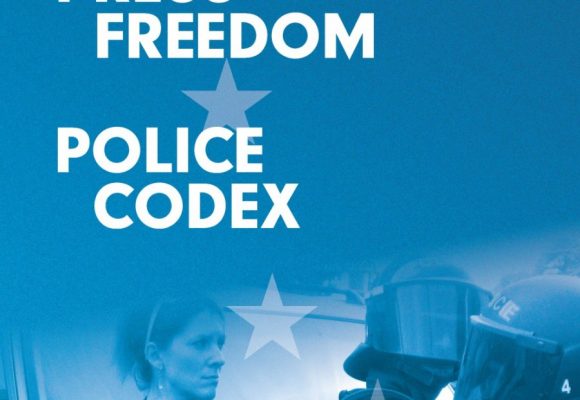
ECPMF launched the first ever Press Freedom Police Codex

Download the Codex The European Centre for Press and Media Freedom (ECPMF) launched its Press Freedom Police Codex on 4 December in Brussels. The Codex formulates in eight clauses how the police and journalists can work amicably together. The clauses are based on research into areas of conflict between the two professions from all over Europe. It addresses issues of police violence, surveillance, accreditation, protection of sources and confiscation of journalistic materials. With the launch of the  Codex, ECPMF aims to provide guidelines, establish and continue a dialogue between journalists and the police, to help the two professions work together…

MATTHEW MIRABELLI / AFP.

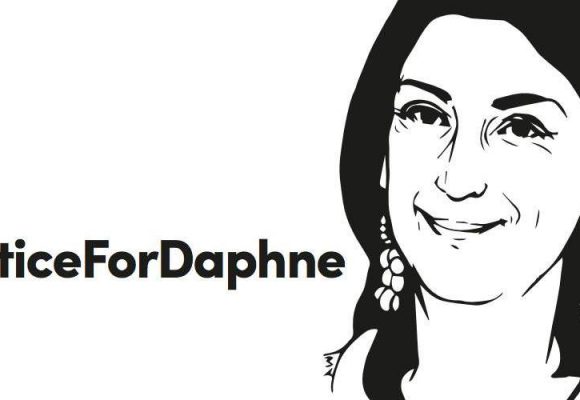
Malta: EFJ urges close scrutiny as the public inquiry into the assassination of Daphne Caruana Galizia begins

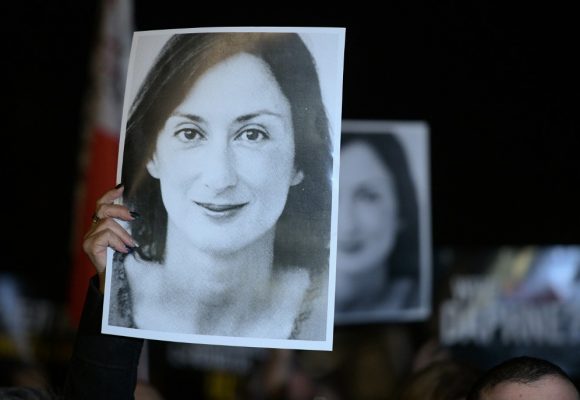
The long awaited public inquiry into the assassination of Daphne Caruana Galizia will begin this Friday 6 December at the Law Courts in Valletta. For two years, our organisations have supported the family of Daphne Caruana Galizia in calling for an independent, impartial and effective inquiry. The inquiry will address questions including whether the State knew or ought to have known of the risk to Daphne Caruana Galizia’s life; whether they failed to take measures to protect her life; and whether the State is fulfilling its obligations to protect journalists whose lives are at risk from criminal acts. We will…

New report: Hungary dismantles media freedom and pluralism

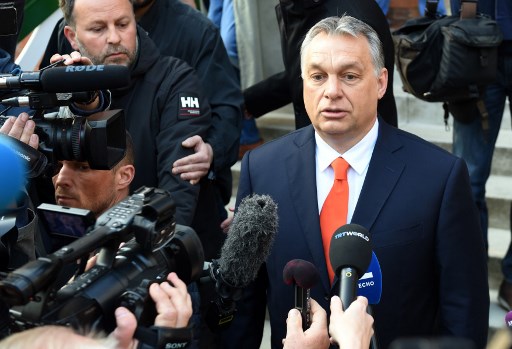
Download the report This report reflects the initial findings of the joint mission to Hungary carried out by the International Press Institute (IPI), Article 19, the Committee to Protect Journalists (CPJ), the European Centre for Press and Media Freedom (ECPMF), the European Federation of Journalists (EFJ), Free Press Unlimited (FPU) and Reporters Without Borders (RSF). These findings are additionally supported by the South East Europe Media Organisation (SEEMO). The mission took place from November 25 to 27, during which time the delegation met with a wide range of Hungarian journalists from Budapest and other cities as well as civil society…

Maltese journalists threatened and harassed while covering protests

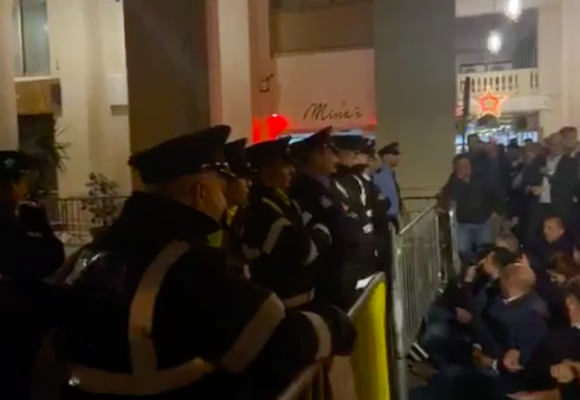
The European Federation of journalists (EFJ) has backed its member, the Institute of Maltese Journalists (IGM), in condemning the latest attacks on Maltese journalists covering public events. #Malta: Journalists threatened, harassed during course of their duties – The Malta Independent https://t.co/m9efR8l7lC — Ricardo Gutiérrez (@Molenews1) December 3, 2019 In a statement published by the IGM, it has denounced the violence against journalists. It IGM said: “We appreciate the work of the police who stopped the incident from escalating in Valletta, where a journalist was attacked by a government security officer. “However, it is unacceptable that journalists were attacked and being prevented…

Launch of the Press Freedom Police Codex

In Europe, the relationship between journalists and the police has not improved in recent years with an increase of protests and sometimes violent demonstrations. Research has revealed that journalists blame the police, the police blame journalists.  The European Federation of Journalists (EFJ) joined the European Center for Press and Media Freedom (ECPMF) which will  launch the Press Freedom Police Codex. Index on Censorship, Osservatorio Balcani e Caucaso Transeuropa (OBCT), Ossigeno per I’informazione, and the South East Europe Media Organisation (SEEMO) are the other partners. With this we aim to start, maintain and build good practice guidelines. For the discussion and…

Ukraine: Journalist attacked by unknown assailant

Ukrainian journalist Oleksandr Vlashchenko was assaulted on 30 November, in the port city of Mykolayiv. So far, the perpetrators have not been caught despite a police investigation. The International and the European Federation of Journalists (IFJ/EFJ) backed their affiliate – the National Union of Journalists in Ukraine (NUJU) – in calling for a full investigation into the case and for action to bring the attackers to justice. Oleksandr Vlashchenko, who works for the web site Novosti N, was on his way home when an unknown assailant sprayed liquid in his eyes and then hit him several times in the face and on the…

International organisations condemn further degradation of press freedom in Malta

The European Federation of Journalists (EFJ), together with seven other international organisations including ARTICLE 19, European Centre for Press and Media Freedom (ECPMF), Index on Censorship, International Federation of Journalists (IFJ), International Press Institute, Reporters Without Borders (RSF) and the Scottish PEN condemns the further degradation of press freedom in Malta and the continued intimidation of journalists. The statement We, the undersigned organisations, condemn the actions taken by Maltese authorities to restrict press coverage and public scrutiny of the ongoing investigation into the assassination of Maltese journalist Daphne Caruana Galizia. We call on Maltese authorities to uphold their international obligations to…

New possibilities for media freedom: joint call to Austria’s new government

Austria’s media freedom is under threat. Over the last two years, the policies of the previous government showed that the current media system can be influenced politically. In its first year under the government of Sebastian Kurz, Austria fell five places on the international press freedom ranking of Reporters Without Borders, to 16th place. According to a survey, nearly half of Austria’s journalists feel that media freedom is in a precarious state. Harassment and threats against journalists, both online and offline, also reached a new level under Kurz’s government. In addition, restrictions on journalistic access to information related to the…

UNESCO-EFJ project ‘Building Trust in Media in South East Europe and Turkey’ to start phase 2

The European Federation of Journalists (EFJ) will start in 2020 the phase 2 of the EU-funded project “Building Trust in Media in South East Europe and Turkey” in partnership with the UNESCO. Together with its members in Albania, Bosnia and Herzegovina, North Macedonia, Montenegro, Serbia, Turkey and Kosovo, the EFJ will organise three annual regional workshops to further develop national social dialogues and ensure the implementation of labour rights in the field of media in the region. Strong cooperation with the EFJ Labour Rights Expert Group (LAREG) will be continued to develop exchanges between journalists’ organisations from Eastern and Western…

Launch of the Pilot project ‘Media Councils in the Digital Age’

When journalists are playing a public watchdog role, who is making sure that journalists and media organisations adhere to their standards and ethics? With the digital transformation in the media and the widespread of disinformation, media self-regulatory framework plays an ever-important role in upholding standards in journalism while preventing state intervention through media regulations to stifle media freedom. The European Federation of Journalists (EFJ) together with a consortium of six European press councils and two universities journalists have launched a project “Media Councils in the Digital Age” with the aims to support the European models of media self-regulation through a network…