Turkey: EFJ and partner organisations condemn escalating use of “disinformation law” against journalists and call for its repeal

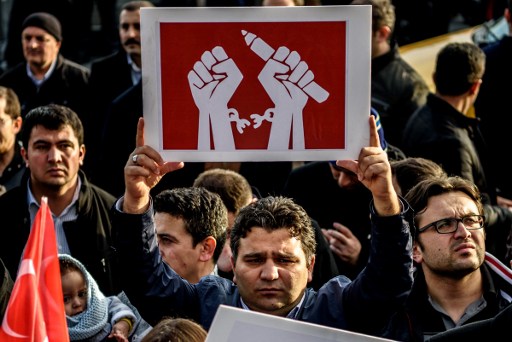
The European Federation of Journalists (EFJ) joins the undersigned organisations in strongly condemning the intensifying use of Article 217/A of the Turkish Penal Code — widely known as the “disinformation law” — to arrest, detain, and prosecute journalists, and calling on the government to repeal the provision immediately and release all journalists imprisoned under it. Since the law entered into force in October 2022, at least 83 journalists have been charged 114 times over disinformation according to news reports. The scale of Article 217/A’s use against journalists has been starkly illustrated in a recent article. The two journalists most frequently…
Italy: Several journalists facing threats related to their stories

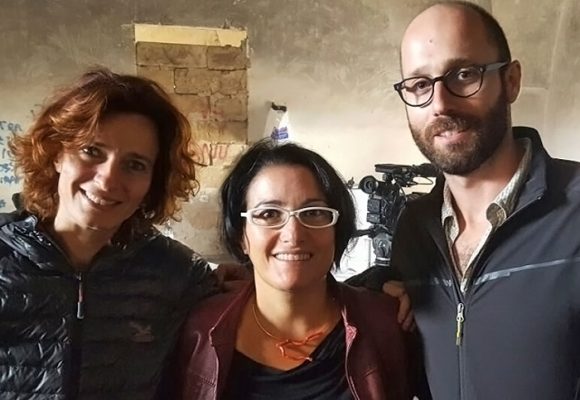
The European and International Federations of Journalists (EFJ/IFJ) have raised their concerns over the repetitive attacks and acts of intimidation against journalists in Italy in the last few weeks. They stand in solidarity with their Italian affiliate, the Federazione Nazionale Della Stampa Italiana (FNSI), and the Italian journalists who are experiencing those threats. On 12th of July investigative journalist Marilù Mastrogiovanni of Apulian newspaper Il Tacco was targeted with death threats flooding her work email. Il Tacco reported that this was not the journalist’s first case of intimidation, and that the level of protection for her and her family had been increased. The local authorities are investigating the…

Examining and assessing PSM editorial guidelines of the Western Balkans

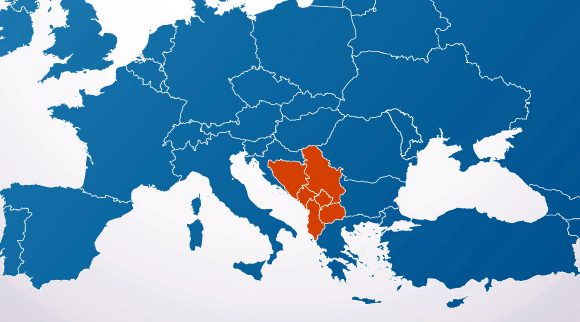
A new publication on editorial guidelines or codes of conduct in the public service media of the Western Balkans was drafted by Renate Schroeder, director of the European Federation of Journalists (EFJ), and presented during a launching event of the EU-funded project “Technical Assistance to Public Service Media in the Western Balkans” in Tirana, Albania, in June 2018. The project is managed by the International Federation of Journalists (IFJ) in close cooperation with the European Broadcasting Union (EBU), in collaboration with the EFJ, Austrian public broadcaster ORF, the Balkan Investigative Reporting Network and the Office of the Eurovision News Exchange…

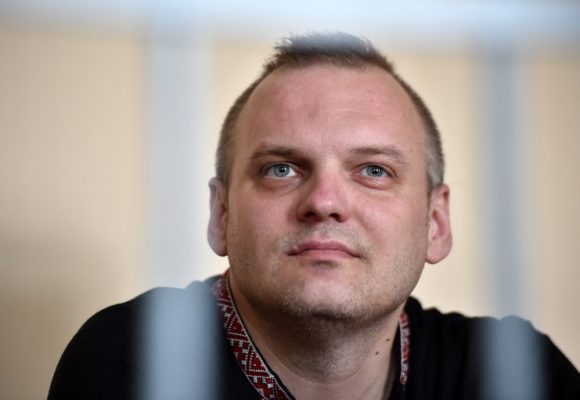
Belarus: Freelance journalist Dzmitry Halko sentenced to four years in low-security prison colony

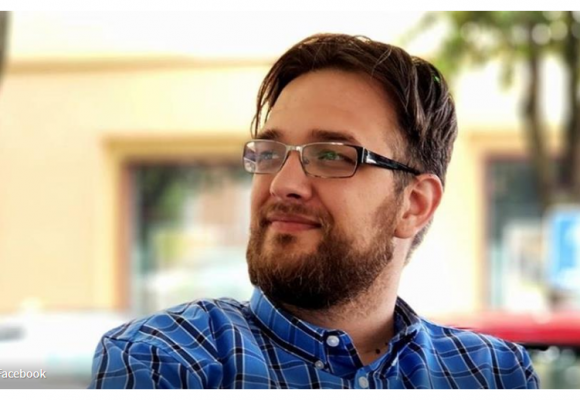
UPDATE 10.10.2018 Dzmitry Halko, the freelance journalist on trial after allegedly assaulting a police officer in November 2017, was sentenced to four years in a low-security prison colony and will have to pay a compensation of 850 Belarusian rubles to the victims, reports the Belarus Association of Journalists (BAJ). In July Halko appealed the decision and was released from pre-trial detention. However, yesterday the Minsk City Court ruled to send the journalist to a labor camp, upholding the 4-year prison sentence imposed on him this summer. The EFJ supports BAJ in strongly condemning the decision of Belarusian legislative authorities against the journalist Dzmitry Halko. ——————————————– Freelance journalist Dzmitry Halko…

Major questions about journalists in Portugal: Precarity, low wages, gender gap and early retirement

A survey in Portugal, performed by University Institute of Lisbon (ISCTE-IUL), aimed at analyzing the working conditions of Portuguese journalists, exploring the diversity of journalists, and identifying the main constraints and challenges. Almost 1 500 journalists were surveyed between 1st of May and 13th of June, 2016, with 78 questions on the current situation and their future, for the data to be comparable to international data. There are 6 161 journalists holding a professional licence or its equivalent in Portugal, according to The Comissão da Carteira Profissional de Jornalista (CCPJ), 16th March 2018, with 51.8% male and 48.2% female journalists. The survey…

“Words That Matter” – glossary by Cypriot journalists to address local issues

On 10th of July in Nicosia, the Office of the OSCE Representative on Freedom of the Media (RFOM) in cooperation with the Ethical Journalism Network (EJN), and several local journalists, including members of EFJ affiliates Basin-Sen and Union of Cyprus Journalists,  has published “Words That Matter“, a trilingual glossary in English, Greek, and Turkish, to list phrases and words, used by the journalists in communities, which may be taken sensitively. The glossary resulted from a common effort between the organisations to minimise hate speech in journalism, as well as trying to overcome the long-lasting tensions between Greek Cypriot and Turkish…

Turkey : Three newspapers and one TV station closed by decree-law

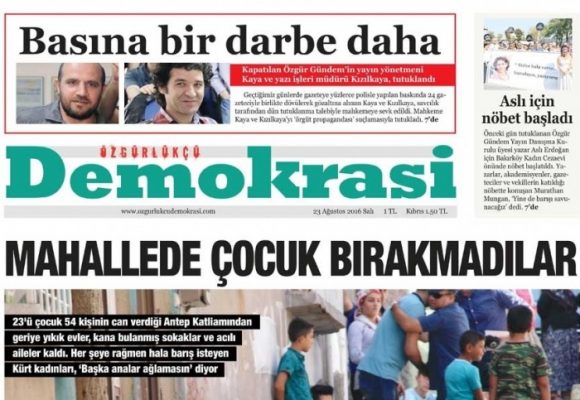
On July 9, 2019, the Turkish government issued a decree-law firing 18,632 civil servants due to their alleged ties to “terrorist groups” and closing 12 associations, three newspapers and one TV station. The decree also dismissed 199 academics, some of whom were among the signers of the Academics for Peace initiative, which called on the Turkish government to halt military operations in the country’s Southeast, which resulted in hundreds of deaths and some hundred thousand displaced people. Among the closed newspapers, Özgürlükçü Demokrasi had been seized by the government in March when trustees were appointed to the board. Özgürlükçü Demokrasi,…

Turkey: Zaman journalists and columnists heavily sentenced to prison

On July 06, 2018, six journalists and columnists have been heavily sentenced to prison by a court in Istanbul for alleged membership to an armed illegal terrorist organisation. The suspects were all working for the late Zaman daily newspaper banned by the Turkish authorities following the failed coup attempt of July 15, 2016. “Our colleagues from Zaman newspaper did not take part to the coup attempt and have condemned it afterwards. Prosecuting workers solely on the basis of their work employment is not ruling based on facts but a politically motivated decision. The Turkish authorities must drop all the charges…

Ukraine: Draft bill to allow blocking of Internet sites without a court order

On 4 July 2018, the Ukrainian Parliament’s Committee on security and defence approved a draft bill that would enable prosecution and the National Security and Defence Council to block Internet sites they deem threatening to national security without a court ruling. According to the bill, Internet sites, can be blocked temporarily if they “threaten national security” or “have an impact on decision-making, or the action or inaction, of national or local government bodies, officials of these bodies, associations of citizens, or legal entities”. Internet providers would have to purchase equipment that would allow the security services to monitor traffic and…

European Authors call on MEPs to maintain their strong support to authors’ rights

The European organisations representing authors have acknowledged the decision of the European Parliament to postpone the adoption of its position on the Copyright Directive. The Authors’ Group now calls on MEPs to maintain their strong and cross-party support to reinforce the contractual position of authors in Europe so that the Copyright Directive can soon bring concrete benefits to authors’ rights in the European Union. The Authors’ Group represents more than half a million writers, composers, journalists, film directors, screenwriters and songwriters in Europe. Today, the European Parliament decided to postpone the adoption of its position on a Proposal for a Directive…

Russia passes new law to label individual journalists as “foreign agents”

The European Federation of Journalists  (EFJ) has criticised a new law passed on 3 July by the Russian State Duma’s information and communication committee to label individual journalists as “foreign agents”. Back in November 2017, the EFJ had heavily criticised Russia for adopting the so-called “foreign agent media law” allowing the authorities to label foreign media organisations as “foreign agents”. The new law goes even further. According to media reports, it will allow the authorities to label journalists and bloggers as “foreign agents”. In addition, it will also allow the authority to blocked websites or other media without a court ruling.…

Journalists and press publishers agree on new wording on publishers’ right

The European and the International Federation of journalists, the world and European largest organisations of journalists, have agreed with European news publishers on a new wording to ensure a clear and non negotiable share for journalists of the benefits deriving from the future publishers’ neighboring right, a right that has been introduced in the Proposal for a Directive on copyright in the digital single market which will be voted in the plenary in the European parliament tomorrow, 5th July. The federations urge Members of the European Parliament to give mandate to the legal affairs committee to negotiate on behalf of the…

Turkey : Ali Ergin Demirhan is a journalist, he needs protection not prosecution

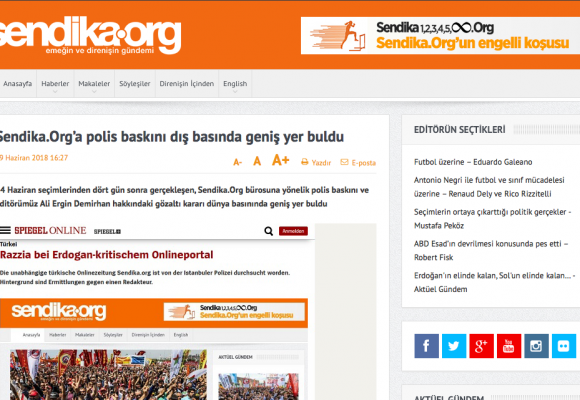
The European Federation of Journalists (EFJ) has today been alarmed by its Turkish affiliate DISK-Basin IS about the police operation that took place in Istanbul on June 28, 2018 against the offices of Sendika.org (Turkish online media portal specialised in labor issues) and targeting specifically our colleague journalist Ali Ergin Demirhan. He is a known figure as a former delegate during the last EFJ Annual Meeting in Lisbon in June 2018 and he went back to Turkey after a successful participation to the international conference. According to recent media reports, Ali Ergin Demirhan is charged for doing propaganda on behalf of an…

Hrvoje Bajlo @ CJA

Croatian journalist Hrvoje Bajlo physically assaulted in Zadar

UPDATE 27.07.2018 An indictment was brought against the attacker of journalist Hrvoje Bajlo, former footballer Jakov Surać by the Zadar district attorney. Jakov Surać was accused of causing severe physical injuries and death threatening, considered to be crimes against life and body, and against freedom of a person by the court. The indictment also states that the attack was connected to the journalist’s work. —————————– Croatian journalist Hrvoje Bajlo was attacked on 24th of June at a parking lot in town of Zadar by a former NK Zadar football player and businessman Jakov Surać. Physical assault was preceded by insults directed towards work of Bajlo, followed by threats to…

Van crashed into office façade of Dutch newspaper De Telegraaf

A van was intentionally crashed into the office building of one of the largest Dutch daily newspapers De Telegraaf located in Amsterdam, at early hours of Tuesday morning, 26 June. Nobody was hurt during the crash, Dutch police stated in a tweet. It is not the first incident of this nature, as last Thursday, 21 of June, a man was arrested after an incident in the Sloterdijk area of Amsterdam, where a man fired an anti-tank weapon into a building of media organisations. The Dutch media organisations has been under threat from organised crime for some time now, with two…

Ukraine needs a national action plan for the safety of journalists

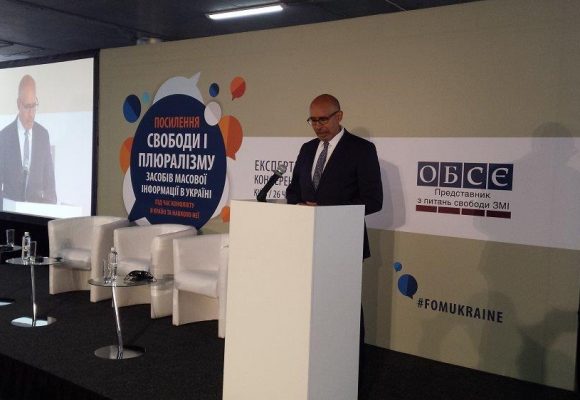
The European Federation of Journalists (EFJ) called on the Ukrainian government to launch a national action plan for the protection of journalists, in cooperation with Ukrainian journalists’ unions. Ricardo Gutiérrez, General Secretary of the EFJ, attended the OSCE expert conference, organised in Kiev, on 26 June, by the OSCE Representative on Media Freedom, Harlem Désir. Pointing out the deterioration of media freedom in the country, since 2015, Gutiérrez called on Ukrainian authorities to launch an action plan for the safety of journalists, together with all the relevant stakeholders, including the EFJ affiliates in the country, the National Union of Journalists…

New project to reform Public Service Media in the Western Balkans kicked-off in Albania

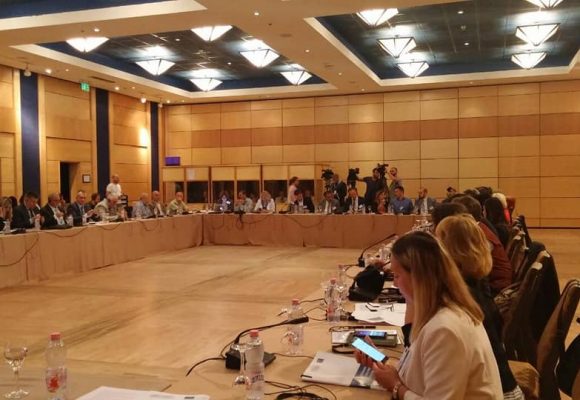
One of the priorities in the Western Balkans is to transform Public Service Media from state media into a genuine service for citizens. To facilitate this reform the European Union invested 1.5 million EUR through the project “Technical Assistance to Public Service Media in the Western Balkans”, which has been promoted at a two-day kick-off conference in Tirana. The conference gathered around 60 participants including representatives of international organisations, PSM directors and senior officials, political decisionmakers and representatives of NGOs and broadcasting regulatory bodies from Albania, Bosnia and Herzegovina, Kosovo*, FYR Macedonia, Montenegro and Serbia. Reminding of the negative assessments…