Kosovo: Ethical media audits and guidelines for quality journalism

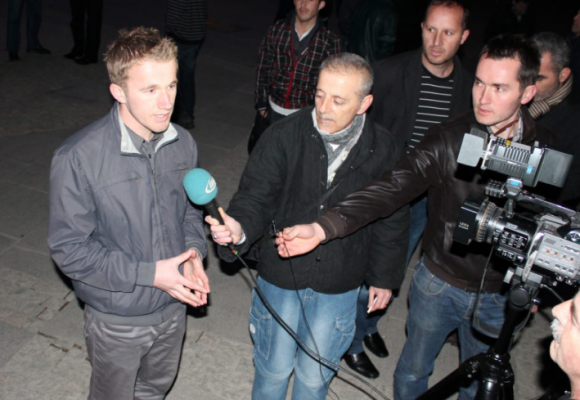
This report arises from a visit to Prishtina and covers a series of interviews and meetings with Kosovo media leaders and regulatory bodies to develop draft guidelines for ethical audits and good governance at media enterprise level. In line with the working programme for 2016 the EJN has begun to prepare materials to perform internal audits (these are attached). The initial material has been circulated to local media selected for co-operation: Koha Ditore, Zëri, Insider Online Agency, Kosovo 2.0 and Radio Television Kosova. The meetings also examined the current media situation and the major challenges for ethical practice and good…
World Copyright Day: Outlaw unfair contractual practices!

Legislators must take concrete steps against unfair contractual clauses in their laws. This is the message put across by the European Federation of Journalists (EFJ) and the International Federation of Journalists (IFJ) to mark World Copyright and Book Day tomorrow 23 April. The organisations warn against the continuing trend developed by media companies to use rights- grabbing contracts. Journalists who sign those contracts not only lose the right to use their works autonomously, but also the (moral) right to protect the integrity of their works. These practices allow for the same work to be used many times for one single payment…

Debate – “I can’t write that”: Self-censorship in European media, 2 May 2016 in Brussels

The European Federation of Journalists (EFJ) together with the Friedrich Naumann Foundation for Freedom will organise a debate on self-censorship in European media on 2 May in Brussels. If an internet search has the potential to land a journalist on the blacklist of security services or if a reporter cannot guarantee for the anonymity of sources, free reporting is in danger. The same goes for journalists who have to pick their words carefully in order to secure their media company’s advertisement revenue. In several Central European states and in Europe’s neighborhood, particularly in Turkey, the government is tightening its grip on media companies.…

Foreign press correspondents increasingly banned from Turkey

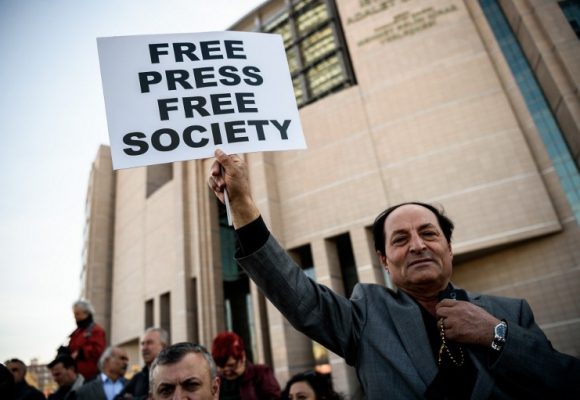
The European Federation of Journalists (EFJ) has today condemned the entry ban imposed by Turkish authorities against Russian journalist Tural Kerimov, the Turkey bureau chief for Sputnik news agency, who “was stopped by a border control officer who said the journalist was flagged as persona non grata by the Turkish authorities”. Turkish authorities seized Kerimov’s press card as well as his residence permit before sending him back to Russia. Russian Union of Journalists (RUJ, EFJ affiliate) has immediately condemned Kerimov being deported from Turkey. RUJ Secretary General and EFJ Vice-President, Nadezda Azhgikhina, made the following statement: “The rights of the…

Macedonia: five journalists beaten by police during protests

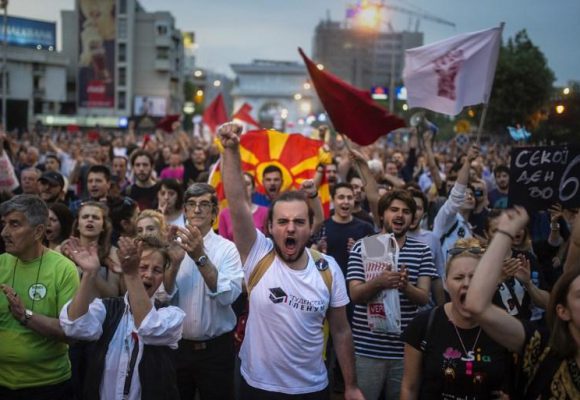
A journalist and four photo reporters were gravely injured by armed police forces on 13 April in the capital, Skopje, while covering an anti-government rally, IFJ and EFJ Macedonian affiliates SSNM and ZNM reported. The protests were sparked by President Gjorge Ivanov’s dual announcement of early elections and a halt to the inquiry into the wiretapping scandal that broke in February 2015 when it was alleged the government was illegally wiretapping over 20,000 people including journalists. Thousands of protesters took to the streets of Skopje, demanding the President either revoke his decision or resign. The Trade Union of Macedonian Journalists and…

Germany prosecutes a comedian on Turkey’s request

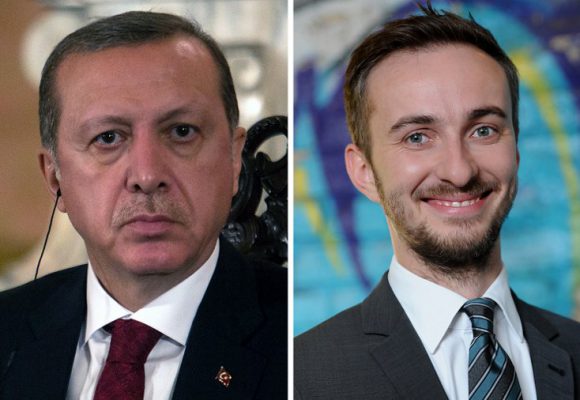
The DJV (Deutscher Journalisten-Verband) and Dju in ver.di (Deutsche Journalistinnen und Journalisten Union in ver.di) (EFJ affiliates in Germany) critised today (15/04/2016) the declaration of German Prime Minister Angela Merkel regarding the request of the Turkish President, Recep Tayyip Erdogan, to file a criminal complaint against Germany’s most popular comedian Jan Böhmermann. “This decision of the Chancellor would not have been necessary because the Turkish President Erdogan has already filed a criminal complaint with the public prosecutor in Mainz” DJV Chairman Frank Überall said. Ms Merkel had previously announced that the German Federal Government would give an authorization to prosecute…

Adoption of the Trade Secrets Directive by the European Parliament: Investigative journalism must be guaranteed

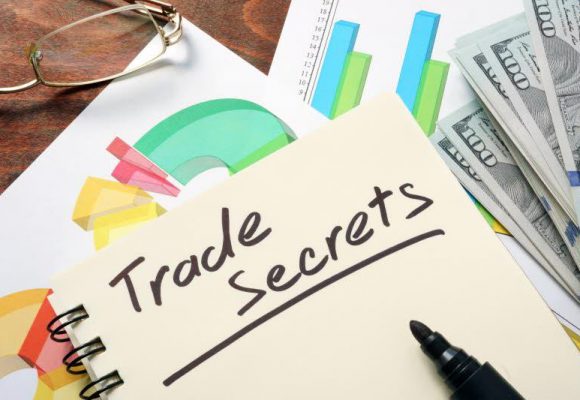
Today, the European Parliament adopted the Directive on the protection of Trade Secrets. European journalists and media associations are concerned that this Directive could put journalists at risk therefore limiting their ability to investigate and report about businesses. This comes at a time when the “Panama Papers” revelations have reaffirmed the essential role that journalists, whistleblowers, and media play in informing citizens about issues of public interest. The European Federation of Journalists (EFJ), Reporters Without Borders (RWB), the European Magazine Media Association (EMMA), the European Newspaper Publishers’ Association (ENPA) and the European Broadcasting Union (EBU – UER) take note of…

EFJ supports ECPMF actions for media freedom in Hungary

Hungary’s Prime Minister Viktor Orban is under fire, with protest letters from the European Centre for Press&Media Freedom (ECPMF) being delivered to his embassies and consulates across Europe on 14 April. The European Federation of Journalists (EFJ) has joined today the ECPMF in its action for media freedom in Hungary. “We appreciate the ECPMF action towards the Hungarian Prime Minister who consistently since 2010 has attacked media freedom in Hungary. Growing government pressure has led to growing self-censorship among journalists. A rule of law procedures like in Poland should have been likewise introduced in Hungary, if the EU wants to be…

Council of Europe adopts guidelines to protect journalists

The Council of Europe today adopted a set of guidelines aimed to ensure the protection of journalism and the safety of journalists in its 47 member states. In a Recommendation supported by the European Federation of Journalists (EFJ), the Committee of Ministers – the organisation´s decision-making body – encouraged states to review their national legislation and practice concerning media freedom to make sure they are in conformity with the European Convention of Human Rights. Secretary General Thorbjørn Jagland said: ”Journalists and free media play an essential role in any functioning democracy. They must be allowed to scrutinise those in power and…

Register for #WPFD – Difference Day 2016 in Brussels

The European Federation of Journalists (EFJ) will join a group media partners and NGOs to launch the World Press Freedom Day events in Brussels on 3 May at the Centre for Fine Art. The day will start with a keynote from Commissioner Günther Oettinger from the European Commission emphasizing that Europe is a strong supporter for freedom of speech. Among a series of activities and debates, the EFJ will gather a panel of women journalists who will share their views on the recent evolution in Turkey in terms of freedom of the press and their role as journalists. A second debate will focus on a…

European Parliament: Media Pluralism and diversity

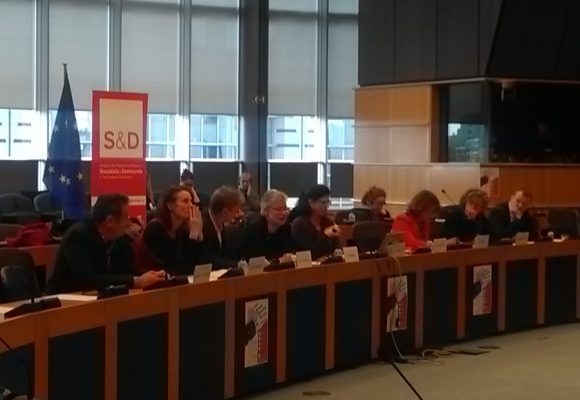
The European Federation of Journalists (EFJ) was invited by the Group of the Progressive Alliance of Socialists &Democrats in the European Parliament to a seminar on Diversity in Media and Culture Versus Convergence  on Thursday 7 of April. Ms Maria Joao Rodrigues, S&D Vice President and the chair of the Culture Committee Silvia Costa introduced the seminar highlighting the group’s priorities for pluralism, culture, media and communication as major sources of development and as a way to integrate European citizens within the European public sphere. Dr Elda Brogi from the Centre for Media Pluralism and Media Freedom (CMPF) exposed the…

From State Media to Public Service Broadcast

Speech by Mogens Blicher Bjerregård (EFJ President) The European Partnership countries in former Soviet states must realize that they in reality have to replace their state media by public service media independent from government Independency of media in the so-called partnership countries from Caucasus to Belarus, Ukraine and Moldova was on the agenda 11th April 2016 at a conference set up by the Council of Europe, hosted by UK Parliament at Portcullis House. I was on the speakers list and should deliver a speech about public broadcast. I emphasized and repeated what a previous panelist has said, that it is important to…

Swiss journalists campaign for collective agreements

Swiss Employment Law is designed liberally and the protection of employees is quite weak compared to other countries. In Switzerland, due to the different circumstances in each language area, the working conditions in the media industry vary from one area to another. While a Collective Agreement for journalists does exist in the French-speaking part of Switzerland, journalists in the German- and Italian-speaking parts have been working without one since 2004 and are therefore constantly facing the consequences of the lack of protection. However, there is reason to hope that this long lasting state of affairs may come to an end…

LAREG+ to monitor journalists labour conditions in Europe

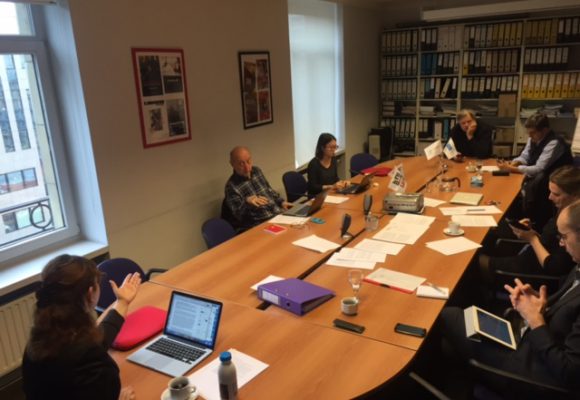
Despite the travel difficulties to Brussels following the attacks of 22 March 2016, members of the Labour Rights Expert Group (LAREG) of the European Federation of Journalists (EFJ) continued their meeting in Brussels to discuss the evolution of labour conditions for journalists and media workers in Europe. Thanks to a new EFJ project entitled Building Trust in media in South East Europe and Turkey financially supported by UNESCO and the EU, the LAREG meeting provided a unique opportunity to exchange views between EU and non-EU participants from South Eastern Europe of the EFJ members and discuss recent developments in the media sector…

Croatia: Attack on well-known journalist Ante Tomić

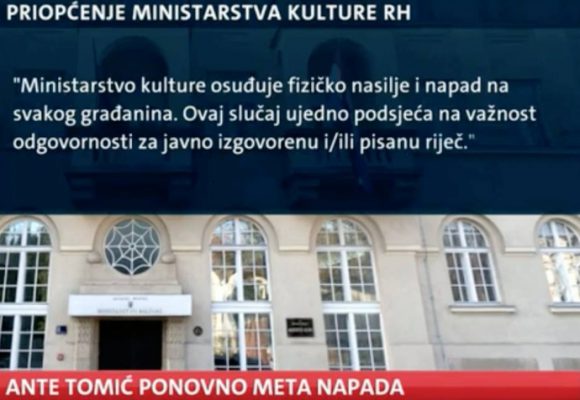
The European Federation of Journalists together with its affiliate in Croatia, the Croatian Journalists’ Association (CJA) condemns the verbal and physical attack on Ante Tomić, well-known journalist and writer, in the very center of Split. CJA congratulated the police for its quick response arresting two attackers. Meanwhile, however, the Culture Ministry responded with a quite unusual and disgraceful statement in which it seemed to give legitimacy to the attackers, report Croatian media on April 3, 2016. The Ministry sent this official statement: “The Ministry of Culture condemns physical violence and attacks on all citizens. At the same time, this case…

Russia: veteran journalist stabbed to death

Veteran journalist Dmitry Tsilikin was found killed in his apartment in Saint Petersburg on 1 April. The IFJ/EFJ condemn the killing and ask Russian authorities for prompt investigation into the murder. “This is a great tragedy for the entire journalistic community, because he was a very well-known, great journalist who wrote on culture and art,” St. Petersburg Union of Journalists chairwoman Lyudmila Fomichev said. According to media reports, Dmitry Tsilikin, 54, received multiple stab wounds. He is said to have died at least two days earlier. A laptop and a mobile phone are missing from the apartment. Tsilikin had returned from a…