Turkey: EFJ and partner organisations condemn escalating use of “disinformation law” against journalists and call for its repeal

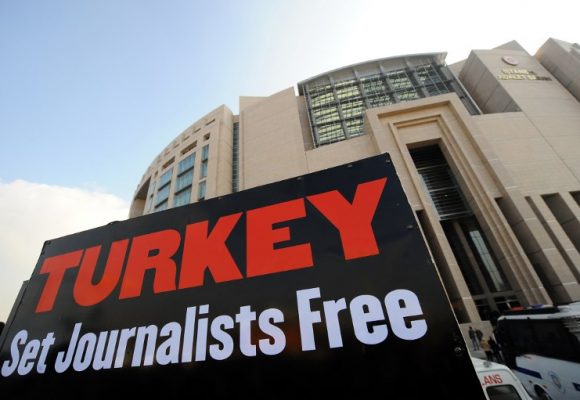
The European Federation of Journalists (EFJ) joins the undersigned organisations in strongly condemning the intensifying use of Article 217/A of the Turkish Penal Code — widely known as the “disinformation law” — to arrest, detain, and prosecute journalists, and calling on the government to repeal the provision immediately and release all journalists imprisoned under it. Since the law entered into force in October 2022, at least 83 journalists have been charged 114 times over disinformation according to news reports. The scale of Article 217/A’s use against journalists has been starkly illustrated in a recent article. The two journalists most frequently…
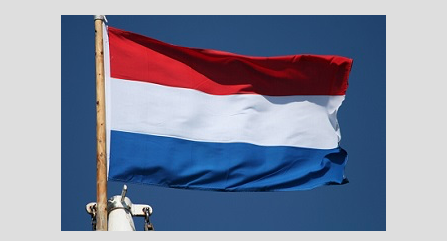
Netherlands: New ‘Source Protection Act’ finally enters into force

On 1st October, the Source Protection Act in Criminal Cases has finally become effective in the Netherlands. The law provides strengthened protection for the confidentiality of journalists’ sources, which have been recognised in several cases as an essential part of freedom of expression by the European Court of Human Rights. The European Federation of Journalists (EFJ) joined its Dutch affiliate the NVJ in welcoming the law, defined by NVJ General Secretary Thomas Bruning as “necessary to the correct functioning of journalism”. With the Source Protection Act, there will always be a preliminary consideration by a judge before the police can have access to the sources data…

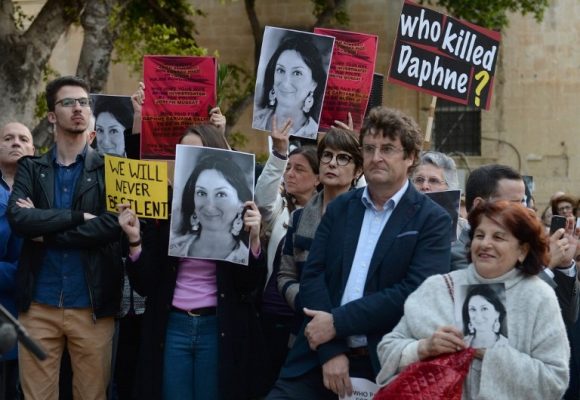
Murder of Daphne Caruana Galizia: EFJ and FNSI join Malta mission

The European Federation of Journalists and its Italian affiliate FNSI will join a group of international press freedom and freedom of expression organisations from October 15-17 on a mission to Malta. The group will support local civil society actions marking the one-year anniversary of the death of investigative journalist Daphne Caruana Galizia, and conduct fact-finding into the case and broader press freedom issues in the country. The group has requested meetings with government officials, including Prime Minister Joseph Muscat, as well as a wide range of civil society stakeholders. The EFJ will be represented by Anna Del Freo (FNSI), member…

Turkish court upheld aggravated life sentences for journalists

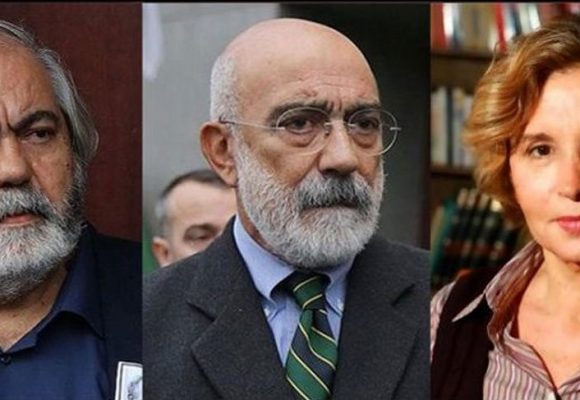
On 2 October 2018, the Istanbul Court of appeal upheld aggravated life sentences of six suspects, including journalists, over terrorism charges. Nazlı Ilıcak, Ahmet Altan, Mehmet Altan, Fevzi Yazıcı, Yakup Şimşek and Şükrü Tuğrul Özşengül were convicted for attempting to overthrow the constitutional order, reported Anadolu Agency. All suspects were accused of being linked to FETÖ, the group which is widely believed by Turkish authorities to have orchestrated the defeated coup of July 15, 2016 that killed 250 people and injured nearly 2,200 others. The journalists had appealed to the high court for their release but the court of appeal upheld their sentence.…

Hunger strike deteriorating Croatian journalist Domagoj Margetić’s health

The European Federation of Journalists (EFJ) is very worried about the deteriorating medical condition of Croatian journalist Domagoj Margetić who has been on hunger strike since 6 September 2018. Domagoj Margetić is a journalist investigating crime and corruption in Croatia and is editor of „No censorship“ show at TV Mreža. Over the last several years, he has reported many death threats, attacks against his property as well as physical attacks, one of them qualified as attempted murder. According to the Croatian Journalists’ Association (CJA), Margetić and his family have suffered intensified pressures since August 2018, such as blackmailing and death threats, which triggered…

Mafia aggressor against an Italian journalist condemned

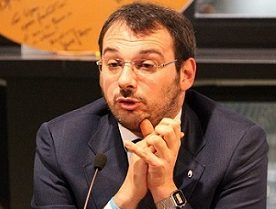
On 28th September, the Italian court of Ragusa sentenced the aggressor of Paolo Borrometi, a 44 years old freelance investigative journalist and the president of Articolo 21, the Italian association promoting freedom of expression. Venerando Lauretta was sentenced for the death threats he made against the journalist, aggravated by the mafia method, to one year and six months imprisonment. Lauretta, regent of the mafia clan Carbonaro-Dominante of Vittoria (Ragusa), begun to threaten Borrometi after identifying the journalist as responsible for the opening of investigations against his person. Paolo Borrometi is the editor of anti-mafia investigative website LaSpia.it, where he reports on the Sicilian…

EFJ rejects the Platforms’ so-called “Code of Practice” on disinformation

Members of the Sounding Board of the EU Multistakeholder Forum [1] on Disinformation Online – which includes the EFJ – have delivered their final opinion on the new so-called ‘Code of Practice’ drafted by the online platforms (Google, Facebook, Twitter, Mozilla and several advertisement organisations). The Sounding Board, comprised of representatives of the media, civil society, journalists, consumer organizations, fact-checkers and academia, thanked the Commission and Commissioner Mariya Gabriel for convening the Forum and for the opportunity to comment on the so-called ‘Code of Practice’ drawn up by the online platforms. As demonstrated in the Sounding Board’s detailed and written…

Austrian Interior Ministry attempts to restrict freedom of press

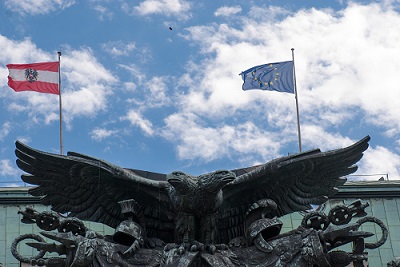
The intention of the Austrian Interior Ministry to restrict communication to “critical media” has been revealed in an email leaked to the press on Tuesday 25 September. In the four pages email, top ministry spokesman Christoph Pölzl, explicitly demanded regional police to “restrict communication with these media to only the most necessary (legally required) degree”. The European Federation of Journalists (EFJ) joined its affiliate in Austria, GPA-djp and Younion, in condemning this attack on press freedom. The media labeled as “critical” include the dailies Der Standard and Kurier as well as the weekly Falter. According to the Ministry, they have “operated…

The EU General Court denies a group of journalists access to MEPs’ expenses

The General Court of the European Union ruled on 25 September 2018 that MEPs expenses can remain secret. The highest court confirmed the European Parliament’s refusal to give access to documents related to MEPs’ expenses to a group of journalists, claiming that this would undermine MEPs’ personal privacy. The European Federation of Journalists (EFJ) condemns this decision and renews its call to improve transparency and access to information in the European Union. The request was forwarded to the European Parliament (EP) in 2015 by a group of 29 journalists, who wanted to access information on the MEPs’ spending records. According to Euractiv,…

New brochure examines whistleblowing from the journalists’ perspective

The European Commission published on 23 April 2018 a proposal for a directive on the protection of persons reporting on breaches of Union law. The European Federation of Journalists (EFJ) welcomed this initiative, while warning that the legislative text doesn’t fully meet the criteria to establish a robust protection against retaliation for whistleblowers at the European level. In a brochure published in September, Quentin Van Enis, a legal expert specialised in media, lecturer at the University of Namur and member of the Belgian press council (CDJ), analysed for the EFJ the draft directive from the journalists’ perspective. The author highlighted the…

President of the Croatia Journalists’ Association threatened with dismissal

UPDATE 01.10.2018: The Croatian Journalists’ Association (CJA) published an open letter  entitled “CJA’s appeal for freedom of journalism” calling for an urgent public response for public broadcaster HRT and the emblematic case of Hrvoje Zovko. The International and European Federations of Journalists (IFJ and EFJ) joined today their Croatian affiliate, Croatia Journalists’ Association (CJA), to strongly condemn the launching by the Croatian public broadcaster HRT of a procedure to fire journalist Hrvoje Zovko, president of CJA. On 12 September, Hrvoje Zovko decided to resign as deputy editor-in-chief of public TV channel HTV4. Hrvoje Zovko has been a journalist and an editor…

Nordic Freelance conference: solidarity to support freelance journalists under attack in Belarus

The Nordic Freelance Conference 2018 took place this year in Malmö, Sweden. The Frilans Riks, the freelance section within the Swedish Union of Journalist (SJF), organised a two day conference focusing on threats against freelance journalists in particular from right wing extremists, rise in self-censorship, dialogue with the police, media situation in Belarus, as well as the power structure of the big tech companies (“GAFA”). EFJ Director Renate Schroeder outlined the work of EFJ and its Freelance Expert Group (FREG) with a special focus on its advocacy work in Brussels for improving freelance rights and monitoring increasing threats against (freelance)…

Media censorship in Belarus: “it is time for the EU to react”

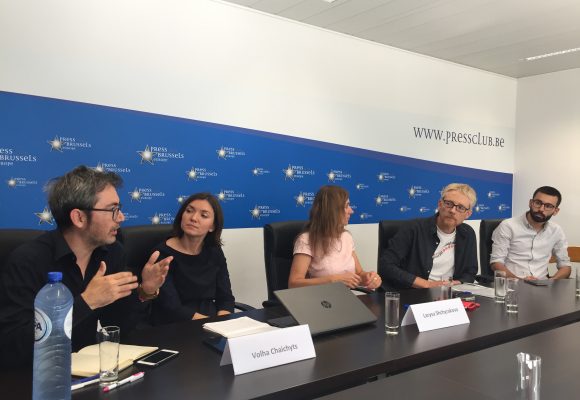
Freelance journalists in Belarus face increasing threats, pressure and censorship and this is a concern Europeans should share, said Belarussian journalists Larysa Shchyrakova and Volha Chaichyts at a press conference held in Brussels, on Tuesday 18 September. The event was jointly organised by the International and European Federations of Journalists (IFJ-EFJ) together with their affiliate the Belarus Association of Journalists (BAJ). Larysa Shchyrakova and Volha Chaichyts are two Belarusian freelance journalists, working for Belsat TV, a ten-year-old television channel based in Warsaw, Poland. During the conference, the two female journalists exposed several problems they face in their country that they…

Danish public broadcaster DR to cut 400 jobs

Danish public broadcaster DR will cut between 375 and 400 jobs and close down three TV channels and three radio channels, as a consequence of the package of media reforms agreed by Denmark’s governing right-wing coalition. DR will lose 20% of its funding over the next five years. The European Federation of Journalists (EFJ) joins its affiliate, the Danish Union of Journalists (DJ), in strongly condemning these unprecedented layoffs in what some are calling an act of “revenge” by the Danish government. A significant driver of the cuts is the right-wing populist Danish People’s Party (DF), which is a supporting partner of the…

EFJ condemns Italian government threat to cut indirect state funding to newspapers

Italian government threatens to cut indirect state funding to the press, accusing newspapers of “polluting the debate”. The International Federation of Journalists (IFJ) and the European Federation of Journalists (EFJ) join their affiliate the Federazione Nazionale Stampa Italiana (FNSI) in strongly condemning these threats and expressing serious concerns over the press situation in Italy. The government’s announcement was made on 12 September and throughout last week by Luigi Di Maio, head of the populist Five Star Movement (M5S) and key figure in Italy’s government. On his Facebook account, the deputy prime minister threatened the press in a post saying that…

Turkey: Austrian journalist Max Zirngast arrested in Ankara

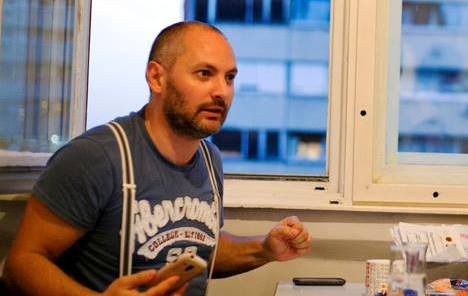
UPDATE 24.09.2018: On 21 September, Max Zirngast has been formally arrested with the accusation of  being a member in the leftist TKP/Kıvılcım group, which Turkey has banned and considers a terrorist organization. Austrian journalist Max Zirngast has been detained together with two other Turkish citizens, in the early hours of 11 September by anti-terror authorities in his apartment in Ankara, Turkey. The reason for detention has not been published yet, but according to media reports, he could have been detained on charges of “support for a terrorist organization” and because of his “political publications”. Allegations might be related to his civil and political activism against…

Hungary should be sanctioned for violating the Rule of Law, said the European Parliament

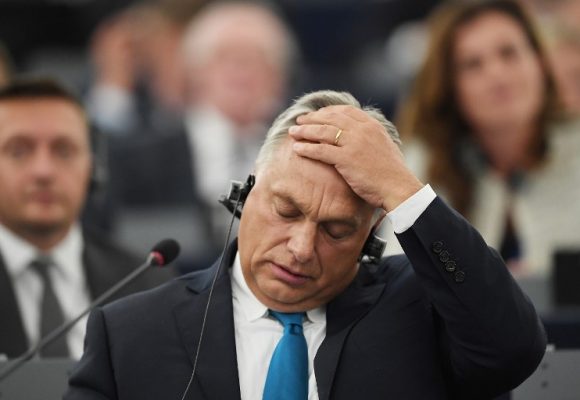
For the first time, members of the European Parliament called on the European Union to sanction one of its Member States, Hungary, on Wednesday 12 September. The government led by Prime Minister Victor Orban was accused of silencing independent media, targeting NGOs and removing independent judges, among other violations of democracy and common European values. The text adopted outlines in particular the bad state of freedom of expression in Hungary and the situation of Hungarian media since 2011, which has been constantly raising concerns on the issues of concentration and politicisation of media ownership; media law; self-censorship; denial of accreditation;  targeting of journalists; and…