Turkey: EFJ and partner organisations condemn escalating use of “disinformation law” against journalists and call for its repeal

The European Federation of Journalists (EFJ) joins the undersigned organisations in strongly condemning the intensifying use of Article 217/A of the Turkish Penal Code — widely known as the “disinformation law” — to arrest, detain, and prosecute journalists, and calling on the government to repeal the provision immediately and release all journalists imprisoned under it. Since the law entered into force in October 2022, at least 83 journalists have been charged 114 times over disinformation according to news reports. The scale of Article 217/A’s use against journalists has been starkly illustrated in a recent article. The two journalists most frequently…
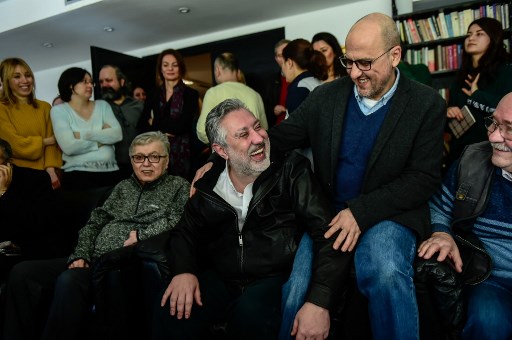
Turkey should immediately release Mehmet Altan and Şahin Alpay

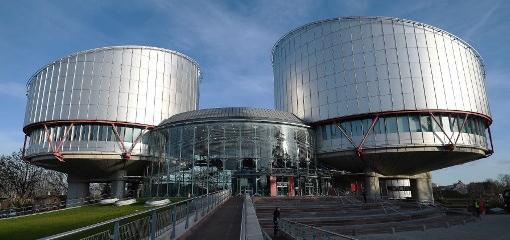
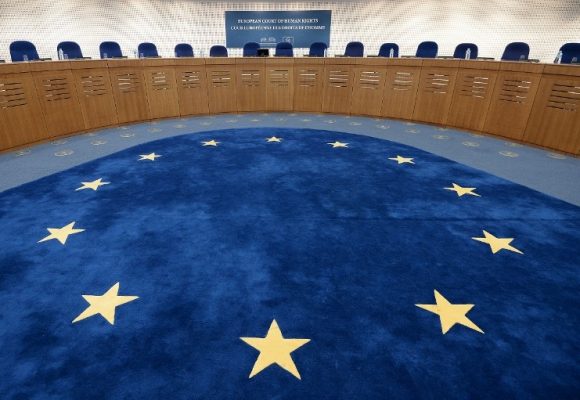
Turkey should immediately implement the judgments of the European Court of Human Rights (ECtHR) and release the veteran journalists Mehmet Altan and Şahin Alpay without delay, a coalition of nongovernmental groups said today. Furthermore, Turkey must ensure that domestic remedies for human rights violations are effective, in particular by ensuring the urgent review of all cases of journalists and writers currently pending before its Constitutional Court. The organizations, which had intervened as third parties in the cases before the court, included PEN International, ARTICLE 19, Committee to Protect Journalists, European Centre for Press and Media Freedom, European Federation of Journalists,…

Turkey violated rights of journalists Şahin Alpay and Mehmet Altan

The European Federation of Journalists (EFJ) calls on Turkish authorities to release without any delay all journalists wrongfully imprisoned in Turkey after the European Court of Human Rights ruled today against Turkey on applications filed on behalf of Turkish journalists Şahin Alpay and Mehmet Altan, who were imprisoned following the failed coup attempt in July 2016. The Strasbourg court issued today a decision on the provisional detention of Mehmet Altan and Şahin Alpay for more than a year and a half. The decision stated that “the investigating authorities had been unable to demonstrate any factual basis” that indicate that both journalists…

Danish government to cut 20% funding for public service media

The European Federation of Journalists (EFJ), representing 320.000 journalists across Europe, is shocked to learn that the Danish government intends to cut 20 percent of funding for Danish public service media (DR). The EFJ urges the government in Denmark to withdraw its proposal. The Danish government has agreed on a new media agreement that is expected to come into effect on January 1, 2019. The new measures include a cut in DR’s budget of 20%. It will also scrap the licence fee for public broadcasting. The measures were taken by the VLAK government with the support of the Dansk Folkeparti party. Free and…

New fund to support EU investigative journalism launched

A fund of up to €450,000 to support cross-border investigative journalism in the European Union is being launched today by the European Centre for Press and Media Freedom (ECPMF) and the International Press Institute (IPI). The Investigative Journalism for Europe (#IJ4EU) fund is intended to foster and strengthen collaboration among European Union-based journalists and newsrooms on revelations in the public interest and of cross-border significance. The fund aims to support investigations that reflect the media’s watchdog role and that assist the public in holding those in power accountable for their actions and to their obligations. In so doing, it seeks…

Dragan Bursac wins European Press Prize

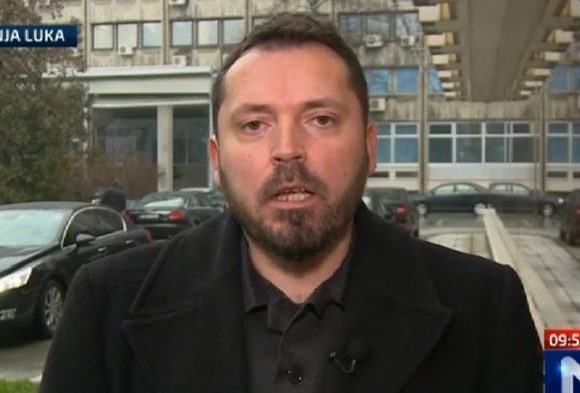
The European Federation of Journalists (EFJ) congratulates Dragan Bursać for receiving the European Press Prize 2018 on 15 March 2018 in the category ‘Opinion’ for his column “The Third Shooting of the Boy Petar from Konjic”, in Budapest, Hungary. Bursać works as a columnist for Al Jazeera Balkans. He lives in Banja Luka, a Bosnian city dominated by a Serbian population. Bursać became known for his critical writing about nationalism. The story for which he was awarded describes the tragic fate of the seven-year-old Bosnian Serb boy Petar who was killed during the Bosnian War. Because of his journalistic work, Bursać received multiple threats,…

No neighbouring right without remuneration for journalists

In a statement published today the International and the European Federations of Journalists (IFJ and EFJ) voice their concerns over the exclusion of journalists’ interests in the ongoing EU debate over a neighbouring right on press publications. These organisations, representing over 300,000 journalists throughout Europe, cannot support the proposal in this form. A European Commission proposal for an EU directive on copyright in the digital single market is currently being discussed in the European Parliament and EU member states. One of the most controversial issues in this text is the introduction of a so-called neighbouring right for press publishers over…

IFJ/EFJ Statement on the proposed neighbouring right 

On behalf of the International and the European Federation of Journalists, we would like to raise our concerns over the ongoing EU debate on the neighbouring right. We are witnessing this debate with great concern. as the current Directive proposal on copyright in the digital single market seems to be evolving toward complete exclusion of journalists’ interests in the exercise of this right. Journalists enjoy authors’ rights protection over the work that they create. This means that they should receive remuneration for each exploitation of their work and benefit from full respect of their moral rights. How can journalists expect…

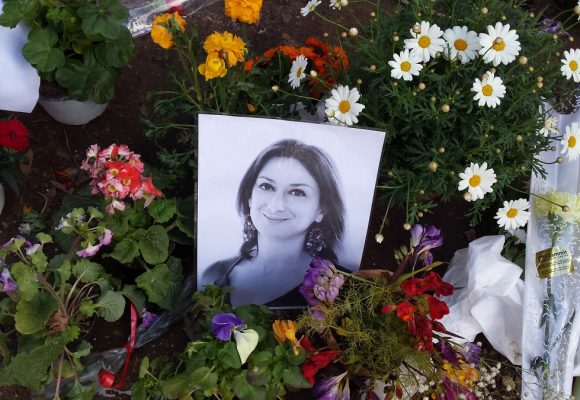
EFJ urges EU Parliament to protect right of access to information after Kuciak’s murder

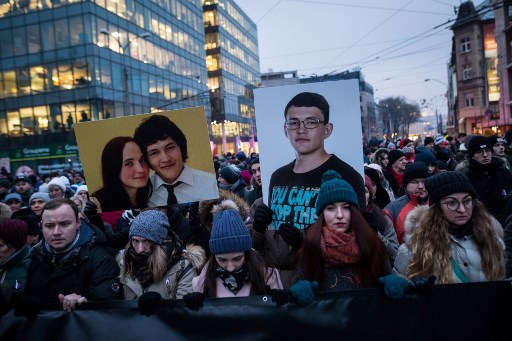
The European Federation of Journalists (EFJ) joined 61 civil society organisations on 13 March 2018 in a letter to the European Parliament calling for stronger safeguards for journalists and citizens who exercise their right of access to information in the wake of murdered Slovakian journalist Ján Kuciak. The statement was sent to all 751 Members of the European Parliament in preparation of a plenary debate on “Protection of investigative journalists in Europe: the case of Slovak journalist Ján Kuciak and Martina Kušnírová” in Strasbourg on 14 March 2018. The letter underlines the importance of the right to access to information in fighting…

The best antidote to disinformation is a sustainable media ecosystem

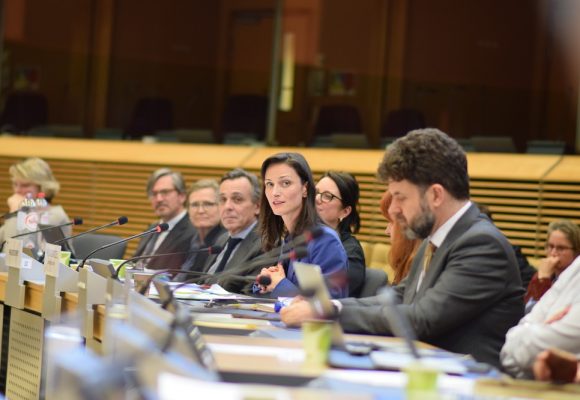
Together with 38 experts, the European Federation of Journalists (EFJ) participated in a EU High-level Expert Group (HLEG) set up by the European Commission, since January 2018, in order to tackle the phenomenon of so-called “fake news” and disinformation. The final report of this group has been published today in Brussels by the EU Commissioner for Digital Economy and Society, Mariya Gabriel. The EFJ welcomes the final report despite some doubts on some specific proposals. The report clearly indicates that the real threat is disinformation, not “fake news”. Disinformation is defined as “false, inaccurate, or misleading information designed, presented and promoted to intentionally…

Turkey: Two Cumhuriyet journalists released, newspaper’s chairman still detained

On Friday 9 March, A Turkish court has released on bail two journalists who were held for over a year on terror-related charges. The editor-in-chief of the opposition Cumhuriyet newspaper, Murat Sabuncu, and the investigative reporter, Ahmet Şık, were both released on bail but they remain charged while the chairman of the newspaper, Akin Atalay, was kept in detention. The staff from the newspaper were held as part of the crackdown that followed the failed coup of July 2016.  Based on articles published by the newspaper, Turkish authorities accuse Cumhuriyet of supporting the Gülen movement who Ankara believes headed the coup attempt, as well…

Czech President Milos Zeman verbally attacks journalists during inauguration speech

The European Federation of Journalists (EFJ) condemns the verbal attacks on journalists delivered by Czech President Milos Zeman during his inauguration speech on 8 March 2018 in Prague. Mr. Zeman accused the Czech public broadcaster of granting too much coverage to the TOP 09 conservative political party. He further went on to allege a general manipulation by liberal news outlets. Karolina Blinkova, a spokeswoman of Czech Television (CT) dismissed his accusations of biased news coverage in favour of the TOP 09 political party as attacks on the independence of the media: “We absolutely reject any attacks on journalists and independence of…

Malta: journalists’ basic protection deteriorates

Journalists’ basic protection in Malta has deteriorated. That is one of the main outcomes of the “Media Pluralism Monitor” for Malta, presented by the Centre for Media Pluralism and Media Freedom (CMPF) of the European University Institute, in the University of Malta, on 9 March. The Media Pluralism Monitor (MPM) is a holistic tool applied to assess the state of play of media pluralism and media freedom in the European Union member states and candidate countries. The findings were presented by professor Pier Luigi Parcu, director of CPMF, and Iva Nenadic, reserach associate at CPMF, who drawn up the report following a…

Two to seven years prison terms for Zaman journalists

An Istanbul court on Thursday sentenced 25 journalists to prison terms of up to seven and a half years over links to the Gülen movement blamed by Turkey for the 2016 failed coup in a mass trial of media staff detained after the putsch bid. Twenty-three of the journalists were convicted of membership of an armed terror group while two more on lesser charges, the Dogan news agency reported. Almost all of those jailed worked for media close to the group of US-based preacher Fethullah Gulen, who Ankara says organised the coup bid but he denies these allegations. Many of…

Council of Europe: new guidelines on media pluralism and transparency of media ownership

The Council of Europe has issued guidelines to its 47 member states in order to promote media pluralism, transparency of media ownership and media literacy. In a Recommendation adopted today, the Committee of Ministers endorses a comprehensive framework of guidelines for creating a pluralist, transparent and participatory media environment, both offline and online. States are encouraged to develop strategies for increasing the sustainability of a variety of media ranging from public service media, local, minority, community and cross-border media. States are also encouraged to support quality independent and investigative journalism, whilst fully respecting the editorial and operational autonomy of the…

The EU is finalising the directive for protecting whistleblowers

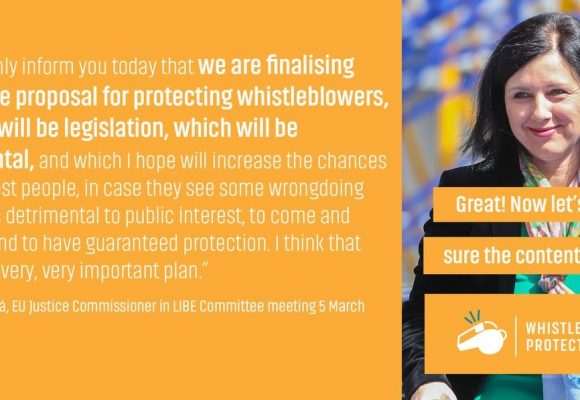
The European Federation of Journalists (EFJ) welcomes European commissioner Jourová’s recent announcement on preparing a horizontal legislation on whistleblower protection. Speaking of the recent killing of investigative journalist Jan Kuciak in Slovakia, Vera Jourová, EU Commissioner for Justice, Consumers and Gender Equity, said on 5th March, in EU LIBE Committee, that she considers the rule of law as one of the things that really matter. If Kuciak’s case is not dealt with satisfactorily, she said, then it would provide additional support for the establishment by 2020 of a European Public Prosecutor’s Office (EPPO), which could try cases such as financial crime,…

Media Against Hate Conference calls for higher ethical standards and effective self-regulation in journalism

The European Federation of Journalists (EFJ) held the final conference of the 18-month campaign ”Media Against Hate” to counter hate speech in the media in Brussels, on 5-6 March 2018. The conference was attended by around 60 participants from all over Europe including journalists, community media, media regulators, journalists’ unions, IT companies and policymakers. Harlem Désir, the OSCE Representative on Freedom of the Media opened the conference with a keynote speech. He emphasised high ethical standards in journalism and effective self-regulation are key to combat hate speech and disinformation in the media. Mr. Désir said, ” This is a challenging…