Ukraine: NUJU launches international advisory council to strengthen support for journalists in wartime

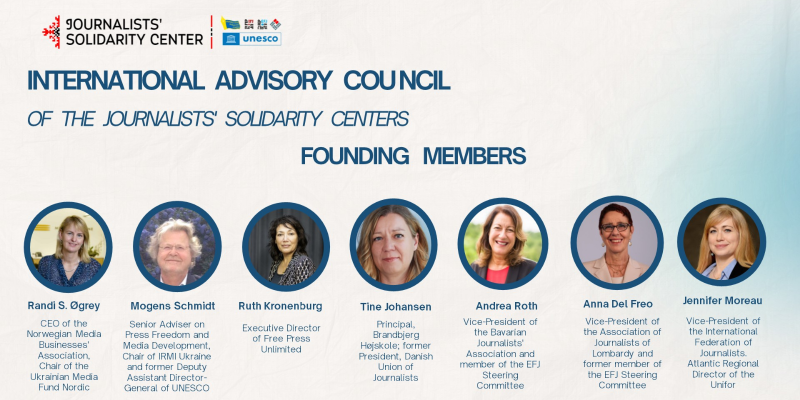
Today, on Ukraine independence day, our Ukrainian affiliate, the National Union of Journalists of Ukraine (NUJU) launched the International Advisory Council of the Journalists’ Solidarity Centers, a pro bono, non-governing advisory board. The new group of international experts will advise NUJU on journalists’ safety, media resilience and the strategic development of its nationwide Solidarity Centers network. The group will also help connect the needs of Ukrainian journalists and independent media with international expertise, professional solidarity and appropriate forms of support. “Ukrainian journalists and media are working in conditions that change almost every week, from missile and drone attacks to displacement,…

Denmark: draft bill on trade secrets fails to protect journalists and their sources

The Danish Union of Journalists (DJ) criticised in a letter sent to the Danish Patent and Trademark Office on 3 November 2017, the draft bill on trade secrets which is being discussed in Denmark in order to comply with the directive 2016/943/EU ‘on the protection of undisclosed know-how and business information (trade secrets) against their unlawful acquisition, use and disclosure’, adopted by the European Parliament and Council on 8 June 2016. The Danish Union considers that the bill in its present form does not contain the necessary protection for journalists and whistleblowers in cases of trade secrets’ disclosure serving the public interest.…

European Parliament: fighting racism and xenophobia in the media

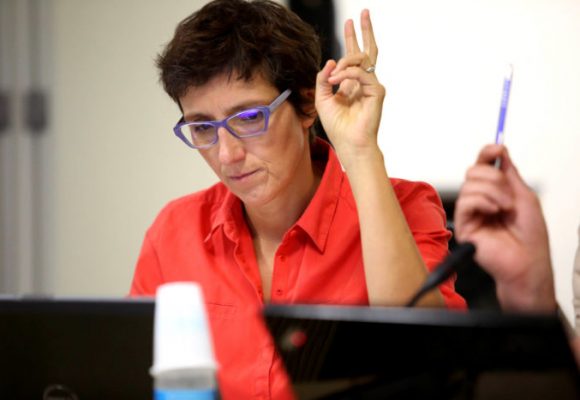
‘Race, racism and xenophobia in a global context III’ was the topic of  conversation on 9th November, in a conference organised by Italian Member of the European Parliament (MEP), S&D Cecile Kyenge in collaboration with New York University (NYU). EFJ director Renate Schroeder attended the conference, to speak about the ever more challenging role of journalists in an age of increased racism and hate speech. Opening the conference, the organisers addressed the representations of people of colour in public space and the media. Speaker Debora Spini from NYU Florence argued that right-wing media portrays a racialized narrative of Islam, in which people of colour and ethnic minorities pose a dangerous threat to Western women. Representations…

Event: How to improve the precarious state of journalism in South East Europe and Turkey? 14 November, Brussels

The European Federation of Journalists (EFJ) invites you to its event “How to improve the precarious state of journalism in South East Europe and Turkey”, which will take place on the 14th of November 2017 at the Press Club Brussels, in the framework of the project “Building Trust in Media in South East Europe and Turkey”. With financial support from the EU and UNESCO, the project seeks to strengthen freedom of expression, access to information, free, independent and pluralistic media, ensuring that journalists and media are key drivers for democratic, sustainable and peaceful development in the region. On this occasion, seven…

New report analyses journalism education in South East Europe

A new report “Back to the Drawing Board: Crafting the Ideal Journalism Education Curricula for South East Europe”, published in November 2017, analysed the current state of journalistic education in Albania, Bosnia and Herzegovina, Kosovo, Macedonia, Montenegro and Serbia. The main goal of the research is to create a set of indicators to evaluate study curricula in journalism across the SEE region. These indicators are to assist journalism faculties in ascertaining whether their curricula in journalism correspond to the overall state of the media in their countries and whether they enable students to acquire adequate journalism skills to help them maintain high professional…

Contracts and collective bargaining for all: “Social Europe”

The European Federation of Journalists (EFJ), along with the European Trade Union Confederation (ETUC) and other European trade union organisations, submitted on 6 November its position on the 2nd phase consultation on the revision of the Written Statement Directive (931/55/EC) trying to extend the right for a written contract and social protection to self-employed workers. The EFJ, along with the ETUC, request in their response that Member States should ensure that all workers (including self-employed workers) have the right to fair remuneration in accordance with national law, collective agreements or practice at the appropriate level in conformity with national industrial…

Studies find precarious employment tied to digitalisation and the gig economy

The grey area between employment and self-employment, symptomatic in the media sector, has been highlighted by two recent studies focusing on online work and the “gig economy”. The separate 2017 studies, one by Eurofound (the European Foundation for the Improvement of Living and Working Conditions) and the other by Heyes and Hastings from the University of Sheffield, suggest a precarious status of employment for ever more workers. This precarity is tied to digitalisation and the “gig economy”. The study by Eurofound focuses on digital platform work. The most reliable estimate of this type of work among European Union member states is from the United Kingdom, where…

EFJ issues alert as Croatian reporter receives death threat

The European Federation of Journalists (EFJ) has released an alert to the Council of Europe, concerning a death threat against Croatian reporter Maja Sever. Sever is a journalist from the Croatian Television (HRT, public media service), and received a threat on October 29 via Facebook in response to her story about Nigerian refugees. The private Facebook message was racially charged, stating that “if you want to live with N***ers, go live in England, France or USA, but do not promote that Freemason’s multicultural politics in Croatia”. The aggressor also called Sever a “whore” and a “Yugoslav – mason whore”, according…

“Stop Hate, Stop Impunity”: EFJ Vice President writes letter from Russia

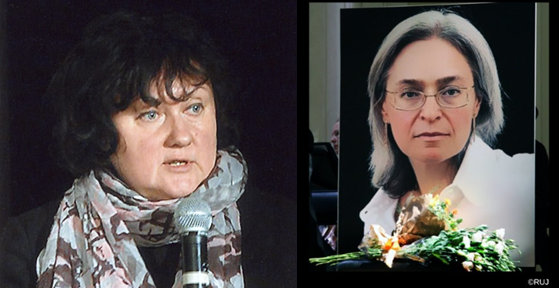
On 2 November 2017, the EFJ Vice President Nadezda Azgikhina wrote a letter from Russia. The letter focused on fighting against hate and impunity towards journalists. Here, the EFJ publishes this letter: The first conference devoted to Impunity in Russia took place just before the Moscow IFJ Congress in 2007. It focused mainly on the assassination of Anna Politkovskaya, the journalist murdered on 7 October 2006, and focused on other colleagues who were murdered too. For the first time, a list of deceased Russian journalists, prepared by Glasnost Defense Foundation, was presented to the international professional community. It consisted of…

There can be no press freedom where journalists work in fear, end impunity!

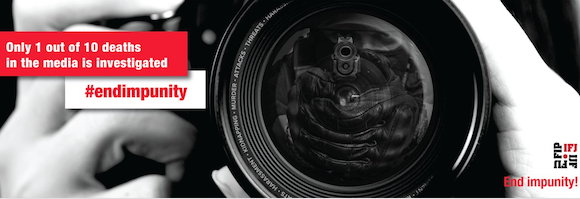
Impunity is when threats, attacks and crimes against journalists go unpunished. It results in a high level of fear, intimidation, censorship and self-censorship that undermines press freedom, the public right to know and leaves victims and their relatives powerless. The European Federation of Journalists (EFJ) joins the International Federation of Journalists’ (IFJ) campaign to #endimpunity, which aims at holding governments and de facto governments accountable for their impunity records and denouncing any crimes targeting journalists that remain unpunished. Murder is the highest form of these crimes but all attacks targeting journalists that remain unpunished must be denounced. In Europe, the EFJ…

13 organisations intervene on cases of detained Turkish journalists before the European Court of Human Rights

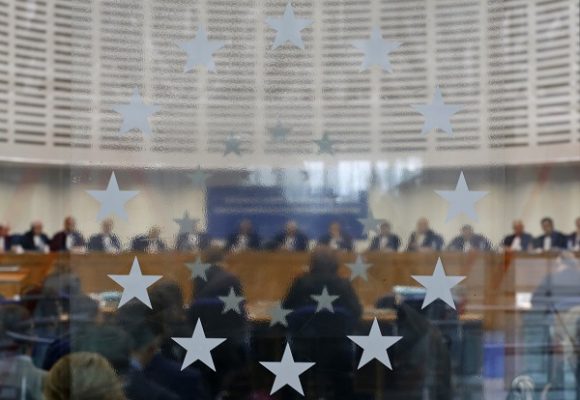
Leading freedom of expression organisations have submitted third-party interventions in ten cases against jailed Turkish journalists to which the European Court of Human Rights (ECtHR) has given priority status. The interventions offer detailed legal analyses of the principles at stake in the cases of the detained journalists. The cases before the ECtHR concern the detention of journalists and board members from the Cumhuriyet newspaper, along with the cases of journalists Murat Aksoy, Şahin Alpay, Ahmet and Mehmet Altan, Ali Bulaç, Ayşe Nazlı Ilıcak, Ahmet Şık, Deniz Yücel and Atilla Taş. The separate interventions include submissions from the Media Legal Defence Initiative, PEN International, ARTICLE 19, the…

Albanian PM insulted journalists for reporting on drug trafficking involving former minister

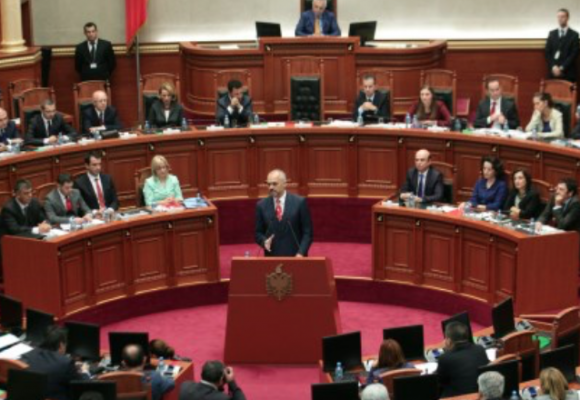
The European Federation of Journalists joins its affiliate the Association of Professional Journalists of Albania (APJA) as well as the Association of Electronic Media of Albania (AEMA) and the League of Albanian Journalists (LAJ) in expressing profound indignation over the insults and the attacks done by Prime Minister of Albania, Edi Rama to the Albanian media on October 25, 2017. Following the Plenary session – where the ruling majority voted against the request to lift the parliamentarian immunity for the arrest of the former Minister of Interior, Saimir Tahiri, suspected to be linked to the activity of an Albanian-Italian narcotics trafficking…

Greek journalists on strike over social security

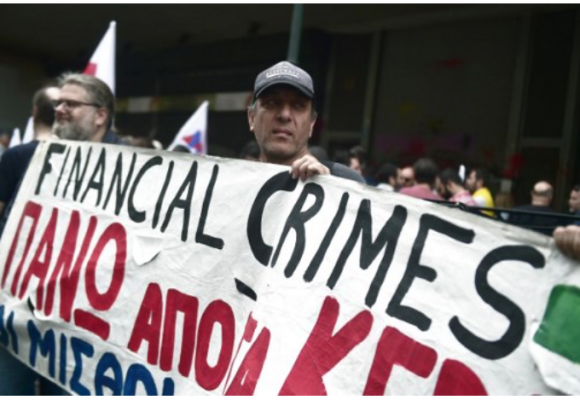
The Athens Journalists’ Union (ESIEA) called on a 48-hour strike in all Greek media on Tuesday 24 and Wednesday 25 October to protest against the impact of cutbacks on the health care and social security organisation (EDOEAP) as well as recent job cuts across the sector. In addition, four women have been on hunger strike for more than ten days. The EFJ expresses its support to its Greek affiliate and all the journalists currently on strike. Greek journalists have been in turmoil for many months following the government’s and mass media owners’ new policy which caused the collapse of EDOEAP.…

The European Parliament urges the Commission to protect whistleblowers

With the adoption of Virginie Rozière‘s report today (24.10.2017) in plenary session in Strasbourg, the European Parliament is sending a strong signal to the European Commission, demanding an EU-wide legislation protecting whistleblowers across the 27 Member States. The European Federation of Journalists (EFJ) warmly thanks the Members of the European Parliament (MEP) who voted in favour of a full protection for whistleblowers. A total of 666 MEPs took part in the vote: 399 (60%) voted in favour of the report, 101 (15%) voted against and 166 (25%) abstained from voting. Proposed by Virginie Rozière (S&D), the report demands an EU-wide protection…

Russia: a journalist stabbed at a radio station’s studio

Deputy editor in chief and anchor Tatyana Felgengauer working for Ekho Moskyv radio station was stabbed in the throat on 23 October at the radio station in Moscow. The well-known journalist is not in critical condition and is said to be stable. The International and European Federations of Journalists (IFJ/EFJ) have joined their Russian affiliate, the Russian Union of Journalists (RUJ), in condemning and demanding an immediate investigation in the attack.   Reports said that the attacker used a gas which was sprayed in a face of security guards before entering Ekho Moskyv offices and bursting into a studio located…

Spanish government threatens to take over public media in Catalonia

The media segment of the trade union FSC-CCOO and the journalists’ trade union of Catalonia (SPC-FeSP) strongly condemn the threat of takeover of Catalan public media by the Spanish central government, following the measures announced on Saturday by the Prime minister Mariano Rajoy (People’s party), with the support of the two main opposition parties (Socialist party and Ciudadanos). The European Federation of Journalists (EFJ) joins its affiliates FSC-CCOO and the Catalan Union of Journalists SPC-FeSP in denouncing this inacceptable political interference in dealing with public service media. This Friday, the Spanish senate could vote a series of measures in application of article 155…

EFJ and EBU call on the European Parliament to adopt report on whistleblowers

The European Parliament has an opportunity to make a crucial statement tomorrow (24.10) on the protection of whistleblowers. The European Federation of Journalists (EFJ) and the European Broadcasting Union (EBU) urge Members of the European Parliament to make this a reality and adopt the report on “legitimate measures to protect whistleblowers acting in the public interest”. Both organizations have welcomed Virginie Rozière’s own-initiative report on the protection of whistleblowers. It recognizes the close link between investigative journalism, whistleblowers and their key contribution to informing the public, and stresses the importance of protecting the confidentiality of journalistic sources. The report also…