Ukraine: NUJU launches international advisory council to strengthen support for journalists in wartime

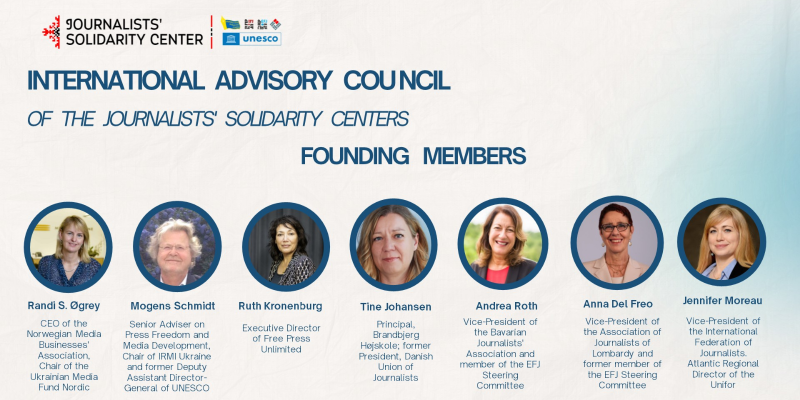
Today, on Ukraine independence day, our Ukrainian affiliate, the National Union of Journalists of Ukraine (NUJU) launched the International Advisory Council of the Journalists’ Solidarity Centers, a pro bono, non-governing advisory board. The new group of international experts will advise NUJU on journalists’ safety, media resilience and the strategic development of its nationwide Solidarity Centers network. The group will also help connect the needs of Ukrainian journalists and independent media with international expertise, professional solidarity and appropriate forms of support. “Ukrainian journalists and media are working in conditions that change almost every week, from missile and drone attacks to displacement,…
Groups intervene in Cumhuriyet case before ECHR

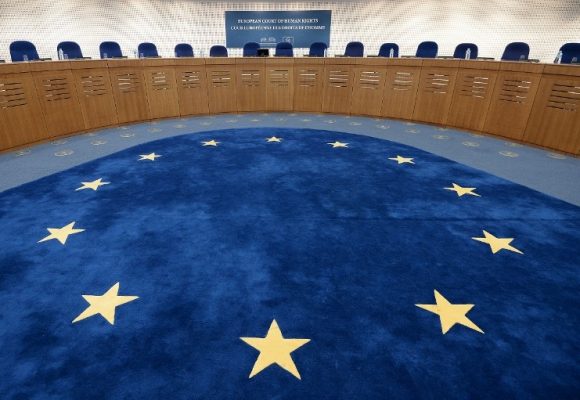
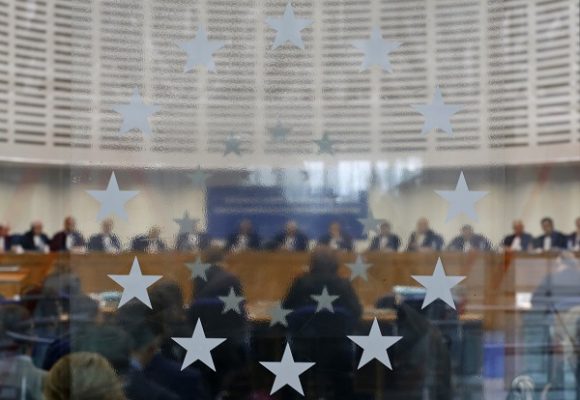
Thirteen international free expression and media freedom defenders filed a brief on October 20, 2017 with the European Court of Human Rights (ECHR) supporting a challenge by journalists and administrators from Turkey’s independent daily Cumhuriyet to their lengthy pre-trial detention on charges of allegedly supporting terrorists. Article 19, the Association of European Journalists (AEJ), the Committee to Protect Journalists (CPJ), the European Centre for Press and Media Freedom (ECPMF), the European Federation of Journalists (EFJ), Human Rights Watch, Index on Censorship, the International Federation of Journalists (IFJ), the International Press Institute (IPI), the International Senior Lawyers Project (ISLP), the Media…

Berlin forum: With quality against lies and hate in the net

How to deal with audiences, how to create trust, how to create facts instead of fakes and what must be done for good journalism to survive. This and many other central questions around fake and facts were discussed on 16 October at the ninth Forum of the “Initiative Qualität im Journalismus (IQ)” in Berlin with about 80 media experts. Professor Tanjev Schultz said that given the speed of false news and propaganda in today’s social media, good journalism is ever more important and can only survive when it is  better than its “loud critic” offer. He explained that lack of…

International press freedom groups condemn killing of Maltese investigative journalist

Sixteen press freedom and media professional groups condemn the killing of investigative journalist Daphne Caruana Galizia and demand an immediate and independent investigation into her death. “The murder of a prominent investigative journalist in broad daylight in an EU Member State underscores the seriousness of this crime. Daphne Caruana Galizia’s work as a journalist to hold power to account and shine a light on corruption is vital to maintaining our democratic institutions. Her killing is a loss for her country and for Europe”, Hannah Machlin, project manager for Index on Censorship’s data platform Mapping Media Freedom, said. Daphne Caruana Galizia…

Submit your best practice on gender equality in media industries

An European consortium comprising the Universities of Newcastle (UK), Padova (Italy) and Gothenburg (Sweden), the European Federation of Journalists (EFJ) and the Permanent Conference of the Mediterranean Audiovisual Operators (COPEAM) is developing an action project to advance gender equality in media industries (AGEMI). Help us build the AGEMI project database by submitting your media best practice on gender equality! Best practices can be tutorials for students, monitoring exercises, modules to strengthen gender equality in the media, guidelines on reporting gender issues or specific issue with a gender lens, media or unions’ policies to build a gender culture in newsrooms and…

EFJ and IFJ condemn murder of Maltese journalist Daphne Caruana Galizia

Maltese investigative journalist Daphne Caruana Galizia has been murdered on 16 October around 3pm by a car bomb in the town of Bidnija, near her family home. The European and International Federations of Journalists condemned today this killing. Daphne Caruana Galizia, 53, was known for her investigative journalism and her blog Running Commentary, which was one of the most widely read websites in Malta. The journalist has been sued many times for her blog posts in which she revealed several corruption scandals involving Maltese politicians. The EFJ had denounced in February 2017 the freeze of her bank accounts as well as the…

EU Court to decide on the right to know about MEPs’ expenditures

The upcoming public hearing at the Court of Justice of the European Union in the case of 29 journalists (from every EU member state) against the European Parliament will take place on October 19, 2017 in Luxembourg. This important case relates to twenty-nine journalists who have filed 27 complaints with the European Court of Justice against the European Parliament which refused to give information on how members of the European Parliament (MEP) spend their allowances. The journalists asked for documents regarding the money MEPs receive on top of their salaries, including a general allowance, travel allowance, daily subsistence and funds for staffing,…

Physical attack against journalist Drago Miljuš

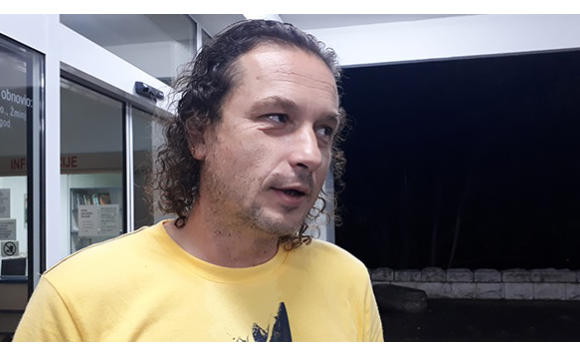
The European Federation of Journalists (EFJ) joins its affiliate the Croatian Journalists Association (CJA) and the Western Balkan’s Regional Platform for Advocating Media Freedom and Journalists’ Safety in strongly condemning the physical attack of Index.hr portal journalist Drago Miljuš by the members of the Split police department. The journalist was standing at the public facility, outside police lines covering the police intervention at the Obojena svijetlost beach in Split (Croatia).  The intervention was related to a suicide bomber who, unfortunately, came through with his intention. One of the policemen present started driving Miljus off, first verbally and then by pushing him away. The…

EFJ-IFJ statement on article 11 of the draft copyright directive on copyright in the digital single market

The EFJ-IFJ are concerned about the rampant reproduction and making available of extracts or the entirety of journalists’ and other creators’ works online by third parties without authorisation or remuneration. Journalists’ contributions to press publications and informing citizens must be recognised and duly protected and remunerated. Their authors’ rights, namely their economic and moral rights, including the right to integrity and paternity, must be duly acknowledged. Freedom of contracts too often results in contractual arrangements where journalists are forced to sign away their rights. These so-called buy-out contracts should be outlawed and there shall be no presumption of transfer of…

Robust protection of journalistic sources remains a basic condition for press freedom

By Dirk Voorhoof, Human Rights Center UGent In the judgment in the case Becker v. Norway the ECtHR showed once more its concern about the importance of the protection of journalistic sources for press freedom and investigative journalism in particular. The ECtHR emphasised that a journalist’s protection under Article 10 ECHR cannot automatically be removed by virtue of a source’s own conduct, and that source protection applies also when a source’s identity is known. The judgment has been welcomed by the European Federation of Journalists (EFJ), as it is perceived “to strengthen the protection of journalistic sources as one of…

Bulgaria: Deputy PM threatened TV journalist Viktor Nikolaev

The European and International Federations of Journalists (EFJ-IFJ) are concerned about threats from politicians on Bulgarian TV journalist Viktor Nikolaev. The EFJ and IFJ join the Union of Bulgarian Journalists (UBJ) in its call to end harassment of journalists and support freedom of expression in the country. Viktor Nikolaev, journalist for NOVA TV, was threatened by Member of Parliament Anton Todorov and Deputy Prime Minister Valeriy Simeonov (our picture) during live broadcast of his morning show last Friday. Todorov and Simeonov threatened the journalist to lose his job if he continued to ask questions about the purchase of fighter aircraft for the…

Serbia: Attacks against journalists must stop

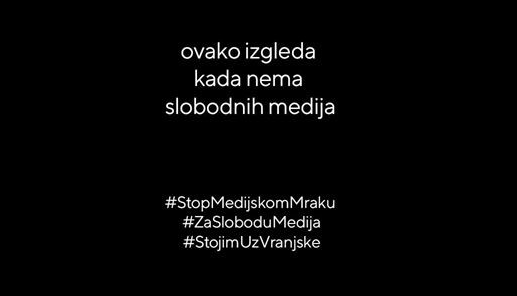
Following the recent media stage black out in Serbia to warn against Serbian leader Aleksandar Vucic‘s muzzling of the press, the European Federation of Journalists (EFJ)’s Steering Committee meeting yesterday (9 October 2017) in Brussels discussed how to best support its affiliates to resist such mounting pressure and coordinate successful advocacy at European and international level. “We ask the European Commission and in particular EU Commissioner Hahn, responsible for European Neighbourhood Policy & Enlargement Negotiations, to be firm and coherent when it comes to enforcement of European standards of freedom of expression and media freedom in Serbia” said Mogens Blicher…

Today is the World Day for Decent Work!

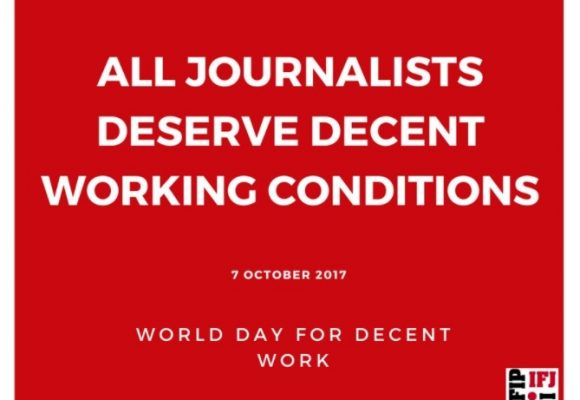
Today is the World Day for Decent Work! A new survey from the International Federation of Journalists (IFJ) shows that unions have helped winning higher pay, saving jobs and securing new collective agreements over the past twelve months. The survey of 60 IFJ affiliates from every continent – released to coincide with World Day for Decent Work – shows that attacks on collective bargaining, low pay and a lack of rights for freelances are threatening to further undermine working conditions for journalists across the globe. A significant majority of unions surveyed highlighted a lack of collective bargaining, a lack of…

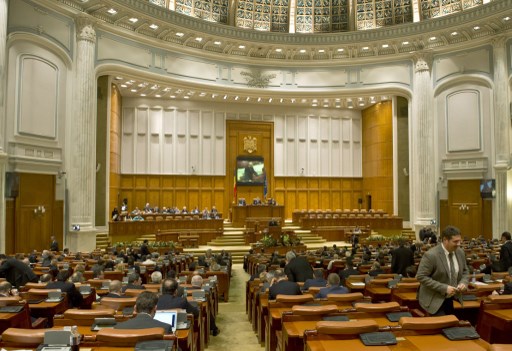
Romania: Draft law threatens independence of AGERPRES news agency

UPDATE (31/10/2017) – On 30 October 2017, 64 senators from the ruling coalition (PSD-ALDE) voted the controversial draft law (16 senators voted against and 27 senators abstained). Alexandru Giboi, AGERPRES General Director, wrote in a press statement that the Romanian minister of Culture “Lucian Romascanu is preparing the dissolution of AGERPRES as an independent press agency”. ————————— The Romanian trade union of journalists MediaSind expressed its concerns about the new draft law intended to regulate the national news agency AGERPRES, to be discussed on 11 October 2017 by the Romanian Parliament. The new law foresees that any political majority could decide to dismiss…

Safety protocol with 16 points for journalists covering conflict zones

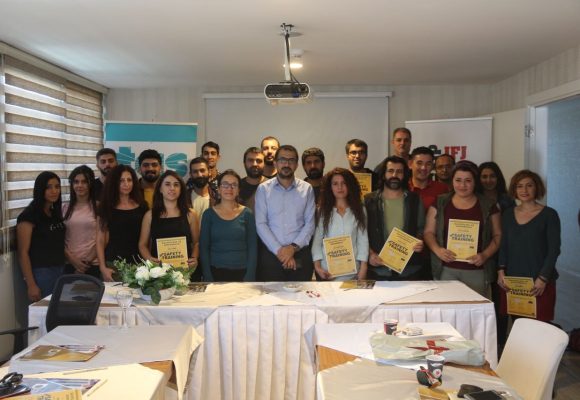
The Journalists Union of Turkey (TGS) in partnership with the European and International Federation of Journalists (EFJ-IFJ) successfully organised a 2-day Safety Workshop in Diyarbakir (Southeast of Turkey) on 03-04 October 2017 for local and visiting journalists regularly covering conflict zones in the region. This workshop was organised in the framework of the IFJ-EFJ-TGS project called #GazetecilikSuçDegildir / #JournalismisNOTaCrime, a campaign to set journalism free, develop trade union rights and defend freedom of expression in Turkey which receives the financial support of the European Instrument for Democracy and Human Rights (EIDHR) Program managed by the European Commission. 30 journalists and media workers…

Journalists harassed for their reports on Hungary’s anti-Soros campaign

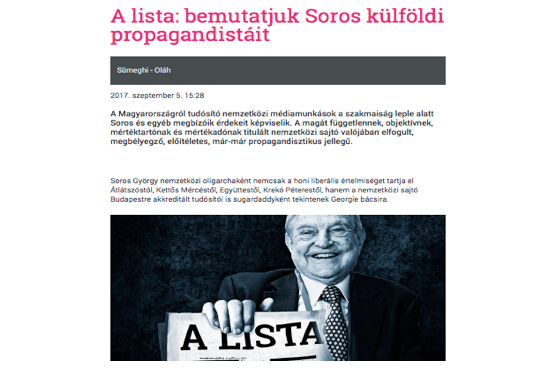
Several journalists working in Hungary for foreign media outlets alerted the European Federation of Journalists (EFJ) about the harassment they have been subjected to. The EFJ condemns those attacks and calls on the Hungarian authorities to stop harassing the journalists in question. “Propagandists”, “spokespeople”, “drug addict”: this is the kind of verbal attacks journalists reporting on Hungary’s campaign against George Soros have received, directly from the government or some pro-governmental media outlets. The EFJ recently submitted the following two cases on the Council of Europe platform for the safety of journalists. The Website 888.hu Publishes a List of Eight Journalists Described as…

Protection of sources: Norwegian journalist won in Strasbourg

Ordering a journalist to give evidence on a source is not justified, even though the source himself has come forward to the police. That’s the main outcome of a decision of the European Court of Human Rights, today, regarding the case launched in 2012 by Norwegian journalist Cecilie Langum Becker, who was ordered to give evidence on her contacts with her source for an article about the Norwegian Oil Company, and fears that it might collapse. The European Court recalled that a journalist’s protection could not automatically be removed because of a source’s conduct. Bearing in mind its previous judgments emphasising the chilling…