European Commission: Improved journalists’ access to public documents needed

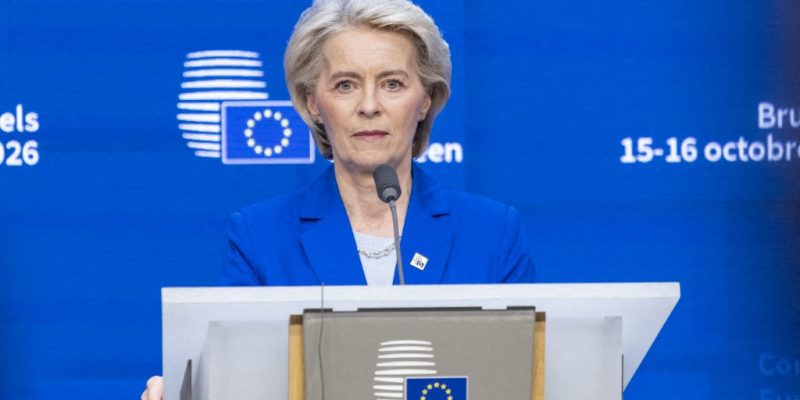
The European Federation of Journalists (EFJ), together with media outlets, journalist associations and press freedom organisations across Europe, has signed an open letter calling on European Commission President Ursula von der Leyen to increase transparency on EU decision-making by making necessary documents more accessible to media workers. This allows journalists and the public to follow the latest policy developments, public money spending and the exercise of power by EU institutions. It is crucial to democratic accountability, and a legal right under EU law. Yet journalists seeking information from the European Commission increasingly face long delays, extensive redactions and refusals to…

EFJ held its Annual Meeting online due to Covid-19 pandemic

The European Federation of Journalists (EFJ) finally held its first ever digital Annual Meeting on 3 November 2020. The decision to organise it online was taken after the EFJ was forced – due to the Covid-19 pandemic – to cancel its event, which should have taken place last May in Zagreb, Croatia. The 2020 online edition was attended by over 70 affiliates from 43 countries. Over 70 participants from 43 countries are ready to discuss @EFJEUROPE activity and financial report and some urgent matters in #COVID19 times! #efjam2020 #mediafreedom #journalismmatters #SocialRights #solidarity pic.twitter.com/fAE9sH7fnG — EFJ (@EFJEUROPE) November 3, 2020 Not…

President’s speech at the EFJ Annual Meeting 2020 (online)

Speech by Mogens Blicher Bjerregård (EFJ President)  Before – and now during the pandemic, the EFJ worked consistently on the issues that our affiliates required from us, incorporating our vision and ambitions on behalf of all our affiliates and your members, and if I may add: for all journalists and media in Europe for the benefit of our societies and democracies. In the Activity Report, you will find more details and an idea of the scope of our work during the last year and a half. We should have held this annual meeting in spring in beautiful Zagreb (Croatia), but we…

New wave of SLAPPs hits Croatian media and journalists

The Croatian journalists’ trade union and professional associations (TUCJ and CJA) announced last week that a new wave of vexatious lawsuits (SLAPP) is hitting Croatian media and journalists. The dozen of SLAPPs targets Telegram news portal, Virovitica.net, Index and journalist Dora Kršul. The European Federation of Journalists (EFJ) joined its affiliates in Croatia in denouncing an attempt to intimidate and silence investigative journalism. The lawsuits are initiated by former top politicians – former Agriculture Minister Tomislav Tolušić and former Member of Parliament Branimir Glavaš – as well as University of Zagreb Rector Damir Boras. Nine lawsuits filed by former Agriculture…

Full support of European journalists to their colleagues in Belarus

The online Annual Meeting of the European Federation of Journalists (EFJ), attended today by 53 delegates from journalists’ unions and associations from 38 European countries, expressed its full support for Belarusian journalists in the face of repression. In Belarus, during and after the 9 August presidential elections, the media, journalists and bloggers were the target of increased repression. As a result, the situation went from serious to catastrophic. While the Belarusian Association of Journalists (BAJ) recorded 23 violations of journalists’ rights from the beginning of the year until 8 May, i.e. before the election campaign was launched, it registered about…

EFJ joins IFJ #EndImpunity campaign

Monday 2 November is the UN International Day for the end of impunity for crimes against journalists. #EndImpunity. The European Federation of Journalists (EFJ) joined the IFJ Campaign: End Impunity 2020, to demand governments put an end to impunity and to highlight and denounce crimes targeting journalists that remain unpunished while the masterminds walk free. This year, the IFJ is putting a specific emphasis on five countries, including Russia in Europe. Since 2005, 17 journalists have been killed in Russia. Six murders remain unsolved: Anna Politkovskaya: the most prominent case of impunity is the killing of Anna Politkovskaya from Novaya…

Germany: Unions urge government to support small media and freelancers in funding scheme for media

The German Association of Journalists (DJV) has called on the Federal Ministry of Economics to link the agreed press funding to certain conditions in order to countervail media concentration and preference of large media groups. In July, the German parliament decided to provide publishers with a funding of €220 million over several years, most probably starting in 2021. This support is primarily aimed at the digital transformation of the publishing industry. However, previously agreed support specifically for the delivery of daily newspapers will not be made available. This is in the context where publishers complain that the delivery of printed press…

22 Slovenian editors-in-chief speak out: “we will not succumb to pressure”

22 editors-in-chief of leading Slovenian media said on 28 October in an open letter intended “to the public” that they will stand against political interference as they face increasing pressure from the government. With this letter, the journalists denounced their difficulty to do their job in these challenging times caused by the pandemic and reaffirmed their commitment to the public. They describe a toxic working environment where weekly pressure from the authorities “place an additional burden and make quality journalistic work more difficult”. “Neither this crisis nor anything else may be used as a pretence for attempts to impose harmful…

Kosovo: new report shows how Covid-19 exacerbates existing problems for media workers

It appears to be a global trend that the Covid-19 outbreak has aggravated previously existing problems in the journalism industry and added another layer that concerns health measures for journalists. Kosovo is no exception as shown by a report called “The impact of Covid-19 pandemic on the economic situation of journalists, cameramen and photojournalists” published on 27 October by the Association of Journalists of Kosovo (AJK). This research focuses on the consequences of Covid-19 on the economic situation for media workers, the difficulties in reporting and the lack of necessary protection equipment. The study was carried out during the period…

Nagorno Karabakh: Urgent concern on physical safety and restrictions faced by journalists covering the conflict

On 28 October, together with fellow partner organisations of the Council of Europe Platform, the European Federation of Journalists (EFJ) signed a statement of urgent concern regarding the risks to physical safety and undue restrictions faced by journalists covering the conflict in Nagorno Karabakh. The statement reads as follows: We undersigned partner organisations of the Council of Europe Platform for the promotion of journalism and the safety of journalists express our urgent and deep concern about the ongoing risks of injury and harm to media workers reporting on the armed conflict inside Nagorno Karabakh. We are also concerned that arbitrary…

Takeaways from the Online Freelance Seminar on 22 October

Since the start of the Covid-19 pandemic, freelance journalists across Europe have been greatly impacted with reduced paid work and often isolation. For the “Online Freelance Seminar: Equal Treatment for All”, the European Federation of Journalists (EFJ) gathered over 30 journalists’ representatives, freelance journalists and their organisers, EU policy-makers and experts to discuss such impacts on their working conditions and explore ways to support them. The seminar kicked off with a panel led by Oddrun Midtbø (Norwegian Union of Journalists, NJ) with Renske Heddema, (Dutch Journalists’ Association, NVJ), Charlotte Michils (Flemish Association of Journalists, VVJ) and Pablo Aiquel (French National…

Croatia: Media outlets disabled comments for two hours to counter increasing hate speech

The Croatian Journalists’ Association (CJA) and the Trade Union of Croatian Journalists (TUCJ) just launched the #togetherwithouthate (#zajednobezmrznje) campaign. The objective is to warn against the destructive influence of hate speech online and offline journalists are facing because of their work, on the rise for many years. The campaign was launched on Friday 23 October with a call on media outlets to disable the possibility to comment on their websites and social media, for two hours, from 11am to 1pm. Major Croatian media outlets took part in the action, including Jutarnji list, Slobodna Dalmacija, 24sata, Večernji list, Novi list, Glas…

EFJ and IFJ call on the US government to drop plans to shorten visa length for journalists

The European Federation of Journalists (EFJ) and the International Federation of Journalists (IFJ) joined the European Broadcasting Union (EBU) and 21 other organisations from across the globe to submit a statement to the US government in response to proposed changes to the I visa program that will impact on foreign journalists. “To be clear, by these restrictions on the validity of visas, the Trump administration wants to make it much harder and more expensive for foreign journalists to work in the United States,” said EFJ General Secretary Ricardo Gutiérrez. “This is why, together with the IFJ and 22 global organisations,…

EFJ welcomes the award of the Sakharov Prize to the democratic opposition in Belarus

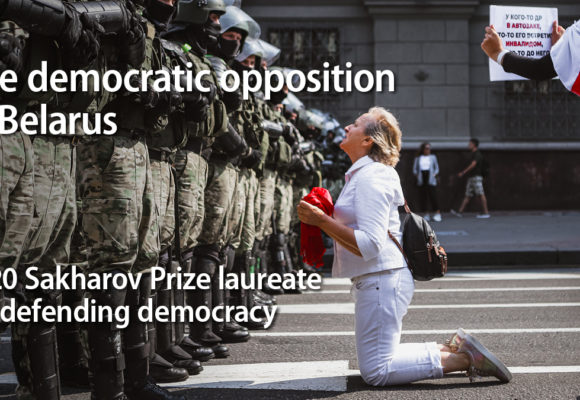
The democratic opposition in Belarus has won this year’s Sakharov Prize for Freedom of Thought, European Parliament President David Sassoli announced today. The Sakharov Prize is awarded by the European Parliament every year in memory of Soviet physicist and dissident Andrei Sakharov. The European Federation of Journalists (EFJ) welcomes the award of the prize to the Belarusian opposition and recalls that six journalists are still in prison in Belarus just for doing their job. Protests erupted in Belarus following a disputed presidential election in August that Alexander Lukashenko claimed to have won with 80 percent of the vote, leading to…

Ukraine: Arson of regional media’s editorial office at the height of election campaign

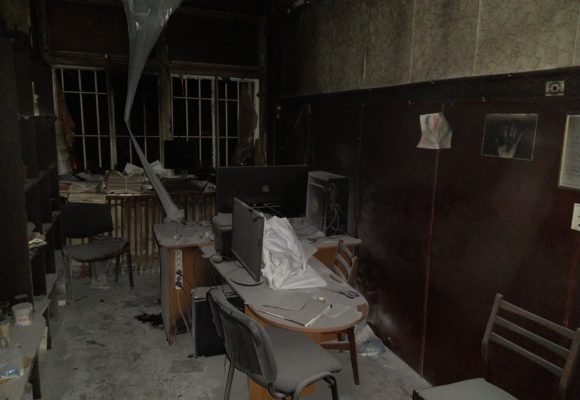
On the night of 21 October, the editorial office of the regional media Alternatyva.org was burned down in the Odesa Oblast region. The National Union of Journalists of Ukraine (NUJU) reported the incident, referring to information from Roman Varshanidze, the editor-in-chief of the publication. The journalist informed that according to witnesses, two unknown persons broke the editorial office window and threw a bottle with Molotov cocktail in it. As a result, the furniture and floor were burnt, but the editorial office and equipment were saved by the neighbours who were able to put out the flames before the firefighters arrived.…

If you want ethical quality information, work with press councils!

What can press councils be used for? A European promotional video co-funded by the European Commission with the support of the Conseil de déontologie journalistique (CDJ – Belgium), is launched today by all European press councils and their partner organisations. It recalls the role and assets of these particular bodies often unknown to the general public pointing one key message : if you want ethical quality information, work with us!   At a time when pieces of information coming from all sources are jostling around without us always knowing whether we can rely on it or not, at a time when distrust of journalists has become the rule, press councils…

Netherlands: Union negotiates travel ban exemption for IFJ press card holders

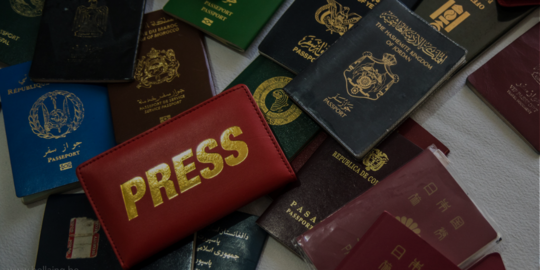
Foreign journalists traveling to the Netherlands will be exempt from a travel ban and be able to leave quarantine to carry out vital newsgathering provided they are carrying an IFJ International Press Card (IPC). The protocol, negotiated between the Dutch Journalist Association, the NVJ, and the country’s authorities exempts foreign journalists in possession of the IPC and a letter issued by the union, are exempted from the travel restrictions currently in place. Journalists are still required to: get a visa when needed follow travel requirements follow corona rules in place, such as self-quarantine for 10 days, except for the time journalists…