EFJ welcomes European Parliament’s call for an EU regulatory framework that protects copyright in the age of AI

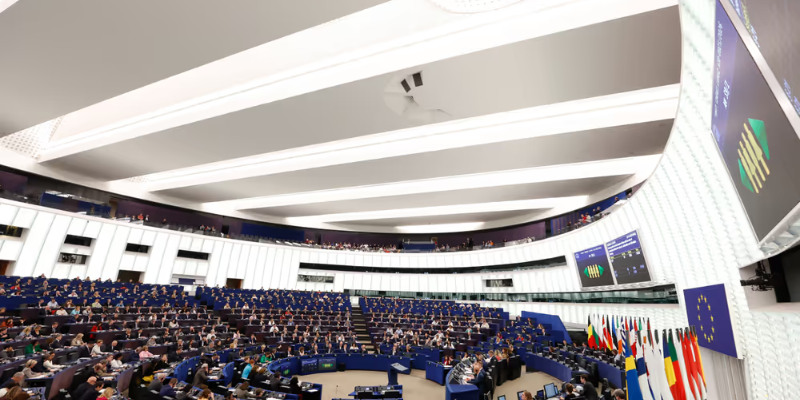
Today the European Parliament adopted the report on “copyright and generative artificial intelligence” drafted by MEP Axel Voss (by 460 votes to 71, 88 abstentions). The European Federation of Journalists (EFJ) welcomes this first step as a sign of political will to strengthen and make fairer the copyright framework protecting journalists from the unauthorised use of their work in AI training and content generation. Until now, AI companies have been relying on journalistic content without seeking consent, providing remuneration, or ensuring transparency about how such material is used. This practice not only undermines journalists’ intellectual property rights but also threatens…

EFJ contributes to European Commission social pillar consultation

On 31st December 2016 the consultation of the European Commission on the European pillar of social rights ended. The EFJ has submitted its response focusing on the need for equal treatment for all workers independent of their employment contract. The consultation of the Commission follows a process of the European Commission that took off following the State of the Union speech of President Juncker in 2015. The public consultation contains a series of questions on the social situation and EU social “acquis”, the future of work and welfare systems and the European Pillar of Social Rights. The most pressing priorities as defined the…

The future of news is linked to journalists’ working conditions

On 1st December, the Council of Europe’s Steering Committee on Media and Information Society (CDMSI) invited the EFJ, digital start-ups and media groups to discuss  “Media adaptation strategies and expectations” together with representatives of the Council of Europe government representatives. Rasmus Kleis Nielsen, Director of Research at the Reuters Institute for the Study of Journalism of Oxford University, presented at the outset the results of a recent study on Challenges and opportunities for news media and journalism in an increasingly digital, mobile and social media environment –   prepared for the Council of Europe on this topic. “The move to an…

Turkey: Organising journalists under the state of emergency

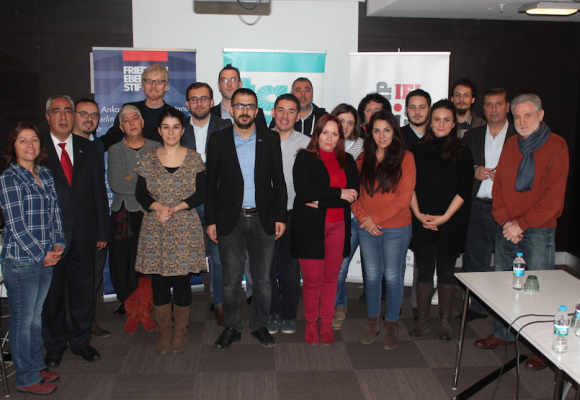
The regional meeting of EFJ-IFJ affiliates from the Balkans and Eastern Europe successfully took place in Istanbul on 29-30 November 2016. The meeting was hosted by the Journalists Union of Turkey (TGS) and the Istanbul office of the Friedrich Ebert Stiftung (FES) who are financially supporting the event with the Swedish Union To Union global trade union programme. The gathering of more than 10 international journalists representatives showing solidarity under the state of emergency with so many journalists in jail (over 120), under prosecution (thousands), without job (over 10.000) was warmly welcomed by the colleagues and local media.   The event has primarily focused on…

German journalists concern over media concentration due to newspapers takeover

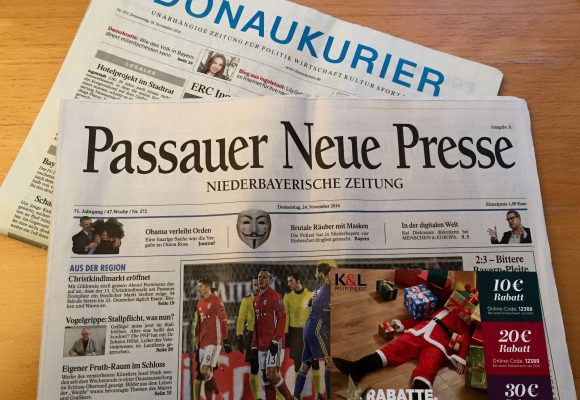
Journalists and their unions in Germany expressed concerns over the sale of newspaper Donaukurier to the larger publishing house Passauer Neue Presse (PNP). The Bavarian Journalists’ Association, a member of the German Federation of Journalists (DJV) warned that the deal will result in further media concentration and uncertainty for the journalists  working at both Donaukurier and PNP. In response to this development, the journalists’ unions in Germany including DJV, (dju) in ver.di and BJV will organise a protest on Saturday 24 November in the Passauer Fußgängerzone, Bahnhofstr. 2-4 (in the City Gallery). The European Federation of Journalists (EFJ) supports the action…

EBU Conference urges Parliaments to protect PSM independence

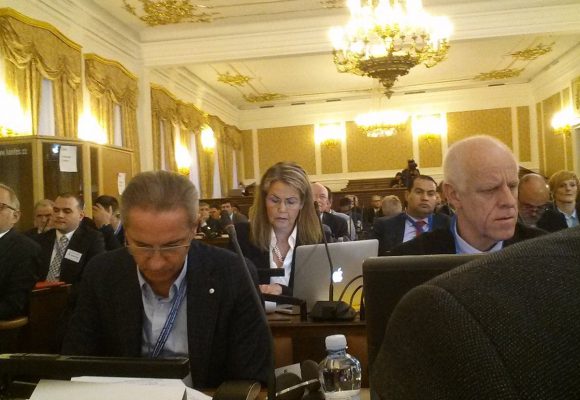
Over 100 delegates from 19 countries in Central & Eastern Europe (CEE) and beyond came together in Prague last week to discuss the need to protect the independence and sustainability of public service media (PSM) in the face of numerous challenges. The conference was hosted by the Czech Parliament in Prague, and organized by the Council of Europe, the Parliamentary Assembly of the Council of Europe, Czech Television and the European Broadcasting Union (EBU). Public service broadcasters, Parliamentarians, regulators, diplomats, academics and experts from a range of organisations including the Council of Europe, Venice Commission, OSCE and the European Federation of…

Manifesto towards media policy in the service of the public

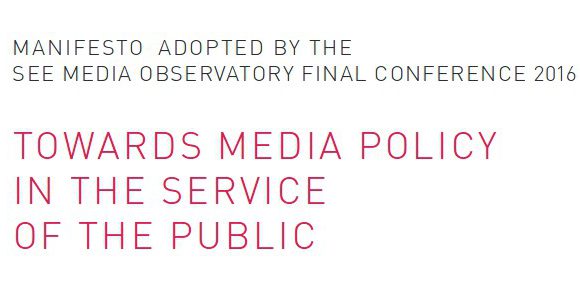
The European Federation of Journalists (EFJ) endorsed the manifesto initiated by the South East European Media Observatory towards media policy in the service of the public, which was presented on November 10, 2016. The aim of the manifesto is to find solutions to deal with current media crisis that is seriously affecting countries of South East Europe. Among the main demands of the manifesto are the initiation of the reforms, accountability of the politicians, the protection of the public service media and the uncompromising transparency of media ownership. The full report can be found here.

President Juncker joined trade union debate on future of Europe

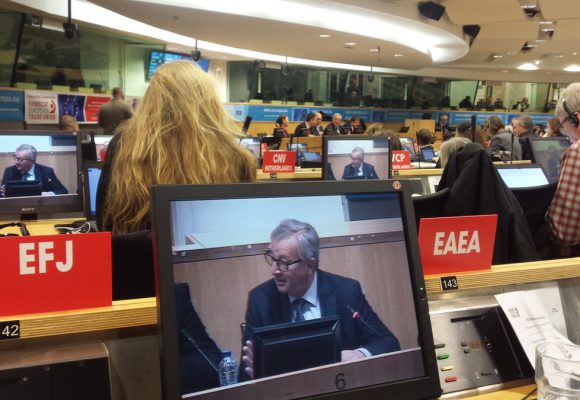
The European Trade Union Confederation (ETUC) welcomed European Commission President Jean-Claude Juncker for a discussion on the future of Europe with trade union leaders from all EU countries. The discussion took place yesterday, in Brussels, during an extraordinary Executive Committee meeting of the ETUC. The European Federation of Journalists was represented by its General Secretary, Ricardo Gutiérrez. The ETUC believes a wide debate on the future of Europe is desperately needed due to the growing lack of trust in the EU caused by high unemployment and poverty, Brexit, terrorism, the failure to deal effectively with the refugee emergency, and growing…

Media Pluralism monitor now in 30 countries: worrying results

The European Federation of Journalists (EFJ) was invited to the Final conference on “The Application of the Media Pluralism monitor (MPM2016) in 30 countries in Florence on 4 November. The preliminary, but almost finished results, gave some alarming trends, in particular when it comes to the journalistic profession including access, the role of unions and associations in protecting journalists, working conditions, safety and protection of sources. In Florence, #MPM2016 preliminary results show a range of risks for journalists working in Europe, particularly in S&SE Europe @CmpfEui pic.twitter.com/nVkdwAdrqR — JOURNALISM AT MDX (@JRNatMDX) November 4, 2016 The Media Pluralism Monitor 2016…

Expertalia: A tool for journalists to diversify sources

The Belgian Association of Professional Journalists (AJP), a member of the European Federation of Journalists (EFJ) launched a web tool Expertalia, an expert directory for media professionals with the aim to diversify media sources in media reporting. The initiative, supported by the Federation Wallonia-Brussels, aims to bring more equality and diversity in the use of experts by the media. Expertalia is a tool targeting at journalists with the aim to renew their sources of information by offering new experts from a diverse background. To date, Expertalia lists 200 experts in various fields (science, law, economics, society, etc), active in research,…

Albanian journalists barred from attending media commission hearing

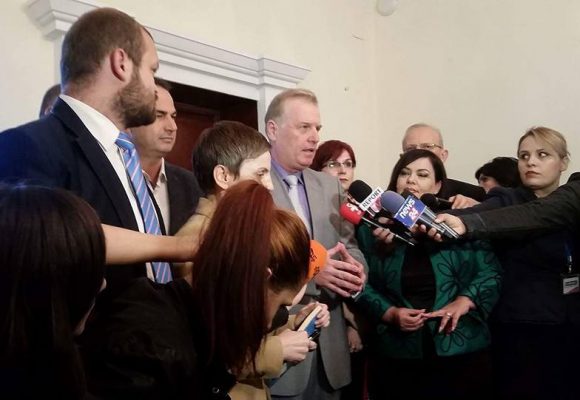
The European Federation of Journalists (EFJ) together with its affiliate, the Association of Professional Journalists (APJ) in Albania expresses firmly its disappointment and concern for failed Commission hearing in the Albanian Parliament. The session was planned for today, where a hearing was organised at the Commission of the media with the former director of the TV Channel A1News. Alida Tota, who was sacked due to an investigative report made last August. The investigation was about the tragic death of a 17-year-old man Ardi Gjoklaj, who was illegally working at a landfill under supervision of the Municipality of Tirana. The Association…

Turkish government shuts down 15 Kurdish media outlets

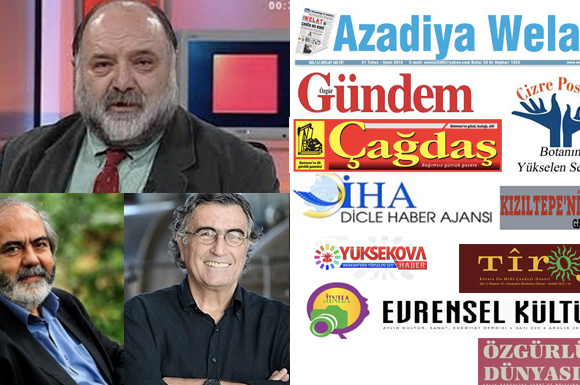
The Turkish government issued on Saturday 29 October a decree shutting down 15 Kurdish media outlets: 11 newspapers, two news agencies and three magazines. The latest closures bring the number of media outlets shut down under state of emergency in Turkey to 168. The Turkish government declared a state of emergency on 20 July, following the failed coup attempt on 15 July. This situation allows the government to close any media organization by issuing a cabinet decree. Here is the list of media outlets targeted by the decree issued on Saturday: Newspapers: Özgür Gündem, Azadiya Welat, Batman Çağdaş , Cizre Postası…

Rights and Jobs in Journalism: Building Stronger Unions in Europe – New handbook launched

In the past years, the media industry has undergone drastic changes due to the emergence of new technologies in the way news are produced and consumed as well as the structural changes driven by the economic crisis. Journalists’ organisations themselves also undergo changes to renew their commitment and strategies to counter new challenges. The European Federation of Journalists (EFJ) launched a handbook within the framework of a project, ‘‘Rights and Jobs in Journalism: Building Strong Unions in Europe’’, showcasing best practices of journalists’ organisations undertaken to tackle new challenges. The handbook was launched in a final conference held in Zagreb…

Enforcing labour rights for journalists in South East Europe and Turkey

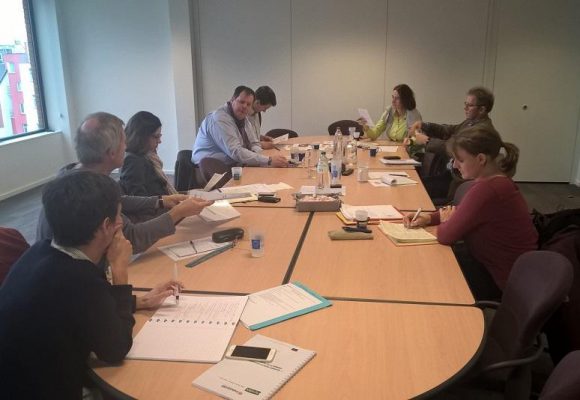
Enforcing labour rights and improving working conditions for journalists remain challenging in South East Europe and Turkey, as concluded in the Labour Rights Expert Group meeting of the European Federation of Journalists (EFJ) on 26 October in Zagreb. The meeting is partly funded by the UNESCO as part of the project “Building trust in the media in South East Europe and Turkey” that enables labour rights experts from the region to exchange views with their colleagues. Erisa Zykaj, journalist and representative from the Association of Professional Journalists of Albania (APJA) said that the enforcement of labour rights is yet to…

Romania must not terminate Public Broadcasting Licence Fee

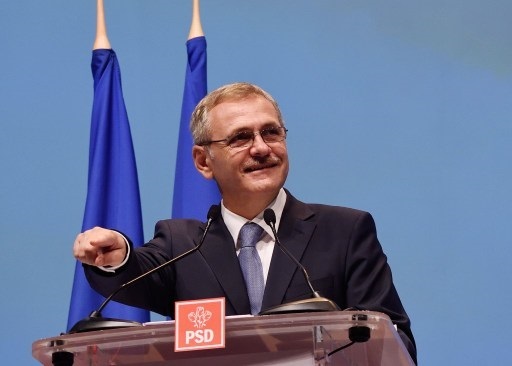
Update (25/10/2016) Romania’s parliament passed a bill on Tuesday to scrap over 100 small taxes, including radio/TV fees. The EFJ and IFJ join their Romanian affiliate FAIR-MediaSind to ask the Romanian President not to promulgate this law. ———————– On October 17, the Romanian Senate approved a draft law to eliminate the monthly TV and radio license fee and to introduce direct funding of public service media from the state budget. The proposal, initiated by the Social-Democrats leader Liviu Dragnea, has come just a few weeks ahead the general elections. The far-reaching measure was buried in a draft law proposing the elimination of…

UK Bank decided to block RT accounts

State-funded Russian broadcaster RT complained on Monday that National Westminster Bank (NatWest) had withdrawn its banking services in Britain without explanation. According to a letter featured on the RT site, the bank will withdraw the card facility on November 14. ”All accounts will be closed on December 12,” the letter continues. The incident would not prevent RT from working in the United Kingdom. NatWest wrote to the UK company that supplies services to RT, rather than the television network itself. The decision to block RT accounts was taken independently by the bank, UK Foreign Secretary Boris Johnson said Tuesday. The Royal Bank of Scotland…

EFJ participates in European trade union informal network on digitisation

(7 October 2016) European trade union federations (ETUFs) informal network on digitialization met  to exchange view on following topics: The need  to regulate on right to disconnect through collective bargaining and other legal instruments Surveillance of data of employees at the workplace, analysis patterns and rating platforms of employers The link between digitalisation and gender equality Online-Platforms and the “sharing economy” with atypical forms of workers as crowdworking, freelancers and the need for framework for employee protection and equal treatment, collective bargaining and fighting undeclared work Digital integration of value chains The Copyright Reform and Intellectual Property Rights and the…