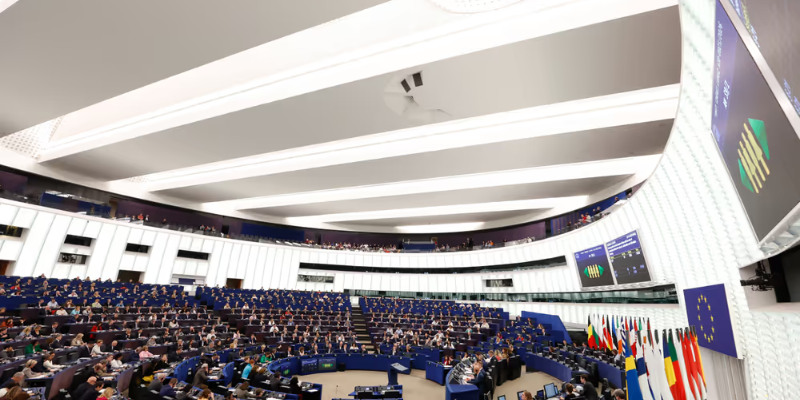
EFJ welcomes European Parliament’s call for an EU regulatory framework that protects copyright in the age of AI

Today the European Parliament adopted the report on “copyright and generative artificial intelligence” drafted by MEP Axel Voss (by 460 votes to 71, 88 abstentions). The European Federation of Journalists (EFJ) welcomes this first step as a sign of political will to strengthen and make fairer the copyright framework protecting journalists from the unauthorised use of their work in AI training and content generation. Until now, AI companies have been relying on journalistic content without seeking consent, providing remuneration, or ensuring transparency about how such material is used. This practice not only undermines journalists’ intellectual property rights but also threatens…
Justice for Anna Politkovskaya

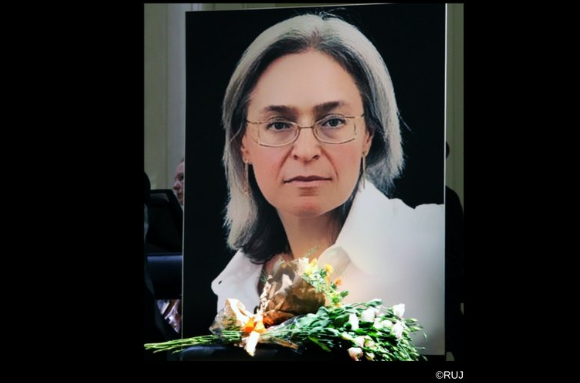
On 7 October 2006 Russian journalist Anna Politkovskaya, a reporter for the Novaya Gazeta, newspaper and a prominent critic of Russian President Vladimir Putin, was shot dead at her apartment building in central Moscow. The European and International Federations of Journalists (EFJ-IFJ) join their affiliate the Russian Union of Journalists (RUJ) in commemorating the death of the veteran journalist and calling on the Russian government to renew its efforts to identify those who ordered the journalists’ murder.  The journalist and human rights activist’s body was found by a neighbour in the elevator, where she had been shot 4 times. The murder of…

Turkey: Med Nûce, IMC TV, Hayatin Sesi,… must be re-established urgently

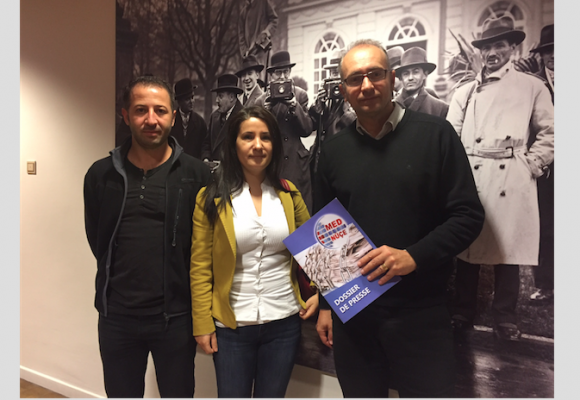
The European and Federation of Journalists (EFJ) has received today (05/10/2016) a delegation of journalists working for Med Nûçe television. The signal of the Kurdish channel based in Belgium has been removed on Monday (03/10/2016 at 10:00) by Eutelsat SA, a French sattelite provider, on Turkish request because “the content is not in line with public order directives of the term’s between us as well as with the laws which regulate TV distribution in Europe and surrounding countries”. The EFJ strongly condemned the action considered as a media freedom violation and reported the case to the Council of Europe’s platform…

Confronting the crisis of transparency and censorship facing journalism in Serbia

A mission to Serbia by the Ethical Journalism Network and the European Federation of Journalists this month has called for urgent action to strengthen journalism and independent media across the country. Aidan White, EJN Director, and EFJ Project Officer Mehmet Koksal talked with media leaders and journalism support groups during their visit on September 16-17. They found that problems of political bias, lack of transparency in ownership, manipulated state funding for favoured media, and a desperately weak economic situation all contribute to a deeply flawed media system. “The media crisis cannot be allowed to get worse,” said White. “It poisons…

Turkey: 11 TV channels removed and state of emergency extended

Update on 04.10.2016: Turkish authorities cut the signal of IMC TV, sealed the building of Hayatin Sesi TV, raided the office of Özgür Radyo and detained journalists / media workers. Update on 30.09.2016, IMC TV was added to the list of banned TV channels. The European and International Federations of Journalists (EFJ-IFJ) have today (29/09/2016) backed its affiliates TGS and TGC in condemning the removal of at least 11 TV channels in Turkey including IMC TV, Hayatın Sesi, Azadi TV, Jiyan TV, Van TV, TV 10, Denge TV and Zarok TV from the national satellite platform TÜRKSAT. According to media reports, the administrative decision…

EFJ calls on MEPs to strengthen independence of audio-visual regulators in Europe

The European Federation of Journalists (EFJ) has today expressed growing concerns over recent amendments to weaken the independence of national regulatory authorities in the review of the EU regulation on audio-visual media (AVMSD Directive 2010/13/EU). The EFJ has called on Members of the European Parliament (MEPs) to reject amendments that would weaken the independence of national regulatory authorities and the  European Regulators Group for Audiovisual Media Services (ERGA). Ricardo Gutiérrez, EFJ General Secretary, said, ‘‘We are very surprised to see several amendments attempting to weaken the provision to guarantee the independence of national regulatory authorities. This is completely contradictory to…

EFJ-IFJ welcome proposed EU directive strengthening authors’ contractual position

The European Commission today published a proposal for a directive on authors’ rights that would help give more power to journalists. The proposal provides mechanisms to address authors’ and performers’ weaker contractual position when negotiating terms for use of their work. The federation welcomed the proposal as a “great step forward” in protecting journalists’ authors rights and called on EU institutions to do their utmost to improve authors’ remuneration in the upcoming legislative process. While acknowledging the “weaker contractual position” of authors and performers, the draft directive on copyright in the digital single market would establish three mechanisms to help secure…

The authors’ group welcomes the EU directive proposal on copyright

The European Commission presented on 14 September its proposal for a directive on copyright in the digital single market. The Authors’ Group* – representing more than 500 000 authors, including writers, literary translators, composers, songwriters, journalists, photographers, film/TV directors and screenwriters in Europe – welcomes the directive, in particular the proposal to address the key issue of creators’ weak bargaining position in their contractual relationships and fair remuneration in contracts. The Authors’ Group supports the European Commission’s commitment to address problems related to the forced transfer of rights of authors to publishers, producers and broadcasters. Achieving a well-functioning market-place for…

Meeting the challenge of atypical working – new handbook launched

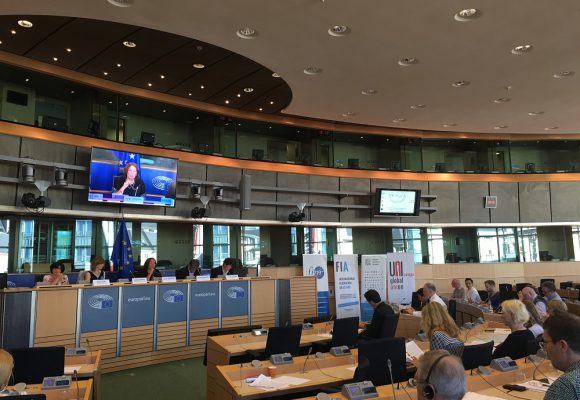
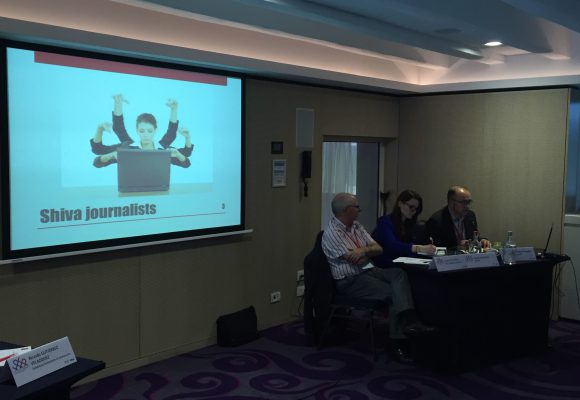
The Media, Arts and Entertainment sector has seen significant changes in the structure of the labour market and in the organisation of work both within and outside the framework of the traditional employment relationships – with an established trend towards various forms of atypical working arrangements. The European Federation of Journalists (EFJ), the International Federation of Actors (FIA), UNI MEI and the International Federation of Musicians (FIM) have today launched a handbook on ”The Future of Work in the Arts, Media & Entertainment Sector”, outlining conclusions and recommendations addressing atypical work in the Media, Arts and Entertainment sector. The launch…

South East Europe and Turkey journalists join European Labour Rights Experts group

Journalists and media workers from South East Europe and Turkey are able to share best practices, illuminate present challenges in labour rights and benefit from legal expertise after joining European Labour Rights Experts Group. “If journalists’ working conditions are poor, how can media be the driver for sustainable and peaceful development in the region? By promoting these exchanges, UNESCO and the European Federation of Journalists (EFJ) aim for a collective upgrade of media professionals’ rights, for the benefit of publics and democracy,” commented Mehmet Koksal, project officer from EFJ. Under the EU-funded project “Building Trust in media in South East…

Albanian journalists demand Parliament to reject law threatening media freedom

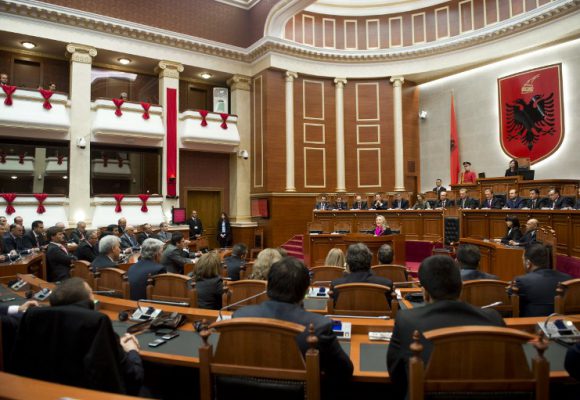
The Association of Professional Journalists (APJ) in Albania together with a coalition of journalists’ organisations called on the Albanian Parliament to withdraw a provision in an anti-corruption law that would threaten media freedom. According to APJ, the controversial Article 13 in the law regulating “the organisation and functioning of institution to encounter corruption and organised crime” will impose censorship on journalists and media organisations. The provision says ”any inappropriate influence on the work of the special prosecutors or their actions on specific issues through the public authorities or the media, or any other form of pressure that impacts on the independence of…

Croatia: Report highlights media freedom in turbulent times

Media freedom in Croatia is facing turbulent times with excessive political influence, concluded by an international mission in a report published on 9 August.  The report published by the International Press Institute (IPI) highlighted that the political crisis in the country has put journalists and media freedom at risk resulting in the lack of independence of public media, increase in legal restrictions and physical attacks on journalists. The report listed a series of findings from the international mission back in June 21 – 23 carried out by the South East Europe Media Organisation (SEEMO). The mission included representatives from the…

Excessive restrictions on foreign broadcasters in Moldova

The European Federation of Journalists is strongly opposed to restrictions on foreign broadcasters in Moldova. The amendments to the Audio-visual Code under consideration by the Parliament in Moldova run counter to international standards on media freedom. On 7 July, the Parliament adopted, in the first reading, amendments to the Audio-visual Code of the Republic of Moldova. The amendments proposed by the Liberal Party and the Democratic Party, members of the ruling coalition, aim to limit broadcasts in foreign languages or those originating from abroad. Ricardo Gutiérrez, the EFJ general secretary, participated to a public debate organised by the chairman of the Parliament…

Greece: union representative dismissed at Alpha 989 radio station

Journalists at Greece’s Alpha 989 radio station are to meet to consider action following the “unfair, illegal and abusive” dismissal of their union representative. The International and European Federations of Journalists have pledged their support to Greek affiliate JUADN following the sacking of Georgia Ioannidou. The union had given the radio station’s board a deadline to reinstate Georgia, who is also a board member of JUADN, but the company failed to act. In a statement the union said: “Our colleague has been targeted for being a union representative and her persistence in taking up issues with the personnel department such…

AFP: End contracts’ masquerade!

The European Federation of Journalists (EFJ) joined the campaign launched by the International Federation of Journalists (IFJ) to denounce Agence France Presse’s (AFP) “unacceptable” contracts. AFP is demanding its photographic stringers across the globe, in offices outside of France, to sign contracts which include the full assignment of their authors’ rights without any additional remuneration. The IFJ has condemned such “unfair” practices and is calling for an immediate revision of the standard contracts imposed on photographers working for AFP. The IFJ is also calling on photographers not to sign the contracts as they stand. The EFJ and the IFJ has been campaigning for years against rights grabbing contracts (Further…

Cyber-bullying: Stop the cycle now!

Anonymity of perpetrators, attacks across borders and a lack of police awareness and reaction are among the obstacles to properly tackle cyberbullying. The Council of Europe’s conference on gender equality “Are we there yet”  held in Tallinn, Estonia, on 30 June and 1 July was an occasion to hear from various experts on how best to tackle cyber-bullying alongside a range of other key topics, including better access to justice and leadership, stereotypes in the media, sexist hate speech and gender mainstreaming. Social media offer incredible opportunities for women to express themselves. But there is also a downside to it.…

European trade unions call for stronger protection of workers in digital economy

European trade unionists and the European Commission have called for a new start for strong social dialogue following in a conference with multi-stakeholders on ”Shaping the new world of work” held by the European Trade Union Institution (ETUI) and the European Trade Union Confederation (ETUC) in Brussels. The conference was kicked off by a panel of high-level speakers from European and international institutions, including Marianne Thyssen, EU Employment Commissioner, Jeffrey Franks, International Monetary Fund (IMF) Europe Office Director, Guy Ryder, Director-General of the International Labour Organisation (ILO), Mark Keese, head of the OECD’s employment, analysis and policy division, Thomas Handel,…