EFJ welcomes European Parliament’s call for an EU regulatory framework that protects copyright in the age of AI

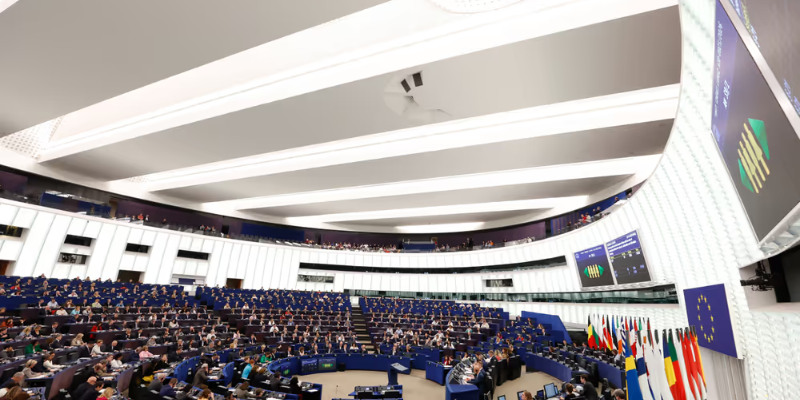
Today the European Parliament adopted the report on “copyright and generative artificial intelligence” drafted by MEP Axel Voss (by 460 votes to 71, 88 abstentions). The European Federation of Journalists (EFJ) welcomes this first step as a sign of political will to strengthen and make fairer the copyright framework protecting journalists from the unauthorised use of their work in AI training and content generation. Until now, AI companies have been relying on journalistic content without seeking consent, providing remuneration, or ensuring transparency about how such material is used. This practice not only undermines journalists’ intellectual property rights but also threatens…
Croatian President says shaming media law should be scrapped

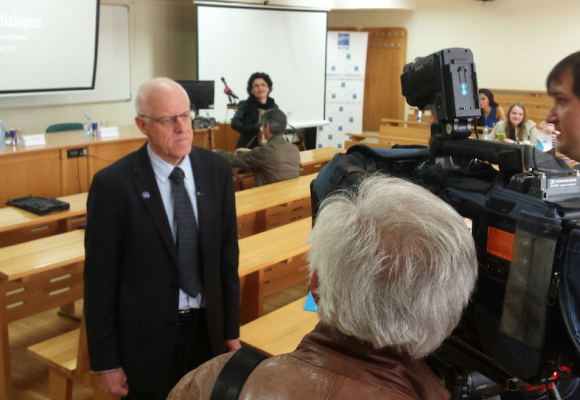
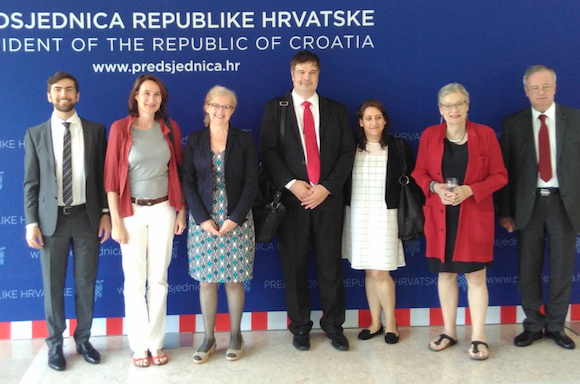
Croatian President Kolinda Grabar-Kitarović told an international media freedom delegation today that she supports efforts to protect the independence of national public broadcaster HRT and to repeal her country’s controversial ‘shaming’ law. While Croatian political parties have traditionally sought to control HRT, alarmingly rapid moves by the outgoing Croatian Democratic Union (HDZ)-led government to replace key positions at the broadcaster have raised international concern. Some observers have warned that the moves represent an attempt to promote a nationalist – and in some cases even historical revisionist – editorial line. The president, in response to concerns raised by the delegation, assured…

Irish government must restore freelance rights for collective barganing

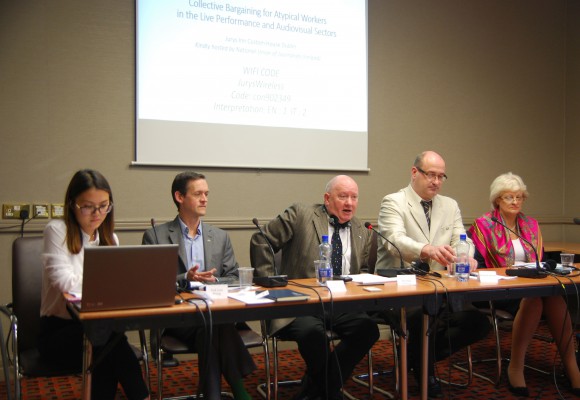
The European Federation of Journalists (EFJ), joining its affiliate in Ireland the National Union of Journalists, is welcoming the decision of the International Labour Organisation (ILO) to challenge Ireland’s failure to treat freelance workers in accordance with the rights enshrined in the organisation’s convention. Following a complaint by the Irish Congress of Trade Unions (ICTU) the Irish government faces questions at the ILO assembly in Geneva about the treatment of freelance workers, who are denied the right to be collectively represented by unions as a result of the actions of the former Competition Authority in Ireland. The complaint was lodged…

#newsocracy: Safeguarding journalism & exploring owner influence.

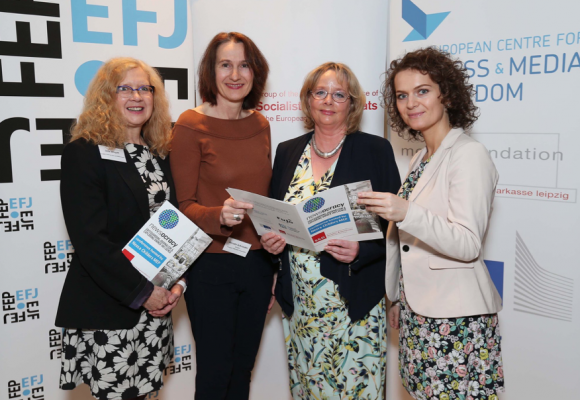
(Dublin, 3rd June, 2016) The conference discussed the current state of journalism in Ireland and Europe and was hosted by MEP Nessa Childers from Ireland. Renate Schroeder outlined the threats on the independent status of journalists in Europe expressing great concern about the precarisation in the media as well the increasing attacks from both political and economic forces. Losing trust in journalism with journalists who no longer have time to check information or self-censor because of fear to lose the work or be attacked is the main challenge today, she told  about 100 participants in Dublin. NUJ Ireland General Secretary…

Trends and skills in the European audiovisual and live performance sectors

The final conference of Creative Skills Europe, the European Skills Council on Employment and Training in the Audiovisual and Live Performance sectors, will take place in Brussels, Belgium, on Monday 6th of June 2016. Closing a phase of activities that included three meetings in Tallinn (April 2015), Prague (January 2016), and Madrid (March 2016) the conference will present the final publication of the project, as well as recommendations for future actions and co-operations in the field of skills development for the audiovisual and live performance sectors in Europe. More than 50 participants from across Europe are expected to this event.…

European journalists seek ways to enforce fair contracts for quality journalism

In the framework of the two-years project “Rights and Jobs in Journalism”, the European Federation of Journalists (EFJ) organised on 30 May its last workshop focusing on “Authors’ rights enforcement: Fair contracts for quality journalism” in Brussels. Twenty EFJ members coming from 16 European countries attended the workshop and exchanged best practices on the protection of authors’ rights and way to ensure fair contracts for journalists.  Participants had the opportunity to discuss practical tools in two working groups. The first one, focused on the question of how to secure fair contracts for European journalists, raising the problem of what a fair remuneration might be. In the Netherlands…

Commission VP Ansip backs call for investigation on fair remuneration in EU copyright review

The Creators Conference 2016 concluded on Tuesday 31 after a productive day of panels, interviews and speeches by prominent artists, experts and policy makers discussing the current issues faced by the European creators’ community and the cultural and creative industries. The Authors’ Group welcomed European Commission Vice-President Andrus Ansip in charge of the Digital Single Market for a keynote speech in which the Commissioner confirmed the “need to look closer at the conditions for remunerating creators and getting a fair share of the value generated”. Vice-President Ansip also stressed the “follow the money approach” and “widening access to content” for consumers…

No to the yellow card on posted workers

The European Trade Union Confederation (ETUC) has written to the European Commission demanding that it : • rejects the arguments against the revision of the posting of workers directive in the ‘yellow card’ from some Member States; • allows a democratic debate without delay on the existing proposal through the normal EU legislative procedure with governments and the European Parliament. The ETUC letter accuses the Member States involved of neglecting their own workers. “All trade unions in Europe, including in countries where parliaments have supported the yellow card procedure, strongly support revision of the Posting of Workers Directive,” said Luca Visentini,…

Cybersecurity II : Secure, protect, investigate

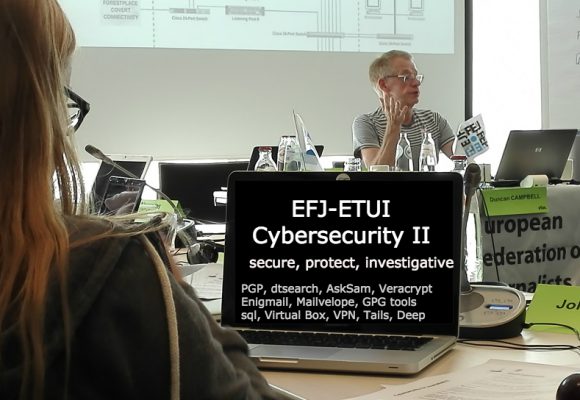
The European Federation of Journalists (EFJ) and the European Trade Union Institute (ETUI) have successfully organised a 3-day training (25-27 May) in Leuven (Belgium) on Cybersecurity for journalists : Secure, protect, investigate. This was the second edition of a course organized 2015 along four days about Cybersecurity for journalists and with the same practical approach. The course aimed to facilitate technical skills to journalists helping them to protect themselves, their work and their sources. 13 journalists and / or unionists coming from 11 countries took part to the training, with an important participation of participants coming from countries of the…

40 % of Serbian journalists wants to leave the profession

Journalists Union of Serbia (SINOS – EFJ affiliate) in partnership with the Friedrich Ebert Foundation held a seminar in Prolom Banja (Serbia) from 19 to 21 May. The theme of the was organising unions for media workers in Serbia and the Balkans countries. The participants talked about precarious work, legal and social status of journalists and the sustainability of trade unions in the media with multinational ownership problems. The President of the European Federation of Journalists (EFJ), Mogens Blicher Bjerregard spoke about the experience of organizing unions for journalists in different European Union member states. He stressed that progress is possible when…

Legalislative framework for investigative journalism need improvements

The Institute of European Media Law (EMR), consortium partner of the European Centre for Press and Media Freedom (ECPMF), has recently conducted a study on the state of media freedom and investigative journalism in Europe. The results published on 17 May 2016 show that restrictive rules for the development of press freedom remain a major obstacle in all countries. 1. Decriminalisation of journalism = Hungarian model Journalists might infringe the law while trying to obtain information. According to the report, all legal frameworks know limits to the freedom of obtaining information. Even though in many states courts take into consideration the importance of press freedom…

World Copyright Day: Outlaw unfair contractual practices!

Legislators must take concrete steps against unfair contractual clauses in their laws. This is the message put across by the European Federation of Journalists (EFJ) and the International Federation of Journalists (IFJ) to mark World Copyright and Book Day tomorrow 23 April. The organisations warn against the continuing trend developed by media companies to use rights- grabbing contracts. Journalists who sign those contracts not only lose the right to use their works autonomously, but also the (moral) right to protect the integrity of their works. These practices allow for the same work to be used many times for one single payment…

From State Media to Public Service Broadcast

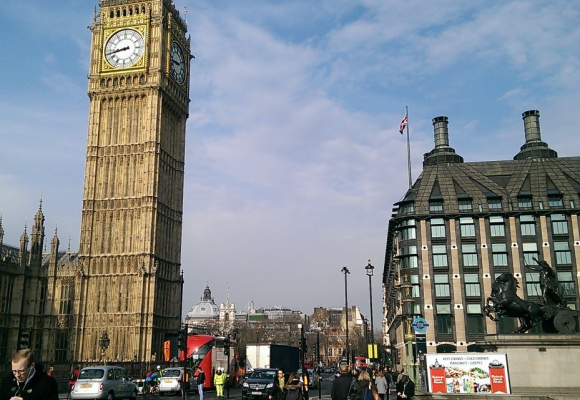
Speech by Mogens Blicher Bjerregård (EFJ President) The European Partnership countries in former Soviet states must realize that they in reality have to replace their state media by public service media independent from government Independency of media in the so-called partnership countries from Caucasus to Belarus, Ukraine and Moldova was on the agenda 11th April 2016 at a conference set up by the Council of Europe, hosted by UK Parliament at Portcullis House. I was on the speakers list and should deliver a speech about public broadcast. I emphasized and repeated what a previous panelist has said, that it is important to…

Swiss journalists campaign for collective agreements

Swiss Employment Law is designed liberally and the protection of employees is quite weak compared to other countries. In Switzerland, due to the different circumstances in each language area, the working conditions in the media industry vary from one area to another. While a Collective Agreement for journalists does exist in the French-speaking part of Switzerland, journalists in the German- and Italian-speaking parts have been working without one since 2004 and are therefore constantly facing the consequences of the lack of protection. However, there is reason to hope that this long lasting state of affairs may come to an end…

Cyber Security Training for Journalists, 25 – 27 May Leuven

The European Federation of Journalists (EFJ) and the European Trade Union Institute (ETUI) are organising a two-day Cyber Security Training for Journalists on 25 – 27 May in Leuven, Belgium. This is the second training on cyber security organised by the EFJ and ETUI. The first training successfully took place in January 2015. The second training targets at professional journalists with digital background. He or she should have good technical skills and have an interest in digital media issues and surveillance law. The EFJ encourages members to nominate their journalist members to attend this training. The training will be in…

Turkey: Press conference tomorrow to support press freedom

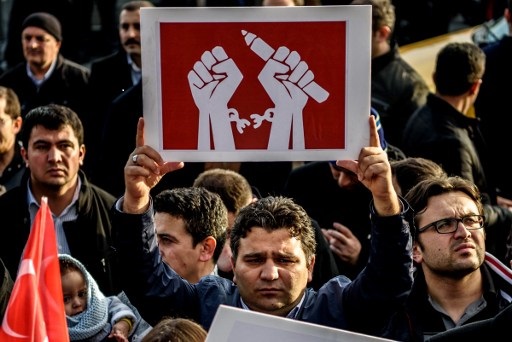
On March 24, 2016 at 5:00 pm, a press conference in support for “freedom of information and freedom for journalists” in Turkey  will be held in the district of Cağaloğlu in Istanbul, where representative of national and international professional media organisations will gather together. The conference is the result of a joint ongoing campaign launched by the Journalists Association of Turkey (TGC), the Journalists’ Union of Turkey (TGS), the Progressive Journalists Association (CGD), DISK-Basin Is trade union, Haber Sen trade union and the Turkish national press institute to set imprisoned journalists free. International media organisations. including EFJ, IFJ, IPI, EJN,…

Greek journalists protest against government plan to reduce TV licence number

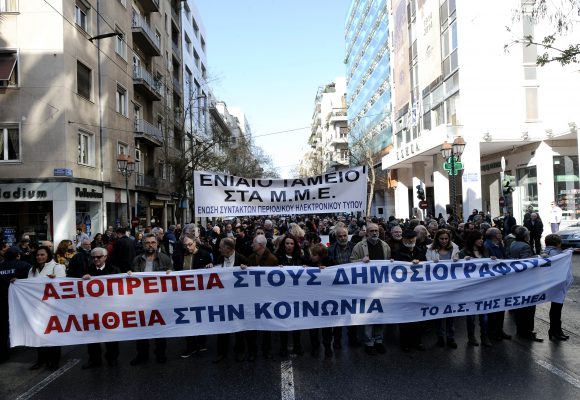
Journalists across Greece stopped broadcasting on 11 February from 18:00 until 01:00 in a protest against government plan to reduce the number of TV licences in Greece to only four national commercials broadcasters. The International and European Federations of Journalists (IFJ and EFJ) and its Greek affiliates (JUADN, PFJU, ESPIT and ESIEMTH) demand the Greek government to withdraw immediately the proposal and guarantee media pluralism and transparency in media ownership. According to the draft law voted on 11 February, the number of TV licences issued to commercial broadcasters will be limited to four. The independent authority (National Broadcasting Council ESR) will be  bypassed and the power to grant…