Serbia: Ministers for European Affairs must urgently draw a red line on media freedom

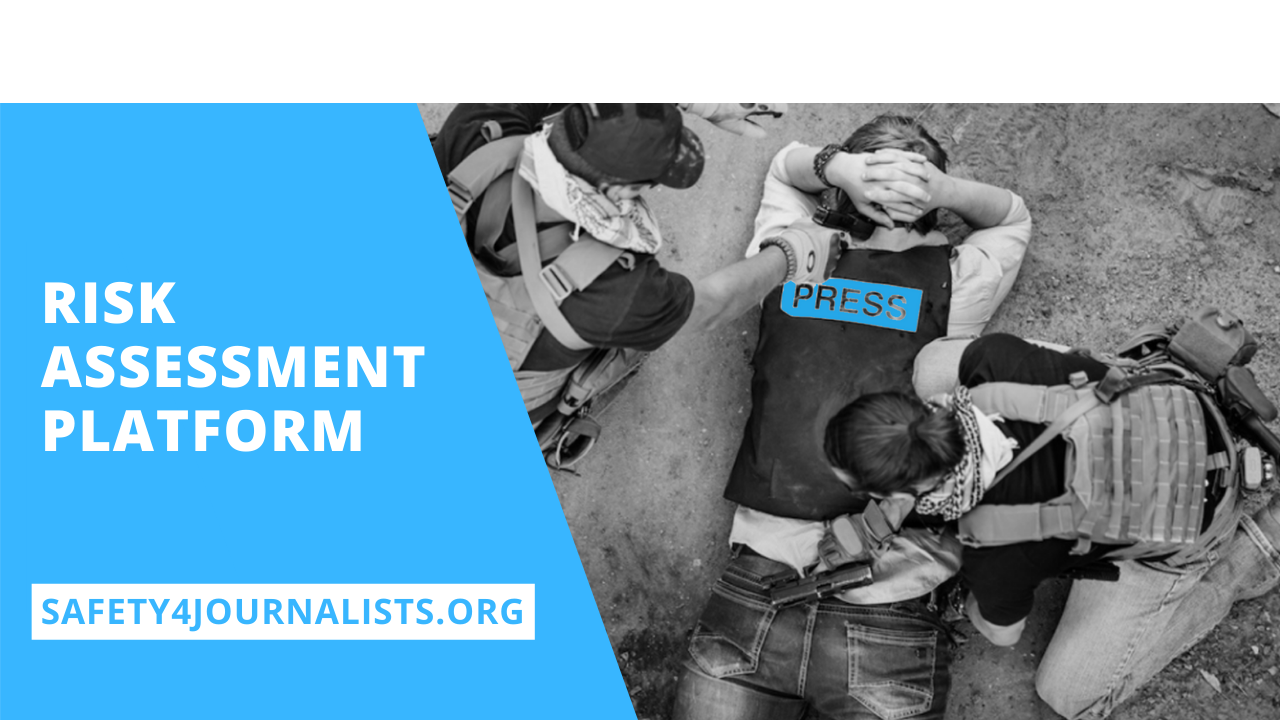
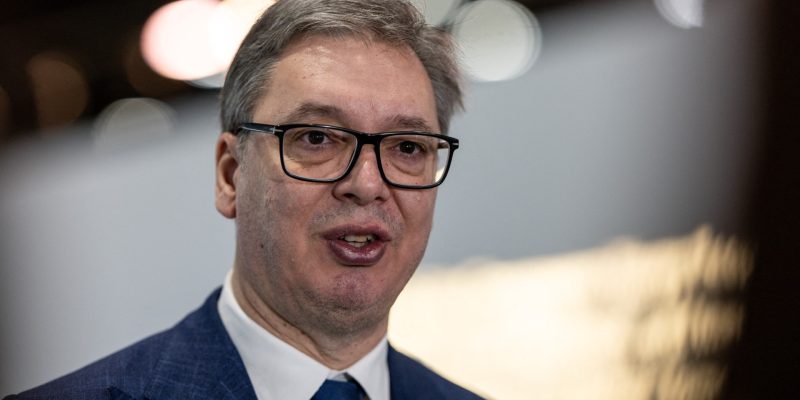
EU Member States must show political leadership and join calls for the suspension of EU funds to Serbia to prevent the spiral of violence against journalists from escalating into deadly attacks, the European Federation of Journalists (EFJ) and nine undersigned organisations said on Friday in a series of letters sent to a group of Ministers for European Affairs across Europe. The organisations highlight the shocking numbers of physical, legal and online attacks against journalists as recorded on international monitoring platforms since November 2024, a level of persistent violence against media that is rare in any EU member state or candidate country. Since the…
IFJ Annual Killed list: two killed journalists in Europe in 2019

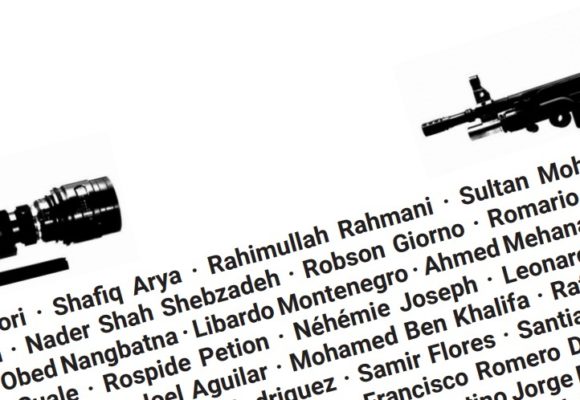
The International Federation of Journalists (IFJ) today released its annual report of killings of journalists, detailing 49 deaths worldwide in 2019 (including two in Europe). The world’s largest organisation of journalists reiterated its call for a real commitment by governments to fight impunity for crimes committed against journalists and for media employers to provide safety training, insurance and equipment for their staff in the field. On 31 December 2019, the IFJ published its list of media workers killed in the line of duty, showing 49 journalists killed in 2019, including three women, half as many as in previous years. The report, published on 4 February, provides…

Cartooning for Peace published a practical guide for the protection of editorial cartoonists

2019 was a terrible year for press cartoons, according to Courrier International. The ‘New York Times affair’, the numerous trials against cartoonists and the greater precariousness of the profession showed that their working conditions are deteriorating. As we marked the fifth anniversary of the attack on Charlie Hebdo, Cartooning for Peace, an international network of press cartoonists, has published a guide intended to cartoonists facing specific or persistent threats. The publication is meant to be very practical as it includes advices, testimonies and useful resources to help cartoonists around the world 1) to assess the risks and 2) to identify…

North Macedonia: online media Vidi Vaka endorsed the European Charter on journalists’ working conditions

The Trade Union of Macedonian Journalists and Media Workers (SSNM) hold a press conference today in Skopje to announce their new collaboration with Association of Journalists of Macedonia (AJM), the Council of Media Ethics of Macedonia, NGO Onlimit Media and Vidi Vaka portal, on two major texts for journalists’ labour rights. The four parties signed the Charter on journalists’ working conditions and the draft Fair Working Contract for journalists and media workers in digital media. By doing so, they commit to respect all journalists’ and media workers’ labour rights, their freedom of expression as well as ethical and professional standards.…

Gender equality is lagging behind in the croatian audiovisual sector

There is no gender equality in the Croatian audiovisual sector. This was the conclusion of a European event hosted by EFJ affiliates the Union of Croatian Journalists’ Union and the Association of Croatian Journalists in Zagreb on 30 January. Croatian film producers, performers, broadcasters, film directors, journalists and researchers convened to share experiences and key findings and pointed at the lack of female presence in audiovisual content as well as in leading roles. According to a recent ILO report published in March 2019 women represent 39% of the global workforce, but make only 27% in management positions. Despite the feminisation…

“Assange, Snowden, Manning and Harrison are the resistance fighters of the 21st century”

Citizens, journalists, artists, human rights organisations and journalists’ unions gathered on January 29th in Brussels to call on the Belgian government to do its utmost to protect Julian Assange and impede his extradition to the United States. The International and European Federations of Journalists (IFJ and EFJ) joined the two Belgian civil society organisations, Carta Academica and Belgium4Assange, in two public actions organised in Brussels to defend freedom of expression, freedom of the press and our right to know in general, and Julian Assange, Chelsea Manning, Sarah Harrison and Edward Snowden in particular. Over 120 personalities, artists, activists and journalists…

“The coverage of violence against women fluctuates between silence and sensationalism”

The UNESCO launched a handbook for journalists on reporting violence against women and girls to help radio, television, press and social media professionals determine which channels of investigation and information is relevant and ethical when reporting on gender violence. This guide includes examples of good practices and tips on how to frame the topic, how to conduct an interview, how to avoid sensationalism, the terminology to use, etc. DOWNLOAD THE FULL REPORT Anne-Marie Impe is the author of the handbook and her professional career is at the crossroads of journalism and lifelong education, writing and action. She started in Dakar, Senegal,…

Turkey: Pro government daily targets Journalists’ Union over press freedom campaign

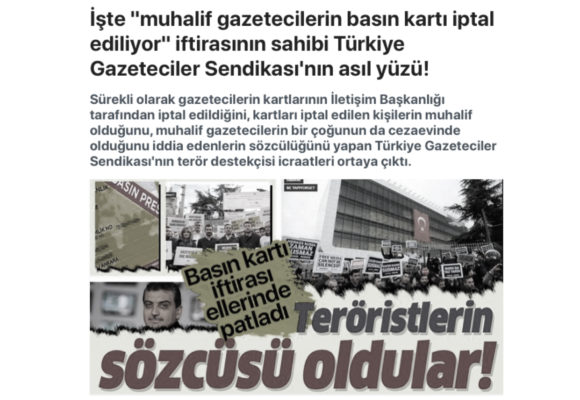
A pro-government newspaper based in Istanbul has blasted the Journalists’ Union of Turkey (TGS), gearing up the official narrative that labels jailed journalists as “terrorists.” “Here is the real face of the Journalists’ Union of Turkey, which flung dirt by alleging that the press cards of opposition journalists were canceled [by the government],” the Takvim daily said on its headline on January 27. Several journalists, including those that work at opposition dailies Evrensel and BirGün, had noticed last week that their pending applications for press cards renewals were rejected by the Presidency’s Communication Directorate when they checked the official body’s…

Journalists meet with European Parliament’s Culture Chair Sabine Verheyen

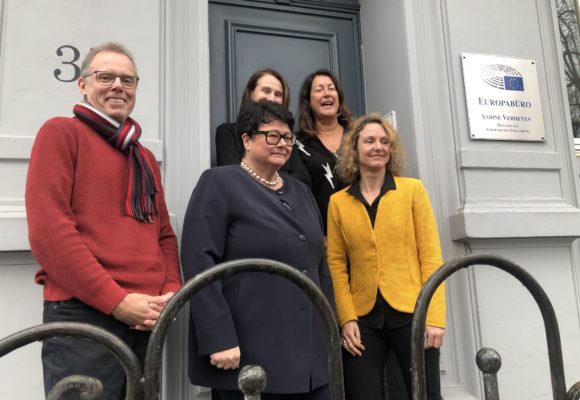
On 27 January, a delegation of journalists from the Europa Commission of the Deutscher Journalisten-Verband (DJV) together with EFJ Director Renate Schroeder met with German MEP Sabine Verheyen (EPP) the chair of the European Parliament’s Committee on Culture and Education in her national office in Aachen (Germany). Headed by its chair Steffen Heinze (Deutsche Welle), the meeting discussed many issues of importance to journalists. Verheyen addressed the increasingly precarious situation of journalists in Europe and expressed great concern about the increased violations against media freedom, the problem of disinformation and in particular the phenomenon of “deep fake”. The issue of…

Turkish press authority cancels press cards of hundreds of journalists

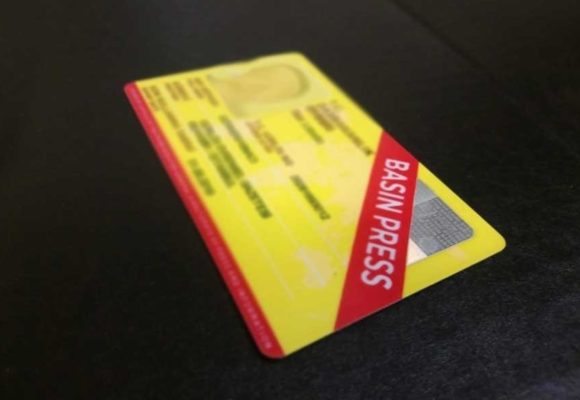
The Turkish press authority cancelled press cards of hundreds of journalists, but did not give any reason for the measure. The International and European Federations of Journalists (IFJ and EFJ), along with their national affiliates, the Journalists’ Union of Turkey (TGS) and DİSK Basın-Is, urge the authorities to revoke this decision and reissue immediately new press cards to their holders. The decision concerned hundreds of journalists who found out that the Directorate General of Press and Information in Prime Ministry’s Office had cancelled their press cards, when they received their press cards with a “cancelled” stamp inside the back cover.…

European press councils stand out as key players to face political interference, disinformation and confidence crisis in media

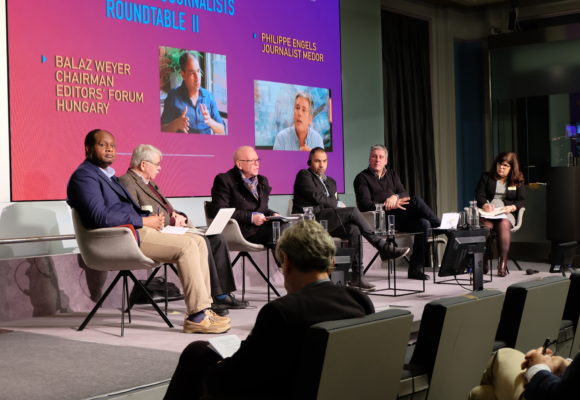
Are press councils the last defences against the falling confidence in journalism? On the occasion of its 10th anniversary, the Belgian French press council (Conseil de déontologie journalistique – CDJ) organised a European forum in Brussels, on 21-22 January, to raise awareness about the role of press councils. The event addressed in particular, on a panel, the stakes of ethics dealing with political interference and pressure on journalists. Threats on journalists are increasing in Europe under various forms while greatly impacting media freedom, reminded Ernest Sagaga, Head of Human Rights at the International Federation of Journalists. The Council of Europe…

Ukraine: journalists’ union rejects new draft law on disinformation

On January 20, the Ukrainian Ministry of Culture, Youth and Sports has unveiled a draft law on combating disinformation and regulating media activity.  According to the minister of Culture, Volodymyr Borodyansky, the text aims to respond to Russian disinformation. However, the journalistic community believes that this initiative is likely to be used as a tool for harassing Ukrainian journalists. In particular, the Nation Union of Journalists of Ukraine (NUJU) warns that the law would legalise state interference in the journalistic profession and restrict media workers’ rights. The document outlines new rules on media regulation and journalistic activity. It foresees criminal…

The Press Freedom Police Codex launches in France

In recent weeks, there has been an escalation in the incidences of violence by police against journalists, especially in France. There could not be a better time to establish a dialogue between the groups and to work towards stopping the violence. This is why the European Centre for Press and Media Freedom (ECPMF) has joined the French Union of Journalists of the Confédération générale du travail (SNJ-CGT), to launch its Press Freedom Police Codex in Paris. The codex was developed by ECPMF and partner organisations based on research conducted across Europe on the situation of journalists. ECPMF teamed up with…

Journalists’ and press freedom organisations welcome start of trial in Kuciak murder

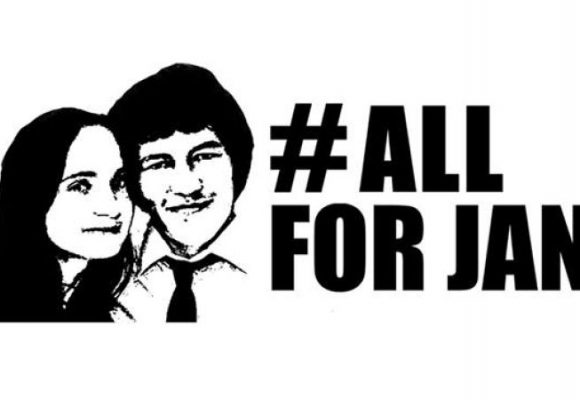
The undersigned international and regional press freedom and journalism groups welcome the start of the murder trial this week against the suspected killers of Slovak journalist Ján Kuciak and his fiancée, Martina Kušnírova. The suspects on trial at the Specialized Criminal Court in Pezinok, Slovakia, include the alleged mastermind, Slovak businessman Marian Kočner, who prosecutors say ordered Kuciak’s murder in retaliation for his journalistic work. A confidante of Kočner’s, Alena Zsuzsová, is charged with having arranged the murder via a middleman, Zoltán Andruskó, who in turn contracted two alleged hitmen, cousins Tomáš Szabó and Miroslav Marček. Andruskó previously admitted guilt…

Italy: Outrage over Sanremo festival presenter’s sexist comments on public TV

The presenter of the Italian Sanremo 2020 festival, broadcast by the Italian public television RAI, caused a wave of indignation in Italy after he praised his co-hosts with sexist comments. The presenter of the Sanremo music festival, Amedeo Umberto Rita Sebastiani, also known as Amadeus, introduced his co-hosts saying they were chosen for being “very beautiful” and referring to one of them as a “sexy icon”. He added that Francesca Sofia Novello, who is a model, is a “super beautiful” woman, and praised “her ability to be close to a great man (in reference to Valentino Rossi, her partner) by…

Albania: Journalists’ association pushes President to veto “censorship” law

The President of Albania, Ilir Meta, has vetoed a proposed law that would stifle online media following the pressure from the Association of Professional Journalists of Albania (APJA), who denounced the bill as “authoritarian”. The International and European Federation of Journalists (IFJ/EFJ) welcomed the decision, stressing that anti-defamation laws must not be used as tools to restrain press freedom. The proposed amendments to the Law on Audiovisual Media and the Law on Electronic Communications would have granted new government bodies such as the Albanian Media Authority (AMA) and Albanian Communication and Postal Authorities (AKEP), the power to instantly block media…

Getting real about diversity and talent: 10 recommendations

Europe’s newsrooms are still predominantly white and middle class, though societies are changing at rapid speed. How to better reflect all members of the increasingly diverse European societies within Europe’s Media and public sphere is crucial; the issue of diversity and gender is and important element in EFJ’s project work. The European Federation of Journalists has published a new report about how to get newsrooms and editorial teams more diverse. As part of the EFJ project ‘Managing change in media’, supported by the European Commission, one of its contributors, Alexandra Borchardt, drafted ten recommendations for newsrooms to be more diverse,…