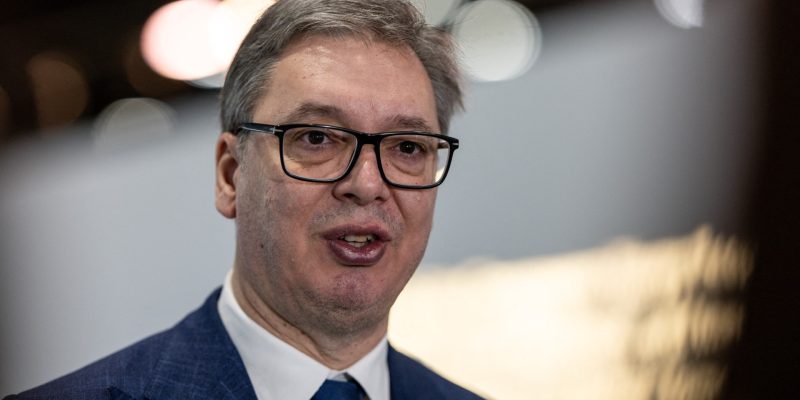
Serbia: Ministers for European Affairs must urgently draw a red line on media freedom

EU Member States must show political leadership and join calls for the suspension of EU funds to Serbia to prevent the spiral of violence against journalists from escalating into deadly attacks, the European Federation of Journalists (EFJ) and nine undersigned organisations said on Friday in a series of letters sent to a group of Ministers for European Affairs across Europe. The organisations highlight the shocking numbers of physical, legal and online attacks against journalists as recorded on international monitoring platforms since November 2024, a level of persistent violence against media that is rare in any EU member state or candidate country. Since the…

UK: BBC journalist wins landmark equal pay case

BBC presenter and National Union of journalists (NUJ) member Samira Ahmed today won a landmark equal pay victory against the BBC. The European and International Federation of Journalists (EFJ-IFJ) congratulate her and the NUJ for its excellent and inspiring work and hope this victory will encourage all women journalists seeking equal pay to make sure they are in a union and media employers to learn the lessons. Journalist Samira Ahmed, backed by the NUJ, first appeared at The Central London Employment Tribunal on Monday 28 October to challenge unequal pay at the BBC. The journalist has been presenting the BBC…

Spain: EFJ-IFJ stand for the defence of Madrid’s public broadcasting service

The European and International Federations of Journalists (EFJ and IFJ) join their Spanish affiliate Federación de Servicios a la Ciudadanía de CC.OO. in the call for the defence of Madrid’s public service broadcaster RTVM (Telemadrid and Onda Madrid) from the blocking situation its management is suffering by the regional government. The Government of the Community of Madrid has not been allowing the replacement of medical leaves for months, it has not yet authorised the broadcasting of women’s sport or second division football matches that have been taking place since 2017, nor has it approved the expense accepted in the Program Contract for…

How can journalists protect their mental health from online harassment?

Journalists have always been in the spotlight and now, with the rise of the use of social media, they are one of the main targets for online harassment. These attacks often includes threats to the journalists themselves and their families and are most commonly directed to women and their biggest consequences are psychological, according to an IFJ survey. Anxiety, stress and fear are, together with self-censorship, the main effects of online harassment on journalists. The Committee to Protect Journalists (CPJ) has published a short guide on how journalists should protect themselves from this harassment: prevention measures to take in advance, how to…

George Foulkes: “A free media is as important to democracy as regular elections”

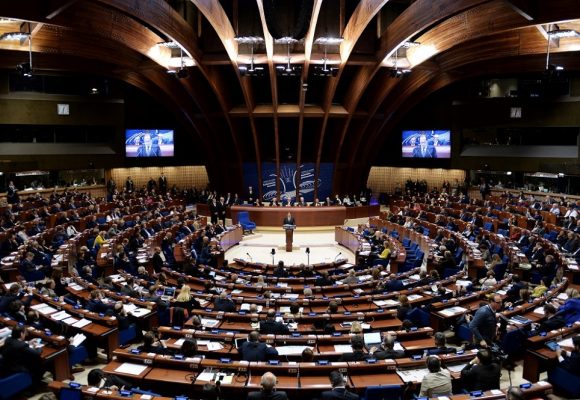
The European Federation of Journalists (EFJ) welcomes Council of Europe Rapporteur on media freedom George Foulkes‘ call for better protection for journalists in Europe. Over the past two years, George Foulkes, who is a British Labour Co-operative politician and former Scotland minister, has been investigating this issue as General Rapporteur on media freedom and the safety of journalists for the Parliamentary Assembly of the Council of Europe (Pace). His report points out that the Council of Europe Platform for the Protection of Journalism shows that the situation is getting worse in Europe. From 2015 to date, 26 journalists have been…

The arbitrary detention of Julian Assange set a dangerous precedent for journalists

Julian Assange, publisher of Wikileaks, is currently detained in Belmarsh high-security prison in the United Kingdom. He faces extradition to the United States and criminal prosecution under the US Espionage Act. He has been charged for publishing the Afghanistan and Iraq war diaries and US embassy cables, important documents that many journalists around the world used and helped to publicise. The “War Diaries” provided evidence that the US Government misled the public about activities in Afghanistan and Iraq and committed war crimes. “We believe that the arbitrary detention and criminal prosecution of Julian Assange set an extremely dangerous precedent for…

New EU Copyright Directive’s workshop: How to get a fair share for journalists

As part of the EU-funded project Trust and Quality in Journalism, the European Federation of Journalists and its Belgian affiliates (AJP/VVJ) are organising the first session of a series of five workshops that aim to promote best practices and exchange ideas about rebuilding trust and ensuring quality in journalism. The workshop taking place in Brussels on March 19-20 will gather experts of authors’ rights officer from the EFJ members, media stakeholders and EU policy makers to discuss national implementation of the EU Copyright Directive and how to guarantee a fair share for journalists. The new directive includes key provisions for the…

Expert Exchange Visit Programme: APPLY NOW!

Are you planning the next big move and in need of expert help? Whether it is about negotiating a new agreement, building recruitment and organising strategies to increase membership, or launching a campaign for journalists, the EFJ Expert Exchange Visit Programme can help you find the experts to share good practices among journalists’ organisations. As part of the EU-funded Trust and Quality in Journalism‘s project framework, EFJ members can request an expert from another affiliate for national training and coaching on union related subjects – collective bargaining, labour rights, authors’ rights, public broadcasting, recruitment and organising and more. The last…

EFJ mourns two killed journalists in Europe in 2019

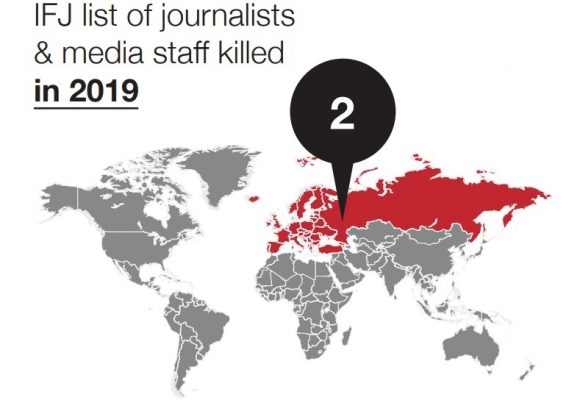
The International Federation of Journalists (IFJ) has recorded 49 killings of journalists and media professionals in 2019, including two in Europe, a significant drop from 95 posted last year. The IFJ says that, while the apparent decreasing bloodbath in the journalists’ community is a welcome relief, the spread of killings and the motives behind the killings are sobering reminders that violence against journalists is still rampant and the failure to combat impunity for these attacks remain a damning indictment on those in power. The IFJ lists 18 countries from the four corners of the world where journalist were killed since…

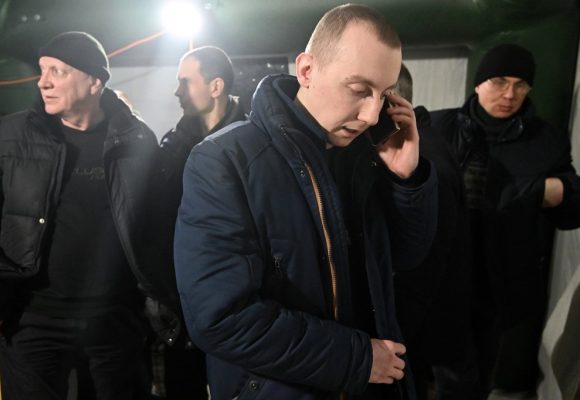
Picture credit: Genya Savilov / AFP.

Aseev is free but 122 journalists remain in prison in Europe

The European Federation of Journalists (EFJ) welcomes the release of Ukrainian journalists Stanislav Aseev and Oleh Halaziuk who suffered a long illegal custody in Donetsk. On Sunday, at a checkpoint near Gorlovka, pro-Russian separatists and Ukraine have concluded a long-awaited prisoner exchange of 200 prisoners, including the two journalists who contributed to the Ukrainian service of the US-funded Radio Free Europe/Radio Liberty. While welcoming these releases, the EFJ recalls that 122 journalists and media actors remain in prison in Europe: 108 in Turkey; 7 in Russia; 6 in Azerbaijan; 1 in the United Kingdom (Julian Assange, founder and publisher of WikiLeaks,…

Spain: no more press conferences without questions!

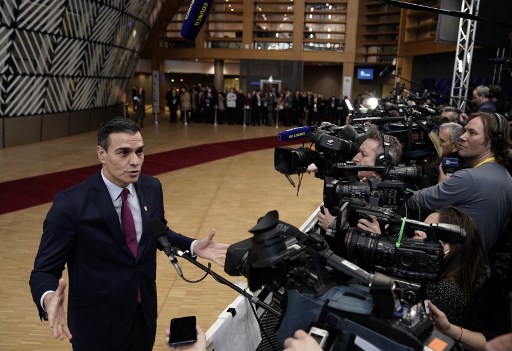
The European Federation of Journalists (EFJ) joined today its Spanish affiliates FSC-CCOO and FAPE in condemning the increasingly common practice of no-questions-asked press conferences, in Spain. On Wednesday, Pedro Sanchez (our picture), secretary general of the PSOE and candidate for investiture as president of the Government, invited journalists to attend a press conference, after confirming the King’s order to try to form a government and thus be invested president. Sanchez only allowed two questions, which was strongly criticized by journalists present. The Spanish Secretary of State for Communication, Miguel Ángel Oliver criticized journalists covering la Moncloa, the seat of government,…

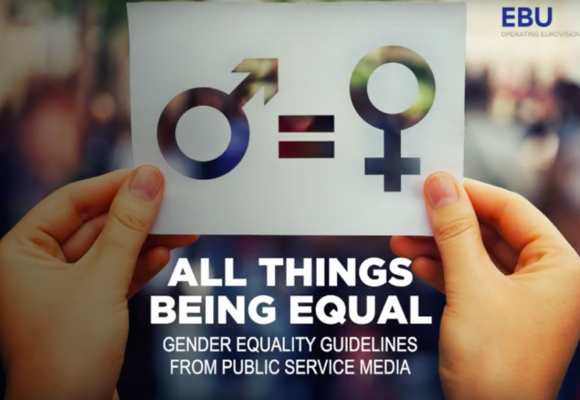
Gender equality in public service media: guidelines for building a gender-balanced workplace

Public service broadcasters have the capacity to shape public’s perception on gender roles and are leading the way in building gender-balanced workplaces. As public services they have the duty to reflect the societies they are informing. Many of them made gender equality a top priority in their workplaces which led to a change in their culture. The European Broadcasters Union (EBU) has published a new report, ‘All Things Being Equal’, in where it shares their members’ own experience and good practices on equal opportunities, equal pay – gender pay gap in the EU is 19% -, work/life balance or protection…

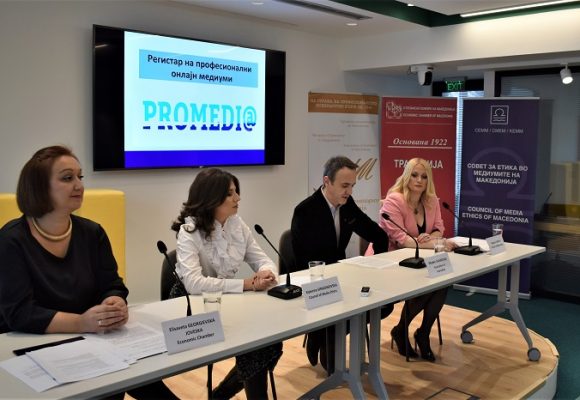
North Macedonia: EFJ welcomes initiative aiming to strengthen self-regulation

The European Federation of Journalists (EFJ) welcomed today the registry on self-regulation of online media in North Macedonia, which was announced yesterday by the Council of Media Ethics (CMEM) together with the Association of Journalists of Macedonia (AJM). “We believe that journalists’ organisations should promote for the public benefit high ethical standards in journalism, based on five principles: truth and accuracy, independence, fairness and honesty, humanity, and accountability,” said EFJ General Secretary Ricardo Gutiérrez. “That is why the EFJ supports this professional initiative aiming to strenghten media self-regulation in North Macedonia.” The initiative will promote self-regulation of online media by…

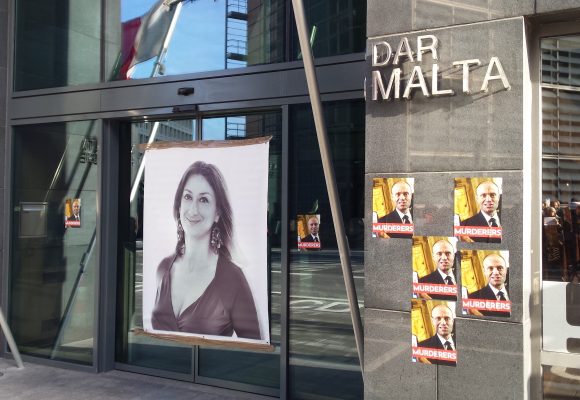
MEPs call on the immediate resignation of Maltese Prime Minister

Several Members of the European Parliament (MEP) urged Maltese Primer Minister, Joseph Muscat, to resign “now”. In a resolution adopted on 18 December, the European Parliament expressed its concern about the “integrity and credibility” of the investigations related to the murder of Daphne Caruana Galizia. It stressed that “any risk of compromising the investigations (…) must be excluded by all means” and warned that this risk will persist for “as long as the Prime Minister remains in office”. MEPs also called on the new Commission “to enter into dialogue with the Maltese Government in the context of the Rule of Law Framework…

Invitation to the European Forum on self-regulation in the digital age (Brussels, 21-22 January 2020)

The Belgian Press Council (Conseil de déontologie journalistique – CDJ) invites you to a European interactive forum on the occasion of its 10th anniversary, to take place in Brussels on 21-22 January 2020. It will bring together media, journalists, press councils, journalists’ unions and associations and will address challenges of journalistic self-regulation in the digital age. Press councils and self-regulatory mechanisms – usually tripartite involving journalists, media representatives and the civil society – plays an ever-important role in upholding standards in journalism while preventing state intervention through media regulations. The forum will raise awareness about the added-value of self-regulation and…

EFJ calls on EU leaders to demand the resignation of Maltese Prime Minister

The European Federation of Journalists (EFJ) and International Federation of Journalists (IFJ) joined today the “Europe stands with Malta” demonstration in front of the Maltese Permanent Representation in Brussels, to stand in solidarity with the people of Malta demanding the immediate resignation of the Maltese Prime Minister following his office being implicated in the assassination of investigative journalist Daphne Caruana Galizia. Several speakers, including Andrew Caruana Galizia, Maltese MEP David Casa, Tom Gibson (Committee to Protect Journalists), Ricardo Gutiérrez (European Federation of Journalists), Oliver Money-Kyrle (International Press Institute) and Alice Stollmeyer (Defending Democracy), spoke out against injustice and impunity in…

Turkey: EU-backed project organises digital and trade-union workshops in Istanbul and Bursa

The International and European Federations of Journalists (IFJ/EFJ), in partnership with their Turkish affiliates, organised last week two training workshops in Istanbul and Bursa, Turkey. The events are part of an EU-funded project promoting journalists’ rights and human rights journalism, which the organisations currently implement in Turkey. Organized on 4 December in partnership with the Türkiye Gazeteciler Sendikası (TGS) and Evrensel newspaper, the first workshop focused on countering fake news and fact-checking techniques. Training was delivered in the newsroom to 12 journalists by trainer Gülin Çavuş and Orhan Şener, director of the TGS Akademi. It examined various online fact-checking techniques including KnightLab,…