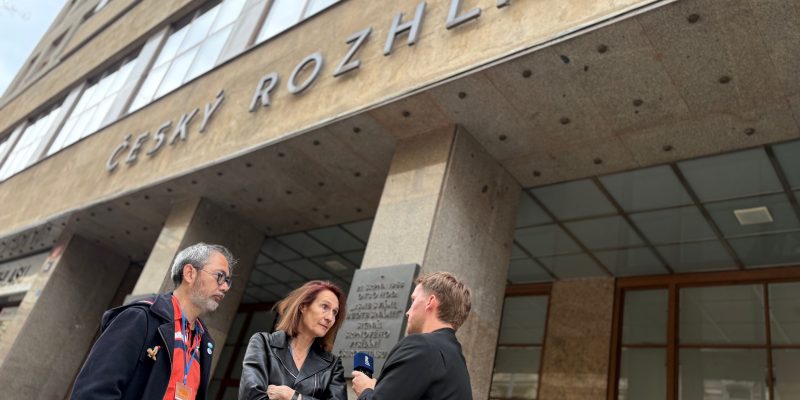
Czech Republic: Public media funding bill raises concerns over compatibility with EMFA

A new government bill which would overhaul the funding model for the Czech public media risks financially weakening the broadcasters, eroding safeguards for their financial independence and violating European Media Freedom Act (EMFA), the undersigned Media Freedom Rapid Response (MFRR) partners, the European Federation of Journalists (EFJ) and other media freedom, journalist and freedom of expression organisations warn today. Our organisations call on the European Commission to closely assess this bill regarding its compatibility with Article 5 of EMFA and to ensure that no reforms are undertaken which threaten the financial, editorial or institutional independence of the Czech public media.…
Launch of the Press Freedom Police Codex

In Europe, the relationship between journalists and the police has not improved in recent years with an increase of protests and sometimes violent demonstrations. Research has revealed that journalists blame the police, the police blame journalists.  The European Federation of Journalists (EFJ) joined the European Center for Press and Media Freedom (ECPMF) which will  launch the Press Freedom Police Codex. Index on Censorship, Osservatorio Balcani e Caucaso Transeuropa (OBCT), Ossigeno per I’informazione, and the South East Europe Media Organisation (SEEMO) are the other partners. With this we aim to start, maintain and build good practice guidelines. For the discussion and…

Ukraine: Journalist attacked by unknown assailant

Ukrainian journalist Oleksandr Vlashchenko was assaulted on 30 November, in the port city of Mykolayiv. So far, the perpetrators have not been caught despite a police investigation. The International and the European Federation of Journalists (IFJ/EFJ) backed their affiliate – the National Union of Journalists in Ukraine (NUJU) – in calling for a full investigation into the case and for action to bring the attackers to justice. Oleksandr Vlashchenko, who works for the web site Novosti N, was on his way home when an unknown assailant sprayed liquid in his eyes and then hit him several times in the face and on the…

International organisations condemn further degradation of press freedom in Malta

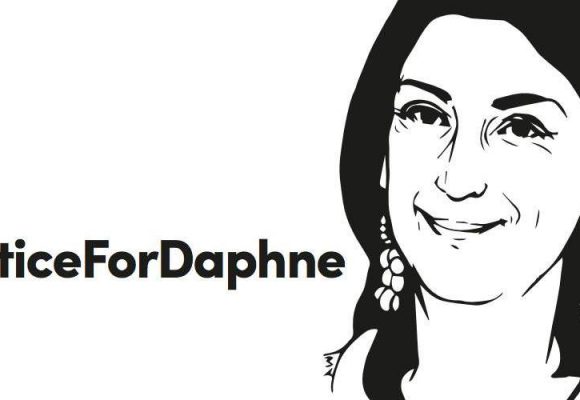
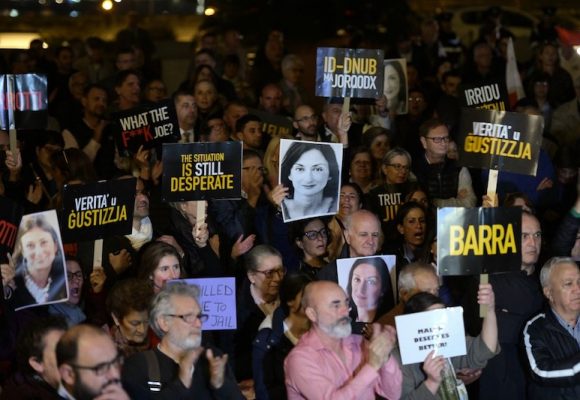
The European Federation of Journalists (EFJ), together with seven other international organisations including ARTICLE 19, European Centre for Press and Media Freedom (ECPMF), Index on Censorship, International Federation of Journalists (IFJ), International Press Institute, Reporters Without Borders (RSF) and the Scottish PEN condemns the further degradation of press freedom in Malta and the continued intimidation of journalists. The statement We, the undersigned organisations, condemn the actions taken by Maltese authorities to restrict press coverage and public scrutiny of the ongoing investigation into the assassination of Maltese journalist Daphne Caruana Galizia. We call on Maltese authorities to uphold their international obligations to…

New possibilities for media freedom: joint call to Austria’s new government

Austria’s media freedom is under threat. Over the last two years, the policies of the previous government showed that the current media system can be influenced politically. In its first year under the government of Sebastian Kurz, Austria fell five places on the international press freedom ranking of Reporters Without Borders, to 16th place. According to a survey, nearly half of Austria’s journalists feel that media freedom is in a precarious state. Harassment and threats against journalists, both online and offline, also reached a new level under Kurz’s government. In addition, restrictions on journalistic access to information related to the…

UNESCO-EFJ project ‘Building Trust in Media in South East Europe and Turkey’ to start phase 2

The European Federation of Journalists (EFJ) will start in 2020 the phase 2 of the EU-funded project “Building Trust in Media in South East Europe and Turkey” in partnership with the UNESCO. Together with its members in Albania, Bosnia and Herzegovina, North Macedonia, Montenegro, Serbia, Turkey and Kosovo, the EFJ will organise three annual regional workshops to further develop national social dialogues and ensure the implementation of labour rights in the field of media in the region. Strong cooperation with the EFJ Labour Rights Expert Group (LAREG) will be continued to develop exchanges between journalists’ organisations from Eastern and Western…

Launch of the Pilot project ‘Media Councils in the Digital Age’

When journalists are playing a public watchdog role, who is making sure that journalists and media organisations adhere to their standards and ethics? With the digital transformation in the media and the widespread of disinformation, media self-regulatory framework plays an ever-important role in upholding standards in journalism while preventing state intervention through media regulations to stifle media freedom. The European Federation of Journalists (EFJ) together with a consortium of six European press councils and two universities journalists have launched a project “Media Councils in the Digital Age” with the aims to support the European models of media self-regulation through a network…

Ukraine: Journalists and publishers jointly call for protection of print media

Ukrainian journalists and publishers jointly called on the Ukrainian government to swiftly address the shrinking newspapers’ circulation at the Forum of All-Ukrainian Editors and Publishers of Print Media, which took place in Kyiv on 21 November. Organised at the initiative of the EFJ affiliate the National Union of Journalists of Ukraine, the forum aimed to find solutions to tackle the print media critical situation, while two of the main Ukrainian newspapers, Segodnya and Dzerkalo Tyzhnia, recently gave up their print version to go exclusively online. The participants denounced the systematic increase of tariffs by the Ukrainian national postal operator combined…

Spain: EFJ/IFJ back RTVE’s decision not to broadcast football Super Cup in Saudi Arabia

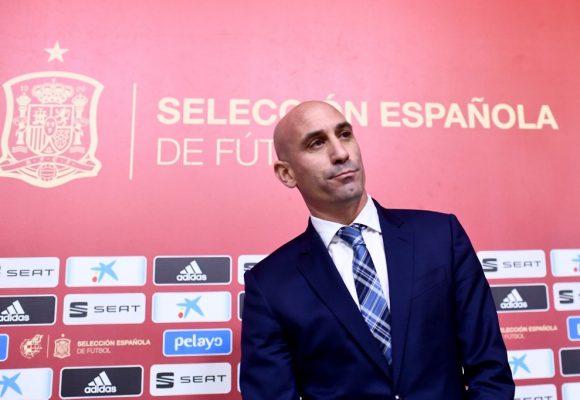
The European and International Federation of Journalists (EFJ/IFJ) strongly support the decision of the Spanish Radio and Television Public Service (RTVE) to not broadcast the matches of the football Spanish Super Cup that will be held in Saudi Arabia next January. The competition, organised by the Spanish Federation of Football, is a national trophy that will be played abroad. The EFJ and the IFJ joined the Spanish affiliates Federacion de Asociaciones de la Prensa Espanola (FAPE), Federacion de Sindicatos de Periodistas (FeSP) and Federacion de Servicios a la Ciudadania de CC.OO (FSC-CC.OO) in backing the public broadcaster to not give…

German expert exchanges collective bargaining strategies with Romanian journalists

Collective bargaining and agreement play a key role in improving the working conditions of journalists. International solidarity and exchange of good practices sometimes can be very helpful for the national negotiation. Thanks to the EU-funded Managing Change in Media‘s project framework, the European Federation of Journalists (EFJ) sent the collective bargaining expert Dennis Amour from its Germany affiliate to support journalists in Romanian (FAIR-MediaSind) for an Expert Exchange Visit. Lawyer and journalist, Dennis Amour, director of the Collective Bargaining Department of the Union of Journalists in Bavaria (BJV) spent two days ( 28 & 30 October) in Bucharest with leaders of…

New solutions for old problems: International organisations to scrutinize press freedom in Austria

Shortly before the collapse of the ÖVP-FPÖ coalition government in May this year, the independence of Austria’s public broadcaster ORF seemed seriously threatened. Government’s attempts to eliminate license fees, if successful, would make the ORF dependant on the government for budgetary decisions. This, in turn, would increase the risk of interference by government’s representatives in editorial decisions. Direct attacks against journalists, both online and offline, also reached unprecedented levels under the recent ÖVP-FPÖ government, raising concerns about media freedom in Austria. At the same time, journalists’ ability to access information about the government’s work was seriously affected by the government’s…

DJV-NRW Journalists’ Congress: Europe needs journalism

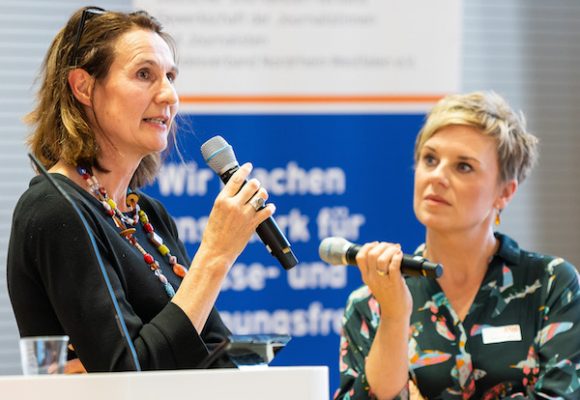
“Stand up for free independent media, Europe needs journalism”, says Renate Schroeder, Director of the European Federation of Journalists (EFJ), with a passionate appeal to politicians and media representatives at the start of the 16th Journalists’ Day of the regional association of the Deutscher Journalisten-Verband of North Rhine Westphalia in Dortmund. The German Journalists’ Association (DJV-NRW) has invited about 500 women journalists* to the meeting under the motto “The future of journalism – now or never”. In his welcoming speech, Chairman Frank Stach invoked the innovative spirit of the early journalists and publishers and encouraged all members and journalists’ students,…

European conference calls for more awareness raising through education and media to counter hate speech

The fight against hate speech should take place in schools and in the media. This was the starting point of the EU-funded project Silence Hate, which ended with a European conference organised by the European Federation of Journalists (EFJ) on Monday 18 November in Brussels.  After two years and 5 national workshops in schools; 15 young journalists trained, 10 journalistic pieces produced (available online); and one module for journalists on how to report migration and counter hate speech; the final event concluded that the awareness raising work should be continued in a more systematic way.  “Journalists have an obligation to…

EFJ to visit Hungary with press freedom coalition this week

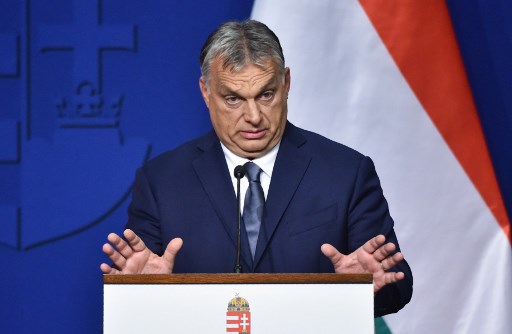
A coalition of six international press freedom organisations and journalists’ organisations will carry out a three-day mission to Hungary from November 25 to 27 to examine current developments related to the state of press freedom and media capture in the country. The mission will meet with Hungarian journalists and civil society groups. It will also hold discussions with the international spokesperson of the Hungarian government, Zoltán Kovács, as well as the newly elected mayor of Budapest, Gergely Karácsony. Numerous reports have documented how Hungarian Prime Minister Viktor Orbán has successively silenced critical voices in the country while at the same…

Russia: “Foreign Agents” Bill threatens journalists

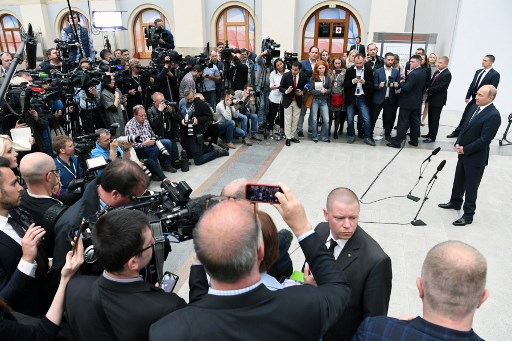
The State Duma on 21st November adopted a law that expands the status of “foreign agents” to private persons, including bloggers and independent journalists: 311 MPs out of 315 voted in support of the initiative, no one voted against, four abstained. The bill now has to be approved by the parliament’s upper chamber, the Federation Council, before President Vladimir Putin signs it into the law. Russia’s legislation on “foreign agents” already covers nongovernmental organisations and media outlets that receive any amount of funding from foreign sources. It requires them to indicate their ‘foreign agent’ status in publications, and creates reporting…

Malta: Daphne Caruana Galizia’s family calls for further investigation after new arrest

Prominent businessman Yorgen Fenech was arrested on 20 November in connection with investigations into the murder of Maltese journalist Daphne Caruana Galizia. Fenech was aboard a yacht, apparently trying to leave the country. Maltese prime minister, Joseph Muscat, described Fenech as a “person of interest” in the case and said there was nothing pointing towards the involvement of members of his administration in the murder. He was released on bail on Thursday evening. Daphne Caruana Galizia’s family welcomed the arrest, saying it was “overdue” and added: “we now expect the authorities to continue investigating the links our mother uncovered between…

Launch of the Stars4Media pilot project – One year to innovate and gain skills!

The European Federation of Journalists (EFJ) is a partner of the new Stars4Media pilot project, starting in November 2019. Together with Fondation Euractiv, Vrije Universiteit Brussel and WAN-IFRA (World Association of newspapers and publishers), the EFJ will put young journalists from Europe with 2-10 years of experience in contact with media outlets in order to organise an exchange programme of 4-12 weeks. WHY: Addressing the crisis of the Media sector Disinformation disorder, falling trust and readership, unprecedented challenges in their business models, shifting skills and technology. The media sector is going through a deep multifaceted crisis. Solutions for a healthy…