Bosnia and Herzegovina: Prevent the shutdown of BHRT, urgent European action needed

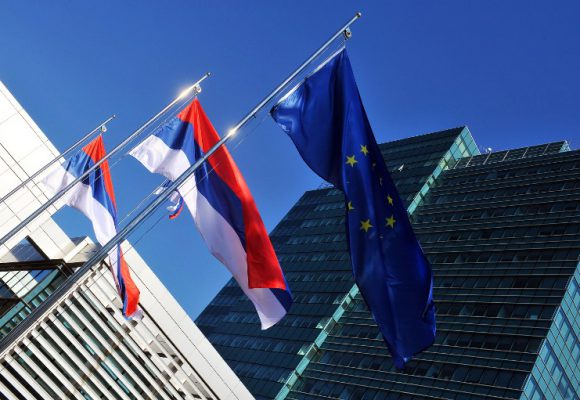
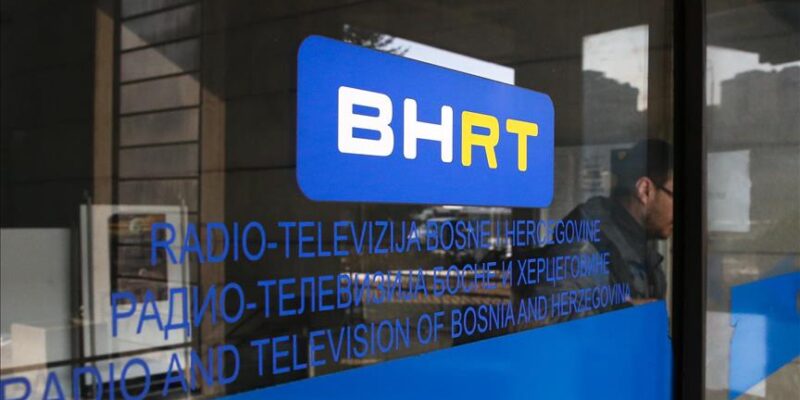
The European Federation of Journalists (EFJ) joins its affiliate, Bosnia-Herzgovina Journalists’ Association (BHN), in warning that BHRT, Bosnia and Herzegovina’s public service broadcaster, is on the verge of shutting down, and in calling for urgent action from Bosnian and European institutions to prevent its possible collapse. BHRT has been in a long-standing financial and institutional crisis, but the situation has now reached a point where the broadcaster’s very survival is at risk. Last week, BHRT was forced to start reducing its programming due to a lack of funding, while its bank accounts have been blocked for over a month. There…
UNESCO launches a handbook for journalists covering terrorism

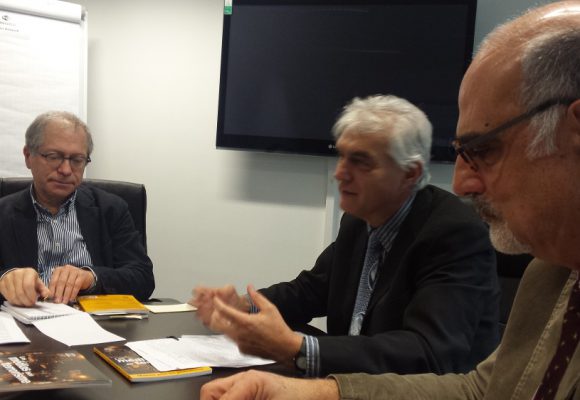
The UNESCO launched on Thursday (02.02.2017) at the Press Club Brussels Europe its new publication “Terrorism in the Media: A Handbook for Journalists” written by Jean-Paul Marthoz, Belgian journalist and longtime press freedom and human rights activist. Guy Berger, Director for Freedom of Expression and Media Development at UNESCO, presented the handbook together with the author. What to do in a hostage situation? Should journalists help the victims first? Should they refrain from disseminating some information at authorities’ request? The handbook provides key advices and reflection to media and journalists in the situation of covering a terrorist attack. It also…

Request for EU Support for Public Service Media in Balkan

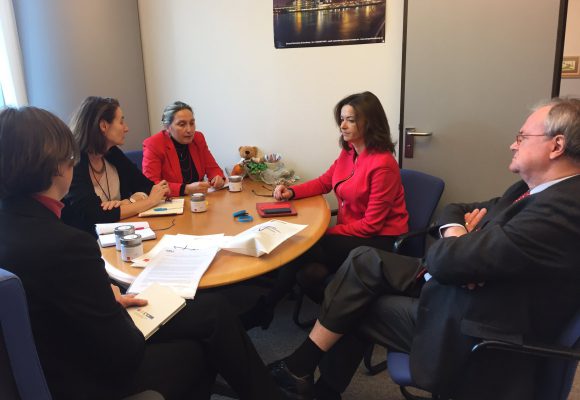
On 1st and 2nd February, the European Federation of Journalists (EFJ) and the European Broadcasting Union (EBU)  had a series of meetings with members of the European Parliament to discuss the urgency of supporting public service media and independent journalism in the accession countries. The lack of financial independence, outdated technologies as well as increasing political control, not only in Hungary and Poland but in all accession countries  affects the compatibility of public media outlets. Out of all Balkan countries only Serbia and Macedonia fully digitalised their production, although they still have most of their products in analogue format. The…

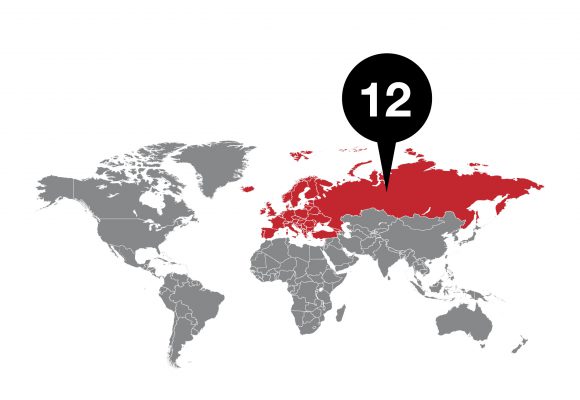
12 journalists died reporting in 2016 in Europe, says IFJ

At the end of each year, the International Federation of Journalists (IFJ) publishes a list of all the journalists and media professionals killed in the course of their work over the previous 12 months. As part of its ongoing commitment to tackle impunity and campaign for greater safety for journalists, the IFJ is publishing The story behind the killings – a in-depth analysis of each region with an explanation of the victims and circumstances of each death. The report lists details of 93 media professionals killed in work-related incidents such as targeted murders, bomb attacks and crossfire incidents last year, a…

#Newsocracy2: Media Ownership Concentration in Ireland and Europe

The European Center for Press and Media Freedom (ECPMF) organised on Tuesday 31 its second conference on media concentration in Dublin, Ireland. A day before the conference to which the EFJ, NUJ, the Florence based CPMF, a member of the European Parliament and Irish politician fighting for media pluralism were invited,  the NUJ demanded that businessman Denis O’Brien should be called before an Oireachtas committee in relation to Independent News & Media’s proposed takeover of a local newspaper group. The National Union of Journalists wrote to the chair of the Oireachtas Communications Committee in relation to the proposed takeover of…

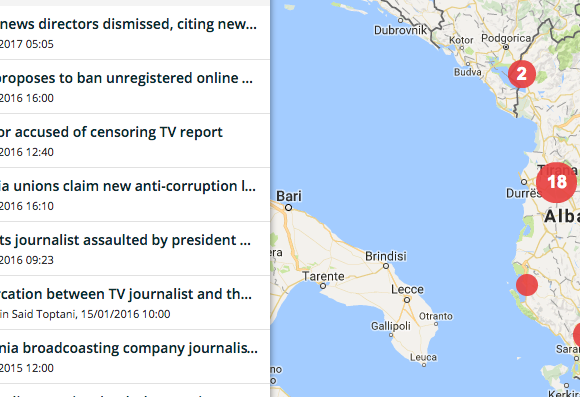
Albanian government accused of “sophisticated silence censorship”

Four months before the next general elections in Albania, the European Federation of Journalists (EFJ) has received alerting information regarding new regulations affecting media freedom situation in the country. The EFJ has been informed that new amendments proposals have been tabled by the ruling Socialist Party to the Article 78/7 of the Election Code and if adopted would seriously damage online media freedom in the country and potentially legalize censorship in Albania. The proposed amendments ambiguously target “uncontrolled and unregistered news websites” and “mandates state authorities to close them down if they engage in election propaganda or conduct unauthorized opinion…

Ukrainian radio faces uncertainty after license issues

The future of the Ukrainian broadcasting company “Radio Vesti” is uncertain after the National Council for Television and Radio Broadcasting of Ukraine delays the prolongation of their licenses in Kiev and Kharkov. The company sent the required documents on time in order to renew the licenses, which will expire on February 13 and 19, 2017 respectively. Nonetheless, the National Council isn’t certain on prolongation of the licenses due to the beneficiary issues. Officially the beneficiaries of the broadcasting company are Denis Mozgovoy from Avdeevka and Tatiana Alexandrova from Donetsk, however, the National Council believes that the information is not clear…

Greece: oldest newspapers cease publication following collapse of the most powerful media group

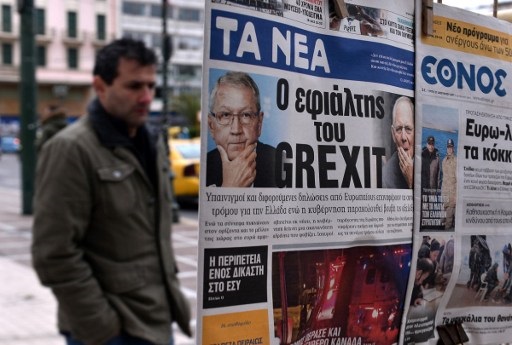
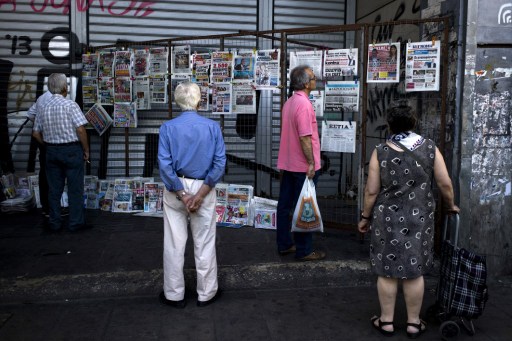
The two oldest newspapers in Greece, To Vima and Ta Nea, were among the publications which were supposed to cease publication last weekend. On Saturday , the media group which owns them, Lambrakis Press Group (DOL), announced the end of their publications “within days due to financial reasons.” The International and European Federation of Journalists (IFJ and EFJ), together with their Greek affiliates, are asking for time to negotiate a long term solution. As a result, over 500 media workers, including 250 journalists, most of whom are members of the IFJ/EFJ Greek affiliate JUADN (Journalists’ Union of Athens Daily Newspapers),…

IFJ/EFJ urge Russian authorities to stop persecuting Ukrainian journalists

Ukrainian journalists Mykola Semena and Roman Sushchenko are facing jail following charges by the Russian authorities of separatism and espionage, respectively. The International and European Federations of Journalists (IFJ and EFJ), together with other human rights groups, are asking for these charges to be dropped immediately. The IFJ and EFJ have joined calls from their Ukrainian affiliates, the Independent Media Trade Union of Ukraine (IMTUU) and the National Union of Journalists of Ukraine (NUJU), to condemn the persecution of independent media and journalists critical of the Russian authorities, especially in the Russia-annexed Crimea. Both Semena and Sushchenko are NUJU members.…

#SpreadNoHate: how to tackle hate speech against migrants and refugees?

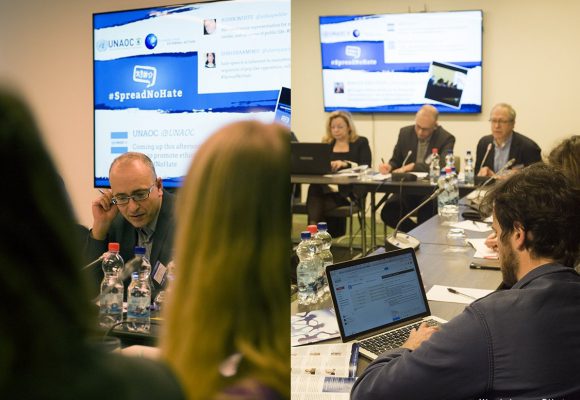
The European Federation of Journalists (EFJ) was invited on 26 January to participate in the high-level debate “#SpreadNoHate: Hate Speech Against Migrants and Refugees in the Media” organised in Brussels by the United Nations Alliance of Civilizations (UNAOC) and the European External Action Service (EEAS). This event was aimed to better understand the mechanisms of hate speech against migrants and refugees as well as exploring new ways to improve the quality of media coverage, by promoting ethical journalism and fostering dialogue between journalists, institutions and organisations. EFJ General secretary Ricardo Gutiérrez moderated the panel on “Strengthening Partnerships between Media and Civil…

Closure of Swiss magazine L’Hebdo: Another blow to media pluralism

Ringier Axel Springer announced on January 23 their plans to close French-speaking magazine L’Hebdo.  Impressum,   the largest journalists’ organisation and the Trade Union of Media and Communications Syndicom  are both deeply concerned about the potential negative impact of the decision on media pluralism, investigative journalism and the future of the media in French-speaking Switzerland. The EFJ expressed its solidarity with their Swiss affiliates and offer full support. A petition was also launched and supported by both EFJ affliates  to demand alternative financial plans to continue or return the title. @EFJEUROPE @lhebdo @IFJGlobal signez la pétition pour @lhebdo https://t.co/zhle3ihJtF — syndicom…

The CoE adopted resolution on attacks against journalists

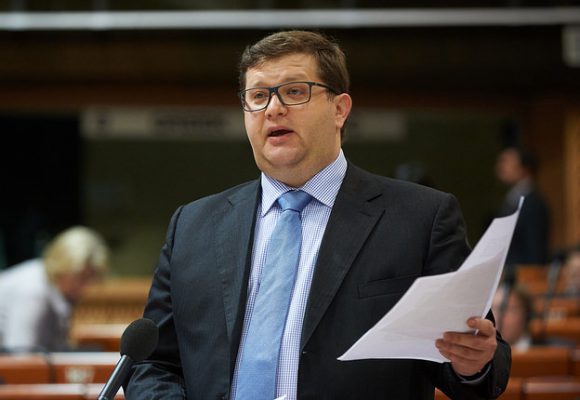
The Parliamentary Assembly of the Council of Europe on Tuesday discussed the rising levels of violence against journalists, particularly in Turkey, Russia and Azerbaijan. Ukrainian MP Volodymyr Ariev (EPP/CD), pictured above, presented the report, where he drew attention to the death of 16 journalists and the arrest of 150 media employees since January 2015 in member States. Mr. Ariev spoke about the deterioration of media freedom in Turkey and called for “release from detention all journalists who have not been indicted for actively participating in terrorist acts”. He also raised concerns on the media situation in Crimea and eastern parts of Ukraine.…

OSCE Representative condemns deterioration of media freedom in conflict-affected parts of Ukraine

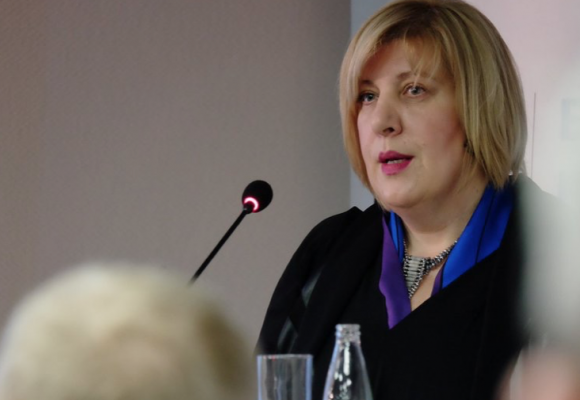
The Representative on Freedom of the Media Dunja Mijatović condemned today the worsening situation with media freedom and safety of journalists in areas not controlled by the Ukrainian government. This comment followed the recent report by OSCE Chief Monitor, Ambassador Ertugrul Apakan, where among others he spoke about the limitation of freedom of expression in the region. The OSCE Chief Monitor mentioned ban of over 350 websites and restrictions against Ukrainian media outlets. Mijatović noted that threats and intimidation of media workers along with the arrest of bloggers Eduard Nedelyaev and Gennadiy Benitskiy are particular worrying cases. She added: Access…

Republika Srpska President’s office limits access for selected media

The European Federation of Journalists backs the Bosnia-Herzegovina Journalists Association (BHJA) in condemning the discriminatory actions by Republika Srpska (RS) President Milorad Dodik against selected media. On January 18 a news crew from N1 Television was denied access to a press conference in Banjaluka on the grounds that they didn’t have accreditation to enter the venue. The TV channel was also removed from the mailing list of the President’s office, which meant no further access to official newsletters or accreditation information that are necessary for the news coverage. BHJA  called these actions unreasonable discrimination against the well-known critical media outlet.…

Greece: stop threats against media pluralism!

The International and European Federations of Journalists (IFJ and EFJ) have strongly backed calls by Greek journalists to prevent banks forcing the closure of the country’s oldest newspapers and threatening up to 500 jobs. The IFJ and EFJ have backed demands from their Greek affiliate, the Journalists’ Union of Athens Daily Newspapers (JUADN), to stop the banks foreclosing on the Lambriakis Press Group (DOL) loans.  The group, which owns the oldest national newspapers To Vima and Ta Nea, is facing serious trouble after the banks threatened to call in their loans. Over 500 media workers, including 250 journalists, most of…

EFJ welcomes European Parliament’s resolution on #Socialpillar

By adopting the draft report on “A European Pillar of Social rights” by Rapporteur Maria João Rodrigues (S&D, PT), the European Parliament adopted the principle of equal treatment saying that  “All workers should have their basic rights guaranteed, whatever their form of employment and contract”. This is one of the main demands the EFJ puts in the response to the Social pillar consultation, which had been initiated by the European Commission, see We thank the rapporteur and the European Parliament for extending the notion of social rights including the right for collective bargaining and joining a union to all workers…

Verbal attacks against Macedonian journalists

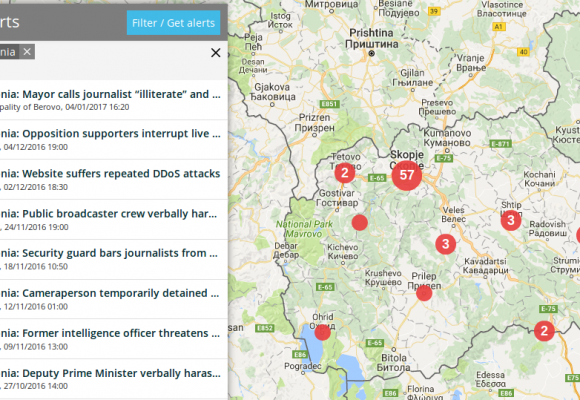
The European Federation of Journalists backs Association of Journalists of Macedonia (AJM) in condemning verbal abuses by the authorities against journalists. Such actions are damaging for the freedom of expression and are limiting the public access to the information. One of the major political parties in Macedonia VMRO-DPMNE accused Fondation Open Society Macedonia for corrupting the journalists and urged to “clean” the “media of Soros”. AJM calls these claims “a pure spin of the government” and finds it very dangerous to call for violence against journalists, as such comments might have negative consequences in the future. The full announcement by…