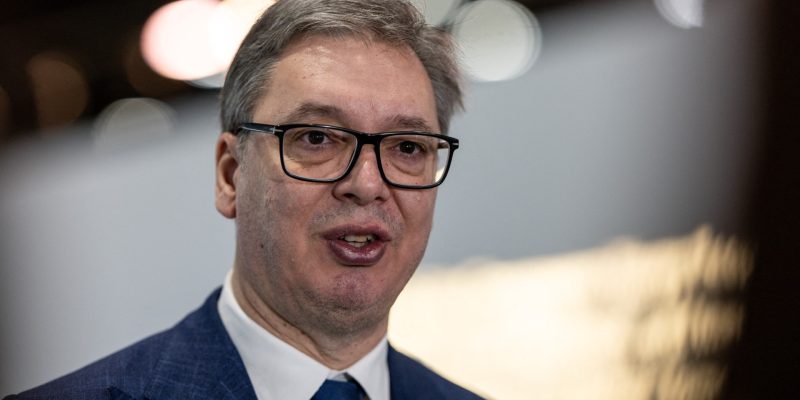
Serbia: Ministers for European Affairs must urgently draw a red line on media freedom

EU Member States must show political leadership and join calls for the suspension of EU funds to Serbia to prevent the spiral of violence against journalists from escalating into deadly attacks, the European Federation of Journalists (EFJ) and nine undersigned organisations said on Friday in a series of letters sent to a group of Ministers for European Affairs across Europe. The organisations highlight the shocking numbers of physical, legal and online attacks against journalists as recorded on international monitoring platforms since November 2024, a level of persistent violence against media that is rare in any EU member state or candidate country. Since the…
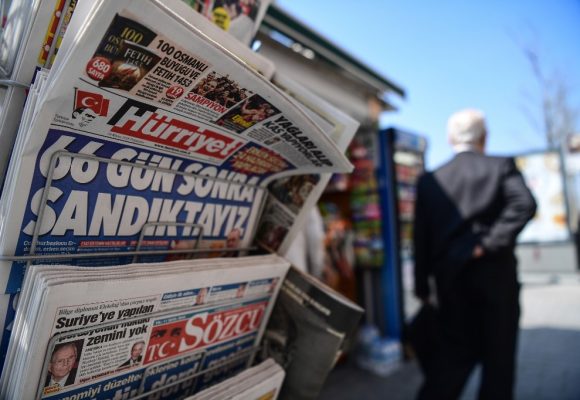
Turkey: newspaper Hürriyet fires 45 journalists

Turkey’s biggest newspaper Hürriyet fired 45 journalists last week in one of the history’s most brutal layoffs operation press in Turkey.  Forty-three of them were members of the Turkiye Gazeteciler Sendikasi (TGS), an EFJ affiliate. The employees said that their dismissal was notified by a letter while they were working. A few journalists’  access to their computer and e-mail accounts were blocked. A woman was on maternity leave, one on compulsory military service and another journalist on sick leave, according to Turkish media reports. Vahap Munyar, Hürriyet’s editor-in-chief, who said he was not aware of the layoffs, and some of…

Silence Hate final conference – Changing words, change the world, 18 November, Brussels

Online hate speech is a worrying and complex phenomenon, which has deep cultural and social roots and brings new questions and challenges to the issue of freedom of expression on the internet. Can a new law be a solution to tackle online hate speech or a curb on freedom of expression? How can we silence hate without silencing media freedom? Only a collective commitment at the cultural and educational level can be the basis to counter it, promoting at the same time freedom and participation. The European Federation of Journalists (EFJ) will organise a final conference on 18 November in…

Iceland: 200 journalists strike for fair wages for the first time in 40 years

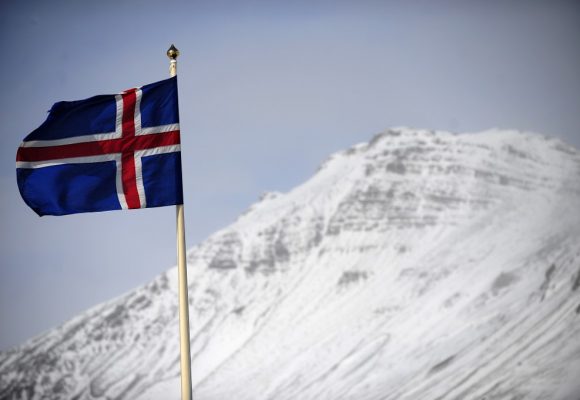
The Union of Icelandic Journalists has called for a series of temporary strikes among its members at the media companies that are affiliates of the Employers’ Association. The Union demands wages for journalists comparable to employees of similar educational background or university degrees. The European Federation of Journalists (EFJ) supports its affiliate the Union of Icelandic Journalists and joins the Nordic Federation of Journalists and its members in Denmark, Sweden, Norway and Finland in backing Icelandic journalists’ demands and standing in solidarity. The first strike is among photographers and online journalists and will last for four hours on Friday. It…

Turkey: Court orders the release under judicial supervision of Ahmet Altan and Nazli Ilicak after three years in jail

A Turkish court ordered on 4 November the release under supervision of journalists Ahmet Altan and Nazli Ilicak who had spent three years in jail, accused of participating in the failed 2016 coup. The European and International Federations of Journalists (EFJ and IFJ) welcome their release but urge authorities to remove the judicial control, stressing they were victims of trumped up charges. Both journalists were jailed in 2016 following their conviction of “aiding a terrorist group without being its member”, charges that they always denied. On 2 October 2018, the Court of appeal in Istanbul upheld aggravated life sentences of…

The Netherlands: Landmark ruling sets 50% pay increase for photojournalists

The freelance photojournalists Britt van Uem (Tubantia) and Ruud Rogier (Brabants Dagblad) won on the 1st of November the lawsuit against DPG Media (formerly De Persgroep). The court ruled that the rates they received for their work, respectively 13 cents per word and 42 euros per photo, were not fair. The judge has increased the rates by 50% to 0.21 cents per word and 65 euros per photo respectively. DPG Media therefore has to pay these two freelancers extra for work they did in 2018. The European Federation of Journalists (EFJ) welcomes this historical decision and congratulates its affiliate, The…

EFJ and partner organisations call on governments to end impunity

Ahead of the International Day to End Impunity for Crimes against Journalists, a UN-recognized day observed annually on 2 November, twelve partner organisations of the Council of Europe Platform to Promote the Protection of Journalism and Safety of Journalists call on governments to ensure that crimes against journalists are not carried out with impunity. Earlier this week, the case of courageous Maltese investigative journalist Daphne Caruana Galizia was moved to the Council of Europe’s category of journalists killed with impunity. The three men charged with her murder have yet to be brought to trial, while those who masterminded her assassination…

EFJ joins IFJ campaign against impunity

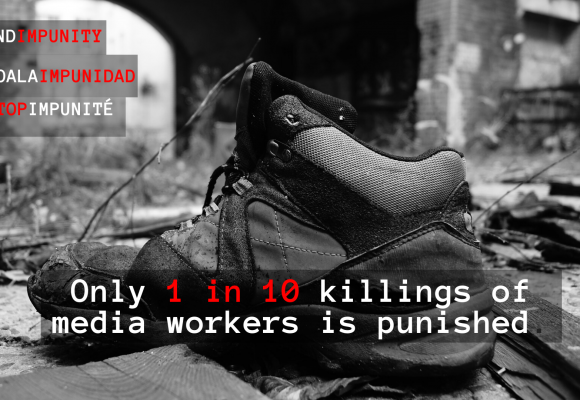
The European Federation of Journalists (EFJ) joined IFJ 3-week campaign to expose the staggering levels of impunity for crimes against journalists and the lack of international action to combat the rising tide of threats and abuse faced by journalists worldwide. The campaign will kick-off on 2 November marking International Day to End Impunity for Crimes Against Journalists and run until 23 November, the anniversary of the Ampatuan massacre in the Philippines, in which at least 32 media workers were killed. The Federation has recorded 1064 killings of media professionals in the past 10 years. Yet, only one murder in every…

How to make journalists’ unions more diverse and inclusive?

The first step for reaching a broader and diverse group of people is improving diversity and inclusiveness within the union itself. Eighteen trade union representatives from sixteen European countries attended a three-day training organised by the European Federation of Journalists (EFJ) and the European Trade Union Institute (ETUI), on 28-30 October in Porto, Portugal. The host of the workshop was the Portuguese union and EFJ affiliate Sindicato dos Jornalistas (SinJor). The training aimed to provide current, future and potential leaders different tools to make their unions more inclusive and diverse, equipping them with leadership and trade union mobilising skills; providing…

EFJ invites journalists’ organisations and media outlets to endorse the ‘Charter on Working Conditions’

Show your support to the charter and join the signatories! The EFJ Charter on Journalists Working Conditions is a guideline on working conditions, signed on 12 February 2019 in Belgrade (Serbia), by 14 journalists’ organisation representatives affiliated to the European Federation of Journalists and leading journalists’ unions from Western Balkans and Turkey. The Charter is open for signature to all journalists organisations, private or public media companies or authorities willing to commit to improve the working conditions and reinforce the labour rights of journalists and media workers in Europe, to fight against censorship and to promote free access to information and sources. The Charter contains 10…

Opinion |”Neighbouring rights: Google is not above the law”

More than 850 journalists, photographers, media executives and reporters signed an opinion against Google‘s decision to refuse to compensate the press sector for information referenced on its search engine and services. The European and International Federations of Journalists (EFJ and IFJ), representing respectively 320,000 journalists in Europe and 600,000 worldwide, co-signed this opinion and called on the EU States to act against this abuse of dominance. « Today, Google is attacking the press. Tomorrow it will be music, cinema. We believe that Google can not be above the law or flout the will of the European Parliament. This is an…

Dutch journalist held “hostage” by the Court of Rotterdam

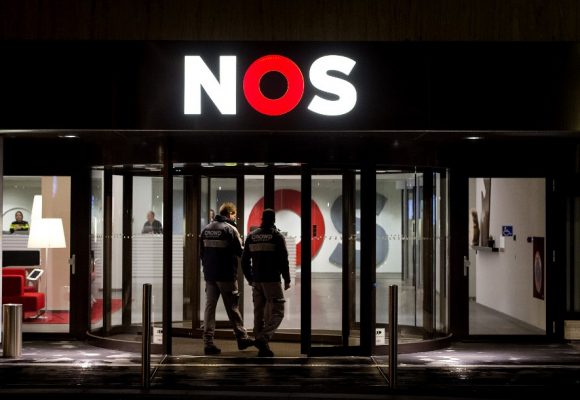
The Dutch journalists led by the EFJ member, the Journalists’ Association of the Netherlands (NVJ) are protesting against the decision of the Court of Rotterdam to held “hostage” NOS reporter, Robert Bas, who refused to reveal his source as demanded by the court. Bas was asked by the court to provide witness to a criminal case investigation, which requires him to compromise the protection of confidential sources. He refused the demand from the court and subsequently held by the court by refusing to provide evidence. Thomas Bruning, the NVJ General Secretary criticised the decision: “It is incomprehensible that a journalist…

Catalonia protests: Without journalism, there is no democracy

The political conflict between Catalonia and Spain has reached its most critical point with a week of protests against the sentence that condemned Catalan leaders between 9 and 13 years of prison. Some of the demonstrations have turned into a scenario of violence between protesters and police officers. The journalists, in between, are suffering the consequences of this confrontation: 59 journalists had been injured as for today (65 according to Mèdia.cat, but some of them are still unidentified), some of the reporters have been held in custody and informing about the situation is becoming more and more difficult. The European…

Ukraine: Journalist Stanislav Aseev sentenced to 15 years and 2.5 years job ban

Stanislav Aseev, an Ukrainian journalist who has been held captive since June 2017 in Donetsk, has today given a 15-year sentence and a ban to practice journalism for 2.5 years by the “Supreme Court” of the self-proclaimed “Donetsk People’s Republic” in east Ukraine. The European Federation of Journalists (EFJ) was shocked by the decision and reiterated its call for the immediate release of Aseev. Ricardo Gutiérrez, EFJ General Secretary, said: “The mistreatment of Aseev and now the harsh sentence are blatant violations of media freedom. “The authorities must stop criminalising journalists and depriving their rights to exercise freedom of speech.” Sergiy…

EFJ calls on EU to enhance protection for journalists

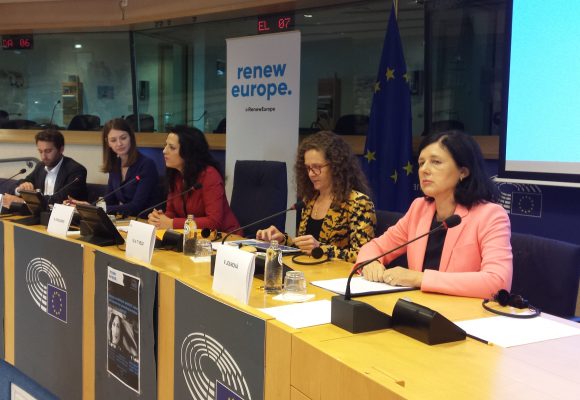
The European Federation of Journalists (EFJ) has participated today at the European Parliament in the workshops and the conference ‘Risking everything to uphold EU values and democracy: protecting journalists in the EU’, organised by Renew Europe Group and Romanian MEP Ramona Strugariu. During the conference, MEP Sophie in’t Veld said that the murder of Maltese journalist Daphne Caruana Galizia had a significant role and importance. She stated that Malta will only be able to regain press freedom with the end of impunity for the murder of Daphne Caruana Galizia. Daphne’s son, Matthew Caruana Galizia, made a tribute to her work and…

Czech Republic: media freedom under pressure

A new report by the European Federation of Journalists (EFJ), the Syndicate of Journalists of Czech Republic, the European Broadcasting Union (EBU), the Nordic Association of News Publishers and the European Centre for Press and Media Freedom (ECPMF)  reveals the state of media in the Czech Republic. A fact-finding delegation met with 14 key informants including journalists, editors, directors, teachers, politicians and founders from various part of the Czech media landscape, both public service media and private media. During the mission, it was noticed that the prime minister’s close link to the media he used to own is totally unacceptable for…

Being a female journalist in Europe

By Marta Sánchez Esparza – @martasesparza What is the status of women journalists in the European Union? Under what conditions do they work? How can they achieve work-life balance? Are their rights to freedom of expression being respected? Do they work on equal terms as their male colleagues? The situation varies greatly from one country to another. The stars of the European flag do not shine the same way for women journalists in the 28 states of the Union. It is not the same to be a reporter in Germany compared to one in the former Yugoslavia, or in the…