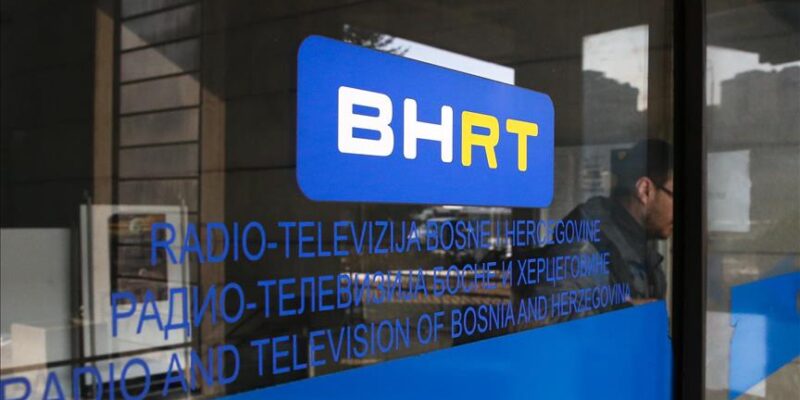
Bosnia and Herzegovina: Prevent the shutdown of BHRT, urgent European action needed

The European Federation of Journalists (EFJ) joins its affiliate, Bosnia-Herzgovina Journalists’ Association (BHN), in warning that BHRT, Bosnia and Herzegovina’s public service broadcaster, is on the verge of shutting down, and in calling for urgent action from Bosnian and European institutions to prevent its possible collapse. BHRT has been in a long-standing financial and institutional crisis, but the situation has now reached a point where the broadcaster’s very survival is at risk. Last week, BHRT was forced to start reducing its programming due to a lack of funding, while its bank accounts have been blocked for over a month. There…


Winner of the 2016 SOLIDAR Silver Rose Awards is the Journalist Union of Turkey (TGS)

In a world of rapid changing political and social circumstances, growing conflicts and inequalities, progressive politics to ensure social justice and global solidarity are more important than ever. The 2016 edition of the SOLIDAR Silver Rose Awards presents four courageous political choices with four awardees working on highly sensitive and late-breaking political issues: Press Freedom, Decent Work, Women’s Rights, Access to Education for All. This year’s winners are: Journalist Union of Turkey (Türkiye Gazeticiler Sendikasi, TGS), to which we dedicate the Silver Rose for Fundamental Rights. TGS supports jailed journalists and promotes solidarity between journalists in Turkey and abroad –…

Trends and skills in the European audiovisual and live performance sectors

The final conference of Creative Skills Europe, the European Skills Council on Employment and Training in the Audiovisual and Live Performance sectors, will take place in Brussels, Belgium, on Monday 6th of June 2016. Closing a phase of activities that included three meetings in Tallinn (April 2015), Prague (January 2016), and Madrid (March 2016) the conference will present the final publication of the project, as well as recommendations for future actions and co-operations in the field of skills development for the audiovisual and live performance sectors in Europe. More than 50 participants from across Europe are expected to this event.…

European journalists seek ways to enforce fair contracts for quality journalism

In the framework of the two-years project “Rights and Jobs in Journalism”, the European Federation of Journalists (EFJ) organised on 30 May its last workshop focusing on “Authors’ rights enforcement: Fair contracts for quality journalism” in Brussels. Twenty EFJ members coming from 16 European countries attended the workshop and exchanged best practices on the protection of authors’ rights and way to ensure fair contracts for journalists.  Participants had the opportunity to discuss practical tools in two working groups. The first one, focused on the question of how to secure fair contracts for European journalists, raising the problem of what a fair remuneration might be. In the Netherlands…

EFJ joins coalition calling for EU protection for whistleblowers

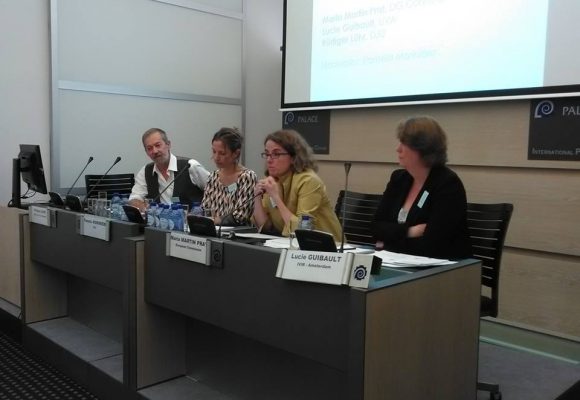
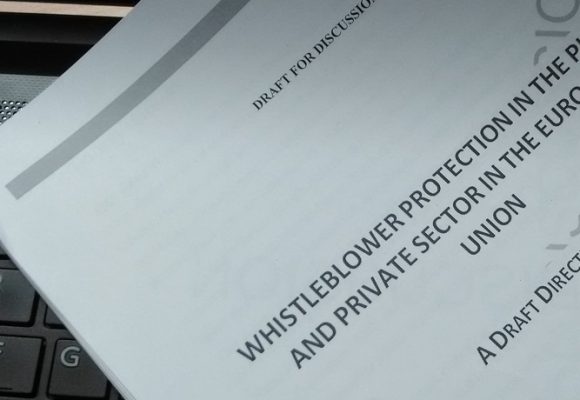
Shortly after the adoption by the European Parliament of the trade secrets directive, the European Federation of Journalists (EFJ) has started to campaign for a EU legislation to protect whistleblowers. The EFJ met with the Transparency and Democracy Campaigner of The Greens/ European Free Alliance in the European Parliament, Pamela Bartlett Quintanilla to discuss a draft proposal on “Whistleblower protection in the public and private sector in the EU”. This draft proposed on 4 May by the Greens/ European Free Alliance guarantees protection for workers, trainees and apprentices working in all sectors of activity who disclose information concerning harms or threat to the public…

Commission VP Ansip backs call for investigation on fair remuneration in EU copyright review

The Creators Conference 2016 concluded on Tuesday 31 after a productive day of panels, interviews and speeches by prominent artists, experts and policy makers discussing the current issues faced by the European creators’ community and the cultural and creative industries. The Authors’ Group welcomed European Commission Vice-President Andrus Ansip in charge of the Digital Single Market for a keynote speech in which the Commissioner confirmed the “need to look closer at the conditions for remunerating creators and getting a fair share of the value generated”. Vice-President Ansip also stressed the “follow the money approach” and “widening access to content” for consumers…

No to the yellow card on posted workers

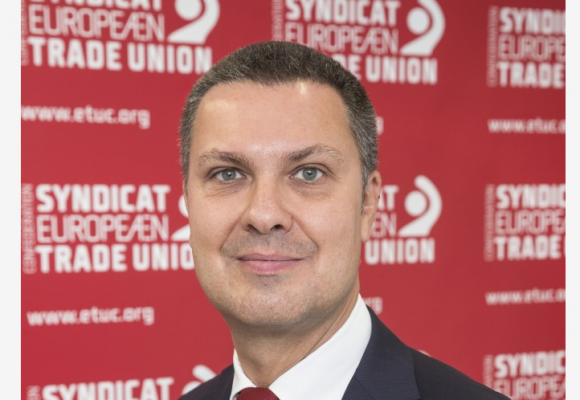
The European Trade Union Confederation (ETUC) has written to the European Commission demanding that it : • rejects the arguments against the revision of the posting of workers directive in the ‘yellow card’ from some Member States; • allows a democratic debate without delay on the existing proposal through the normal EU legislative procedure with governments and the European Parliament. The ETUC letter accuses the Member States involved of neglecting their own workers. “All trade unions in Europe, including in countries where parliaments have supported the yellow card procedure, strongly support revision of the Posting of Workers Directive,” said Luca Visentini,…

Italy: draft bill to tighten criminal penalties for defamation

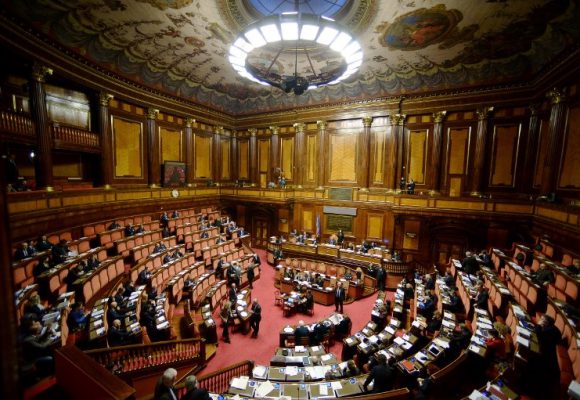
The International and European Federations of Journalists strongly condemn the draft amendment to the Italian Penal Code which will increase the criminal penalties for those accused of defamation against members of the political class, the judiciary or public administration. The EFJ and its Italian member, FNSI, call on Italian authorities to decriminalize defamation. The EFJ and IFJ have submitted today an alert on the issue on the Council of Europe of the Platform for the Protection of Journalism. A committee of the Italian Senate voted unanimously on 3 May 2016, a draft amendment to the Penal Code which will increase the criminal…

Cybersecurity II : Secure, protect, investigate

The European Federation of Journalists (EFJ) and the European Trade Union Institute (ETUI) have successfully organised a 3-day training (25-27 May) in Leuven (Belgium) on Cybersecurity for journalists : Secure, protect, investigate. This was the second edition of a course organized 2015 along four days about Cybersecurity for journalists and with the same practical approach. The course aimed to facilitate technical skills to journalists helping them to protect themselves, their work and their sources. 13 journalists and / or unionists coming from 11 countries took part to the training, with an important participation of participants coming from countries of the…

Nordic Freelance Conference: The Significance of Independent Voices

The Norwegian Freelance Journalist Union (NJ Frilans) hosted the Nordic Freelance Seminar, which is held once a year,  in Ilsetra, Norway on 20-22 May. The over 100 participants were freelance journalists from EFJ affiliates in Finland, Denmark, Sweden and Norway. The aim of the seminar was  networking and sharing experience, discussing recent trends both regarding ever more precarious working conditions for freelances and new technological tools to advance storytelling and journalism by getting closer to the audience. Frank Aarebrot, professor of comparative politics at the University of Bergen in his opening speech adviced the community to demand public funding to…

A silent problem: 4 stories on the threat of (self-)censorship

Hungary It all started with a simple question. Janos Karpati, then Brussels correspondent for the Hungarian national newswire, didn’t think it would terminate his longtime career when he addressed the Hungarian Prime Minister Victor Orban at a press conference at the fringes of the European Parliament’s plenary meeting in Strasbourg. Orban had come to Strasbourg to speak about migration – and his widely-criticized comment on reinstating the death penalty. Karpati, an experienced correspondent who has worked in Prague and Washington, DC, asked Orban about Fidesz’ position within the European People’s Party, a question he hadn’t cleared with anyone beforehand. He…

Azerbaijan: Journalist Khadija Ismayilova released on probation

The International and European Federations of Journalists welcome the Azerbaijani Supreme Court’s decision today to release investigative reporter Khadija Ismayilova, who had been imprisoned on trumped-up charges since December 2014. The court converted Ismayilova’s jail term into a three-and-a half-year suspended term. Khadija Ismayilova has already served 1.5 years in prison, held on politically motivated charges for her work exposing corruption. She now faces 3.5 years on probation, and a two-year ban on professional activities. In September 2015, the Baku Court of Serious Crimes sentenced Ismayilova to seven-and-a-half years in prison on tax evasion and large-scale embezzlement charges. The IFJ…

European Creators’ conference

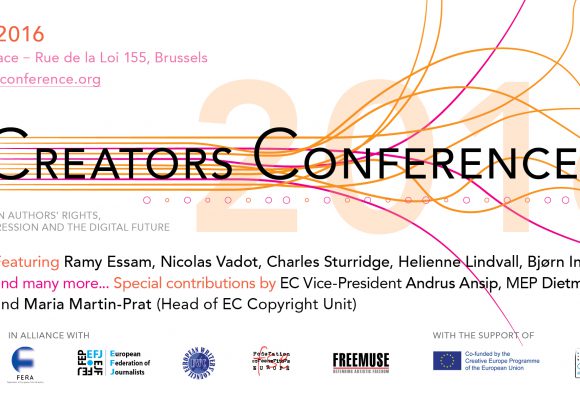
How do we bring authors’ rights back to the core of the copyright debate? Where are authors in the EU copyright priorities? How can EU lawmakers ensure that authors get a fair share of their works and do not get ripped of by unfair contracts? To address these questions, the European Federation of Journalists (EFJ), is partnering with European organisations representing music composers (ECSA), writers (EWC), film directors (FERA) and Screenwriters (FSE) in a key conference on 31 May in Brussels addressing authors’ rights, freedom of expression and digital future. More about the conference: http://creatorsconference.org/home

40 % of Serbian journalists wants to leave the profession

Journalists Union of Serbia (SINOS – EFJ affiliate) in partnership with the Friedrich Ebert Foundation held a seminar in Prolom Banja (Serbia) from 19 to 21 May. The theme of the was organising unions for media workers in Serbia and the Balkans countries. The participants talked about precarious work, legal and social status of journalists and the sustainability of trade unions in the media with multinational ownership problems. The President of the European Federation of Journalists (EFJ), Mogens Blicher Bjerregard spoke about the experience of organizing unions for journalists in different European Union member states. He stressed that progress is possible when…

Europe follows worrying developments at the Radio Television of Vojvodina

UPDATE (01/06/2016) : Nada Kalkan, the new editor of RTV, is sending the EFJ the following statement : “That’s not true that journalists in RTV were layoffs. Previous program director was replaced and new director elected because the executive board was not satisfied. The general director and the editor-in-chief have resigned. Now, we have new a group of managers, nobody at RTV was dismissed or degraded and most of them have same salary and rested on editorial places.” Serbian media report that program director of RTV, Slobodan Arežina, was replaced, general director Srđan Mihajlović resigned under political pressure; 7 editors of news program…

Turkey must stop feeding its environment of fear for journalists and trade unionists

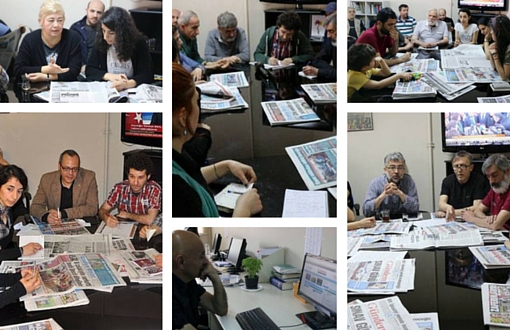
Update (25th May): Our Turkish colleague Erol Önderoglu is also under criminal investigation for “terrorist propaganda” for participating in a solidarity campaign with the Kurdish daily newspaper Özgür Gündem. The EFJ and IFJ demand that all criminal charges be dropped against journalists involved in this campaign. The European and International Federations of Journalists (EFJ and IFJ) is calling upon the presumptive upcoming Turkish Prime minister, Binali Yildirim, to end the climate of permanent judicial intimidation, threats, harassment, detention and physical assaults against journalists and media workers in Turkey. The EFJ is particularly underlining the fact that Turkish judicial authorities have recently opened an…

Legalislative framework for investigative journalism need improvements

The Institute of European Media Law (EMR), consortium partner of the European Centre for Press and Media Freedom (ECPMF), has recently conducted a study on the state of media freedom and investigative journalism in Europe. The results published on 17 May 2016 show that restrictive rules for the development of press freedom remain a major obstacle in all countries. 1. Decriminalisation of journalism = Hungarian model Journalists might infringe the law while trying to obtain information. According to the report, all legal frameworks know limits to the freedom of obtaining information. Even though in many states courts take into consideration the importance of press freedom…