Journalists and human rights defenders attacked in Russia

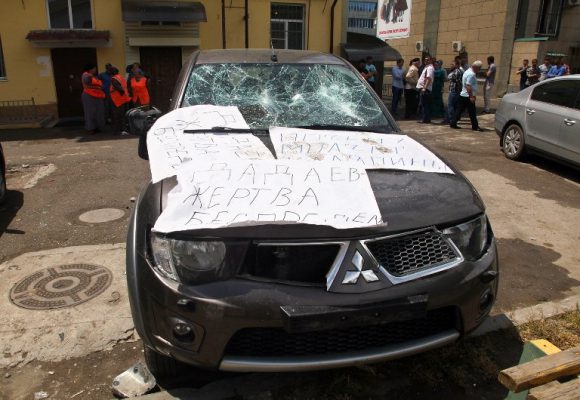
A violent attack by unknown assailants against a group of eight journalists and human rights activists occurred on 9 March at the border between Chechnya and Ingushetia, in Russia. The International and European Federations of journalists (IFJ/EFJ) joined their affiliate, the Russian Union of Journalists (RUJ), in condemning the beating of journalists and human rights defenders and called on the Russian authorities to investigate the case and to bring the perpetrators to justice. About 50 kilometers from Grozny, on the main road to Baku, a press tour organised by the Russian Committee on Prevention of Torture was forced to stop…
New platform launched to monitor threats against women journalists

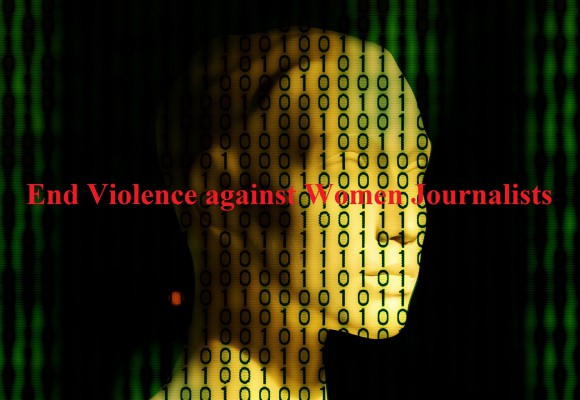
To mark the International Women’s Day on 8 March, the European Federation of Journalists (EFJ) partners with the European Centre for Press and Media Freedom (ECPMF) to launch a special Women’s Reporting Point to address the growing threat facing women journalists coming from online and offline world. The Women’s Reporting Point is hosted by the ECPMF to allow victims to report threats via encrypted messaging. The report will be handled with care and confidentiality by a female member of the staff. The reports made to the ECPMF will be collected in a database (with details of the woman’s identity removed)…

EU leaders should react to the political seizure of Zaman media group

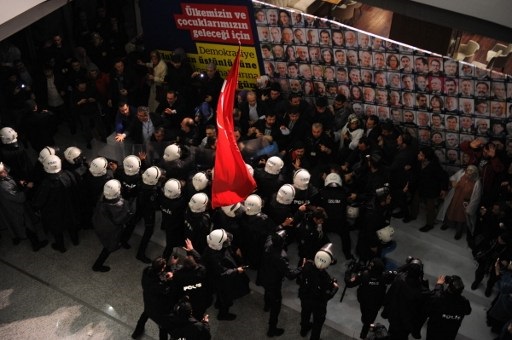
Update (05/03/2016): Turkish police have raided the offices of Zaman, the country’s biggest newspaper, late on Friday, in Istanbul, hours after a court ruling placed it under state control. Another blow to free speech in #Turkey: #Zaman takeover is nothing but a veiled move to eradicate opposition media pic.twitter.com/fJM0QZ4EJc — Lotte Leicht (@LotteLeicht1) March 5, 2016 ——————— The European Federation of Journalists (EFJ) and the International Federation of Journalists (IFJ) are closely following and with great concerns the ongoing media crackdown against Zaman media group in Turkey. On March 4, according to local media reports, an İstanbul court has appointed trustees…

EFJ Focus March 2016

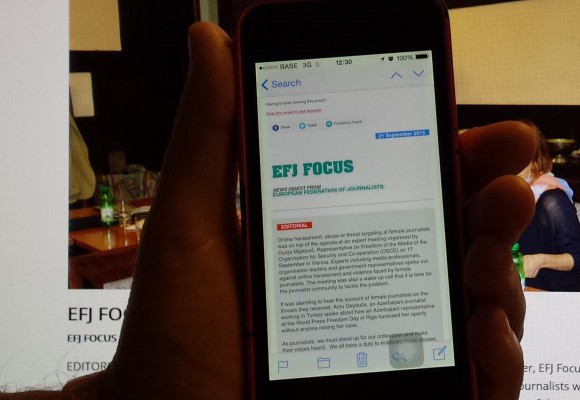
The EFJ newsletter, EFJ Focus, is available in English and German.   EDITORIAL Media freedom under attacks In Turkey, local journalists are being put in prison while foreign journalists are being deported. Meanwhile, Poland changed its media law giving more power to the government and parliament. These attacks on media freedom are being recorded by the Council of Europe (CoE) Platform on the protection and safety of journalists. In the past year, the CoE has recorded 125 alerts on media violations. Therefore, it is important to bring this issue on the top of the European agenda. In February, a Danish…

Greece: Journalists must be free to report on refugees

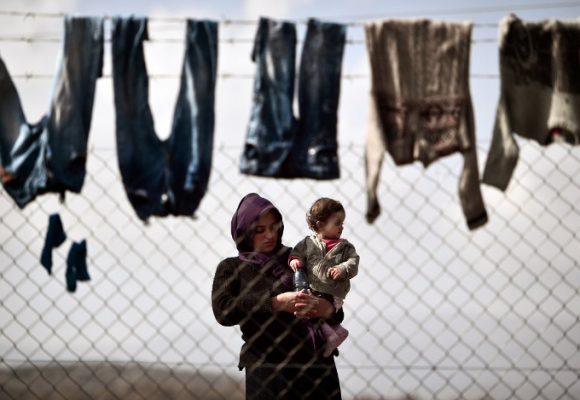
The Pan-Hellenic Federation of Journalists’ Unions (PFJU, EFJ-IFJ affiliate) expresses its opposition to unprecedented ban to journalistic research and reporting aspects of the urgent situation regarding refugee attempted by a new “directive” issued by the Greek ministry of Immigration Policy. According to this directive, “both on the Islands and on the mainland of Greece, television crews and journalists will not be granted license to enter the premises where refugees are hosted until further notice”. PFJU calls on the Greek government to withdraw the decision immediately, since no state of emergency can justify any restriction of individual and social rights constitutionally…

EFJ: Media requires urgent reforms in Macedonia before elections

The EFJ sent the following letter  to Enlargement Commissioner Johannes Hahn: Dear Commissioner Hahn, On behalf of the European Federation of Journalists (EFJ), representing over 300.000 journalists across Europe, and our affiliates in Macedonia, the Association of Journalists of Macedonia (ZNM) and the Trade Union of Macedonian Journalists and Media workers (SSNM), we are writing to you with continued grave concerns over the state of media freedom in Macedonia. As you know, since 2015, Macedonia is in a deep political crisis after the opposition boycotted the Parliament and published the wiretapping scandal. The opposition in the subsequent months published a…

Two arrested journalists released in Turkey after 92 days

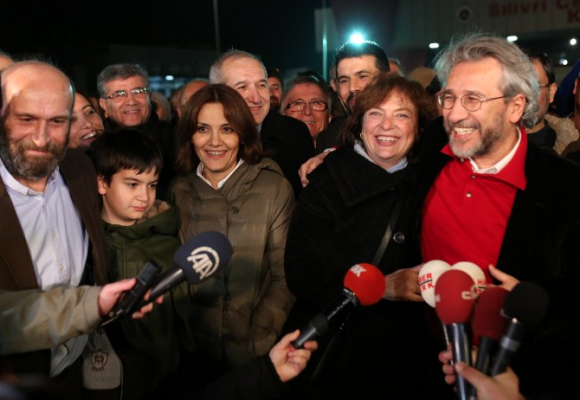
The European and International Federations of Journalists (EFJ-IFJ) warmly welcomed today Turkey’s Constitutional Court ruling on February 25 stating that the rights of Cumhuriyet newspaper journalists Can Dündar and Erdem Gül have been violated and underlining the lack of justification to jail them following the publication of several articles. The ruling refers to the violations of Article 19 (“right to personal liberty and security”), Article 26 (freedom of expression) and Article 28 (press freedom) of Turkey’s Constitution. Dündar and Gül were arrested on 26 November 2015 after the newspaper’s reporting and footage of the content of trucks belonging to the National Intelligence Agency.…

Freedom of the media more important than ever

by Mogens Blicher Bjerregård – EFJ President The truth is the first victim of a conflict, and right now, we have such victims in Europe. Most recently, the amendment in the Polish media law turning publish service media into more state control. As well, the record list counts the Hungarian media law removing the self-regulation system, public service media under attack in Spain and more dramatically, journalists beaten and jailed in bunches in countries like Turkey and Azerbaijan. More state control of the media will allow more hate speech leading to propaganda as seen during the conflict between Russia and…

Digitisation at the workplace

On 23 February, the ETUC organised a workshop on digitisation for its members at national level and the European industry federations including the EFJ. Esther Lynch, ETUC Confederal Secretary explained the challenges and methods regarding the recognition of employment relationship for digital workers and the different definitions of worker and employee throughout the European Union. She asked whether the ETUC should advocate for a Directive for online platform workers. While online work in the medical sector for example is heavily regulated, most other sectors lack complete regulation. Lynch said when it comes to freelance journalists it may be more useful…

Greek journalists denied access to cover police operation against refugees

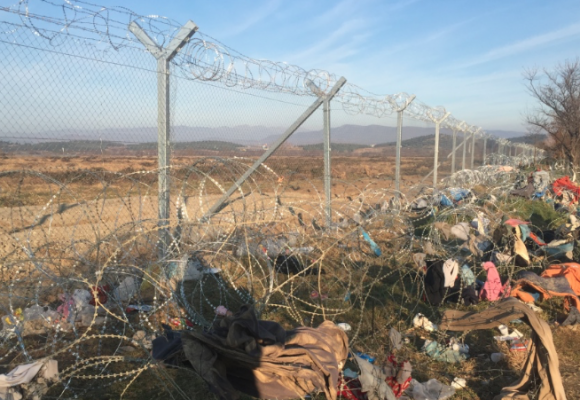
The Journalists’ Union of Macedonia and Thrace Daily Newspapers (ESIEMTH, EFJ affiliate) is reporting another incident of journalist and his TV crew being removed from the camp build for refugees in Idomeni (Greece) that occurred early morning on February 23, 2016. At around 05:30, the Greek police asked the TV crew including journalist Aphroditi Spilioti (member of ESIEMTH), a cameraman and a sound engineer working for the private broadcaster Αlpha Channel to leave the camp “for safety reasons”. The crew did move outside the perimeter of the refugee camp at Idomeni where they could possibly still have a view on…

DIHA journalists regularly targeted by Turkish authorities

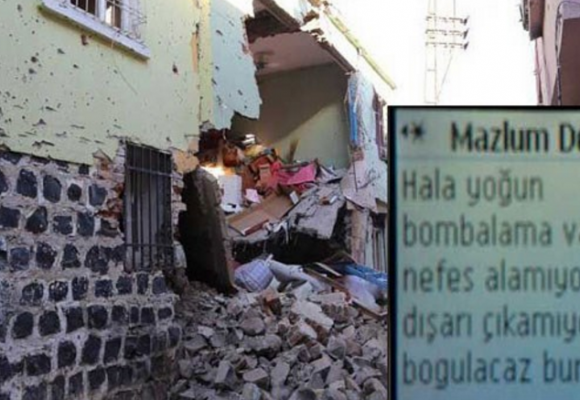
The European and International Federations of Journalists (EFJ-IFJ) are strongly concerned about the alerts they receive on a daily basis about DIHA journalists and media workers being permanently attacked, beaten, threatened or jailed by the Turkish authorities because of their news coverage in conflictual Kurdish populated areas in Southeastern Turkey. The most recent violation is related to Mazlum Dolan, DIHA press correspondent in the municipality of Sur (Diyarbakir), where the journalist was locked at the basement of a building under heavy firing. “We are under heavy bombing, we can’t breath and we can’t go out. We are going to suffocate…

Media should reflect on the way they portray women

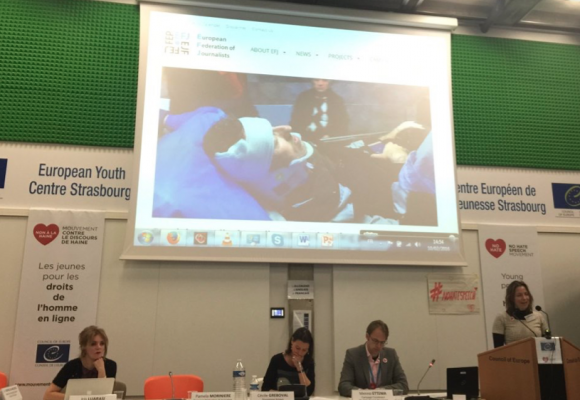
The European Federation of Journalists (EFJ) was invited to a seminar of the No Hate Speech Movement, linked to the implementation of the Gender Equality Strategy of the Council of Europe, that took place from 10 to 12 February at the European Youth Centre in Strasbourg. The issue of sexist hate speech is particularly acute for women journalists both off and online. Sexist forms of hate speech are direct manifestations of violence against women and girls, which remains the most pronounced expression of the uneven balance of power between women and men, one of the root causes of discrimination against…

Commissioner Muižnieks calls on Poland to protect the independence of public media

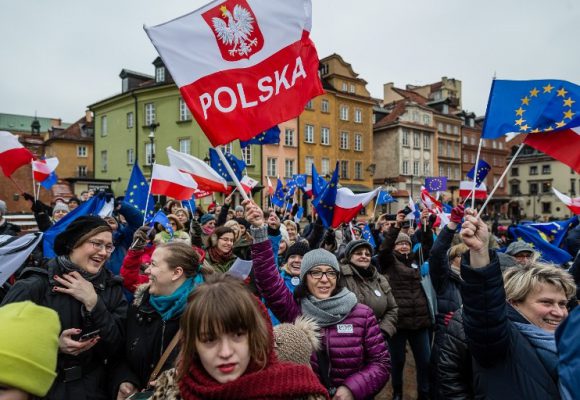
The Council of Europe Commissioner for Human Rights, Nils Muižnieks, issued a statement today, at the end of a four-day visit to Poland. He expressed concerns at the adoption in December 2015 of transitional legislation in the field of public service media, pending the adoption of a wider reform in this area, expected before the summer 2016. “Placing public service media under direct government control by giving the latter the powers to appoint and dismiss the members of the supervisory and management boards of public service television and radio contradicts Council of Europe standards which notably require that public service media…

Turkish journalist Füsun Erdogan visits the EFJ/IFJ offices

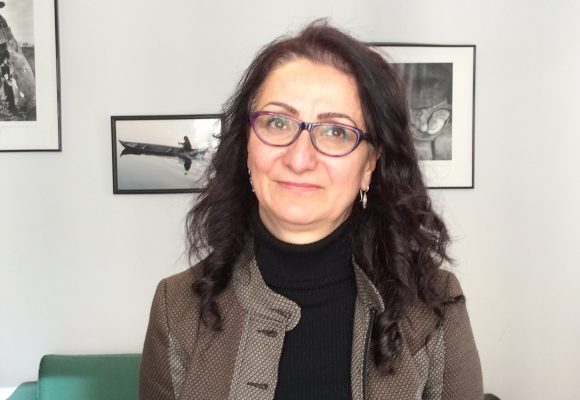
Turkish journalist Füsun Erdoğan visited the IFJ/EFJ offices today to share the latest developments of her trial to be set in Ankara, Tukey’s capital on 23 March. On 2 November 2013, Füsun Erdogan was given a life sentence and charged with being a member of an alleged terrorist organisation. Her trial in the appeal court will take place on 23 March. The IFJ and the EFJ will ask the Turkish government to ensure a fair trial and set the journalist free. Founder of the radio station Özgür Radyo (Radio Free), Erdogan has often defended political, religious and ethnic minorities. On…

Croatia: governmental attacks on Media Freedom

The decision to abolish state subsidies for non-profit media in Croatia was announced by Croatian Minister of Culture, Zlatko Hasanbegović, on the 27th of January 2016. The International and European Federations of Journalists join their affiliates in Croatia, the Croatia Journalists’ Association (HND) and the Trade Union of Croatian Journalists (Sinoh) in condemning this decision, as well as the minister of Culture dissolution of the Expert Committee for non-profit media before the end of his mandate. “Non-profit media in Croatia arose as an oasis of critical and professional journalism, focusing on topics ignored by most other media outlets, bolstering the freedoms and…