European Commission: Improved journalists’ access to public documents needed

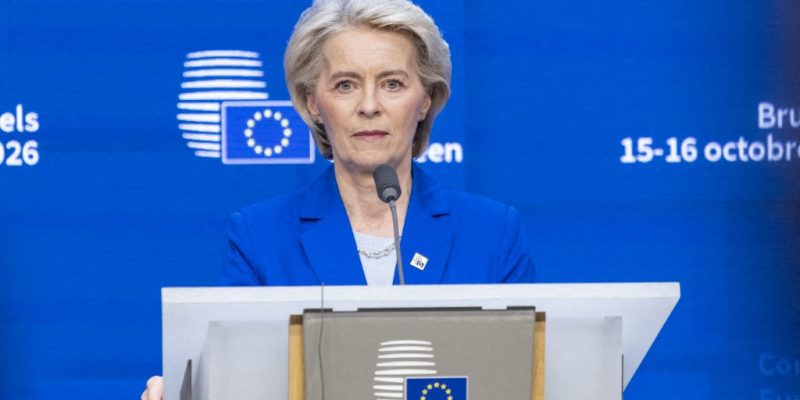
The European Federation of Journalists (EFJ), together with media outlets, journalist associations and press freedom organisations across Europe, has signed an open letter calling on European Commission President Ursula von der Leyen to increase transparency on EU decision-making by making necessary documents more accessible to media workers. This allows journalists and the public to follow the latest policy developments, public money spending and the exercise of power by EU institutions. It is crucial to democratic accountability, and a legal right under EU law. Yet journalists seeking information from the European Commission increasingly face long delays, extensive redactions and refusals to…
The Netherlands: Landmark ruling sets 50% pay increase for photojournalists

The freelance photojournalists Britt van Uem (Tubantia) and Ruud Rogier (Brabants Dagblad) won on the 1st of November the lawsuit against DPG Media (formerly De Persgroep). The court ruled that the rates they received for their work, respectively 13 cents per word and 42 euros per photo, were not fair. The judge has increased the rates by 50% to 0.21 cents per word and 65 euros per photo respectively. DPG Media therefore has to pay these two freelancers extra for work they did in 2018. The European Federation of Journalists (EFJ) welcomes this historical decision and congratulates its affiliate, The…

EFJ and partner organisations call on governments to end impunity

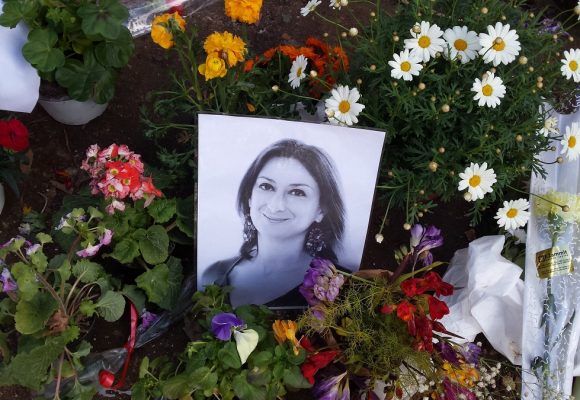
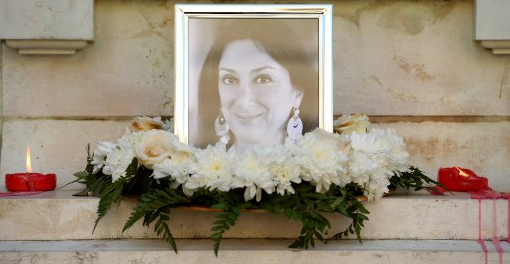
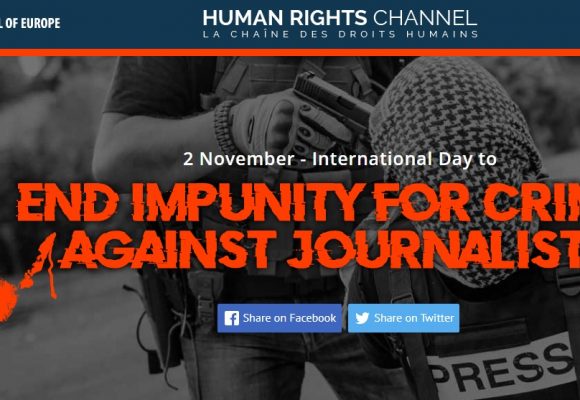
Ahead of the International Day to End Impunity for Crimes against Journalists, a UN-recognized day observed annually on 2 November, twelve partner organisations of the Council of Europe Platform to Promote the Protection of Journalism and Safety of Journalists call on governments to ensure that crimes against journalists are not carried out with impunity. Earlier this week, the case of courageous Maltese investigative journalist Daphne Caruana Galizia was moved to the Council of Europe’s category of journalists killed with impunity. The three men charged with her murder have yet to be brought to trial, while those who masterminded her assassination…

EFJ joins IFJ campaign against impunity

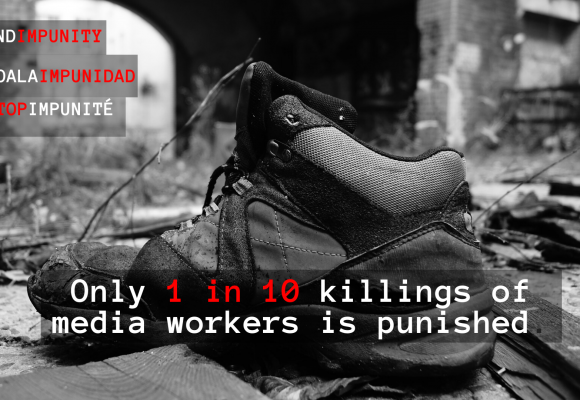
The European Federation of Journalists (EFJ) joined IFJ 3-week campaign to expose the staggering levels of impunity for crimes against journalists and the lack of international action to combat the rising tide of threats and abuse faced by journalists worldwide. The campaign will kick-off on 2 November marking International Day to End Impunity for Crimes Against Journalists and run until 23 November, the anniversary of the Ampatuan massacre in the Philippines, in which at least 32 media workers were killed. The Federation has recorded 1064 killings of media professionals in the past 10 years. Yet, only one murder in every…

How to make journalists’ unions more diverse and inclusive?

The first step for reaching a broader and diverse group of people is improving diversity and inclusiveness within the union itself. Eighteen trade union representatives from sixteen European countries attended a three-day training organised by the European Federation of Journalists (EFJ) and the European Trade Union Institute (ETUI), on 28-30 October in Porto, Portugal. The host of the workshop was the Portuguese union and EFJ affiliate Sindicato dos Jornalistas (SinJor). The training aimed to provide current, future and potential leaders different tools to make their unions more inclusive and diverse, equipping them with leadership and trade union mobilising skills; providing…

EFJ invites journalists’ organisations and media outlets to endorse the ‘Charter on Working Conditions’

Show your support to the charter and join the signatories! The EFJ Charter on Journalists Working Conditions is a guideline on working conditions, signed on 12 February 2019 in Belgrade (Serbia), by 14 journalists’ organisation representatives affiliated to the European Federation of Journalists and leading journalists’ unions from Western Balkans and Turkey. The Charter is open for signature to all journalists organisations, private or public media companies or authorities willing to commit to improve the working conditions and reinforce the labour rights of journalists and media workers in Europe, to fight against censorship and to promote free access to information and sources. The Charter contains 10…

Opinion |”Neighbouring rights: Google is not above the law”

More than 850 journalists, photographers, media executives and reporters signed an opinion against Google‘s decision to refuse to compensate the press sector for information referenced on its search engine and services. The European and International Federations of Journalists (EFJ and IFJ), representing respectively 320,000 journalists in Europe and 600,000 worldwide, co-signed this opinion and called on the EU States to act against this abuse of dominance. « Today, Google is attacking the press. Tomorrow it will be music, cinema. We believe that Google can not be above the law or flout the will of the European Parliament. This is an…

Dutch journalist held “hostage” by the Court of Rotterdam

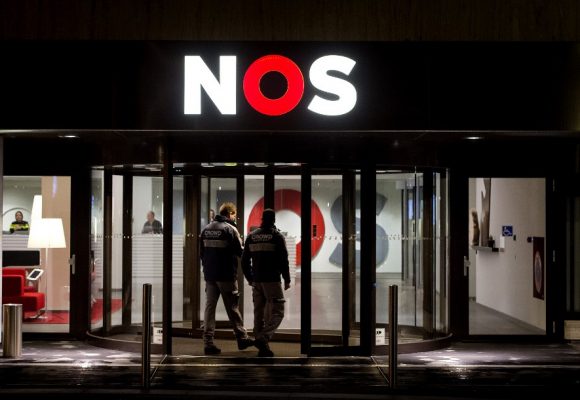
The Dutch journalists led by the EFJ member, the Journalists’ Association of the Netherlands (NVJ) are protesting against the decision of the Court of Rotterdam to held “hostage” NOS reporter, Robert Bas, who refused to reveal his source as demanded by the court. Bas was asked by the court to provide witness to a criminal case investigation, which requires him to compromise the protection of confidential sources. He refused the demand from the court and subsequently held by the court by refusing to provide evidence. Thomas Bruning, the NVJ General Secretary criticised the decision: “It is incomprehensible that a journalist…

Catalonia protests: Without journalism, there is no democracy

The political conflict between Catalonia and Spain has reached its most critical point with a week of protests against the sentence that condemned Catalan leaders between 9 and 13 years of prison. Some of the demonstrations have turned into a scenario of violence between protesters and police officers. The journalists, in between, are suffering the consequences of this confrontation: 59 journalists had been injured as for today (65 according to Mèdia.cat, but some of them are still unidentified), some of the reporters have been held in custody and informing about the situation is becoming more and more difficult. The European…

Ukraine: Journalist Stanislav Aseev sentenced to 15 years and 2.5 years job ban

Stanislav Aseev, an Ukrainian journalist who has been held captive since June 2017 in Donetsk, has today given a 15-year sentence and a ban to practice journalism for 2.5 years by the “Supreme Court” of the self-proclaimed “Donetsk People’s Republic” in east Ukraine. The European Federation of Journalists (EFJ) was shocked by the decision and reiterated its call for the immediate release of Aseev. Ricardo Gutiérrez, EFJ General Secretary, said: “The mistreatment of Aseev and now the harsh sentence are blatant violations of media freedom. “The authorities must stop criminalising journalists and depriving their rights to exercise freedom of speech.” Sergiy…

EFJ calls on EU to enhance protection for journalists

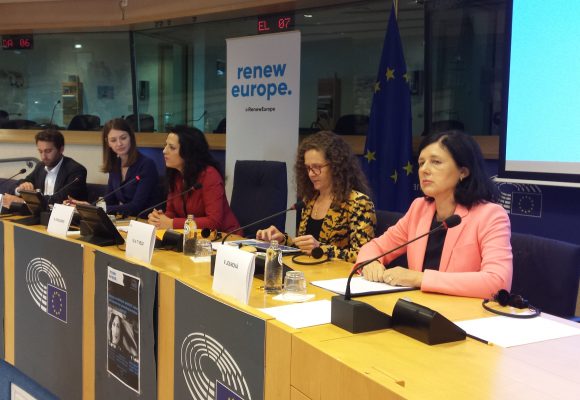
The European Federation of Journalists (EFJ) has participated today at the European Parliament in the workshops and the conference ‘Risking everything to uphold EU values and democracy: protecting journalists in the EU’, organised by Renew Europe Group and Romanian MEP Ramona Strugariu. During the conference, MEP Sophie in’t Veld said that the murder of Maltese journalist Daphne Caruana Galizia had a significant role and importance. She stated that Malta will only be able to regain press freedom with the end of impunity for the murder of Daphne Caruana Galizia. Daphne’s son, Matthew Caruana Galizia, made a tribute to her work and…

Czech Republic: media freedom under pressure

A new report by the European Federation of Journalists (EFJ), the Syndicate of Journalists of Czech Republic, the European Broadcasting Union (EBU), the Nordic Association of News Publishers and the European Centre for Press and Media Freedom (ECPMF)  reveals the state of media in the Czech Republic. A fact-finding delegation met with 14 key informants including journalists, editors, directors, teachers, politicians and founders from various part of the Czech media landscape, both public service media and private media. During the mission, it was noticed that the prime minister’s close link to the media he used to own is totally unacceptable for…

Being a female journalist in Europe

By Marta Sánchez Esparza – @martasesparza What is the status of women journalists in the European Union? Under what conditions do they work? How can they achieve work-life balance? Are their rights to freedom of expression being respected? Do they work on equal terms as their male colleagues? The situation varies greatly from one country to another. The stars of the European flag do not shine the same way for women journalists in the 28 states of the Union. It is not the same to be a reporter in Germany compared to one in the former Yugoslavia, or in the…

Over 30 best practices collected during ‘Managing Change in the Media’ project

More than 60 participants from 23 European countries attended the final conference on ‘how to manage change in the media’ from the unions’ and newsrooms’ perspectives. It took place in Thessaloniki, Greece, on 10-11 October 2019. Co-organised by the European Federation of Journalists (EFJ) and its affiliate in Thessaloniki, the Journalists’ Union of Macedonia and Thrace Daily Newspapers (ESIEMTH), the conference concluded a two-year project (2017-2019) whose objective was to help journalists’ organisations in adapting practices to the news industry and in strengthening their union capacity, through a series of five workshops (see below). The exchange of best practices and…

EFJ and international organisations demand an end to impunity two years after the assassination of Daphne Caruana Galizia

Two years after the assassination of journalist Daphne Caruana Galizia in Malta, on 16 October 2019, we, the undersigned international free expression, anti-corruption, and journalists’ organisations, once again demand an end to impunity for this heinous attack. Six of our organisations, including the European Federation of Journalists (EFJ), took part in an international freedom of expression mission to Malta one year ago, where, at the highest levels of government, we raised our profound concerns about this case and the broader worrying free expression environment in Malta – which has fallen 30 places over the past two years and is now…

Two years since the assassination of Daphne Caruana Galizia

The European and International Federations of Journalists (EFJ and IFJ) joined today their Maltese affiliate, the Institute of Maltese Journalists (IGM), in standing with those fighting for justice, two years after the assassination of Daphne Caruana Galizia. IFJ and EFJ associate themselves with IGM’s press release issued today: “It has been two years since the day Daphne Caruana Galizia was brutally murdered in a horrific attack on freedom of speech. Two years since a fellow journalist was killed because someone feared what she had to say and used the threat of murder as a tool to censor the Maltese press.…

Catalonia: EFJ and IFJ demand an investigation into police violence against journalists

[UPDATE] The number of journalists victims of some type of aggression while covering the different demonstrations this week in Barcelona rises to 59. On Tuesday 15, in Tarragona, a protester tore the shirt first a journalist and then pulled Canal Reus’ editor Ariadna Escoda’s hair. In Lleida, the journalist of the Catalan News Agency (ACN), Laura Cortés, was wounded in the leg by the impact of an object. In Barcelona, a photojournalist from eldiario.es, Sònia Calvó, freelance photojournalist Xavi Hurtado, journalist Quico Sallés from El Món, three photographers who prefer to remain anonymous, and a French reporter reported to have been…