European Commission: Improved journalists’ access to public documents needed

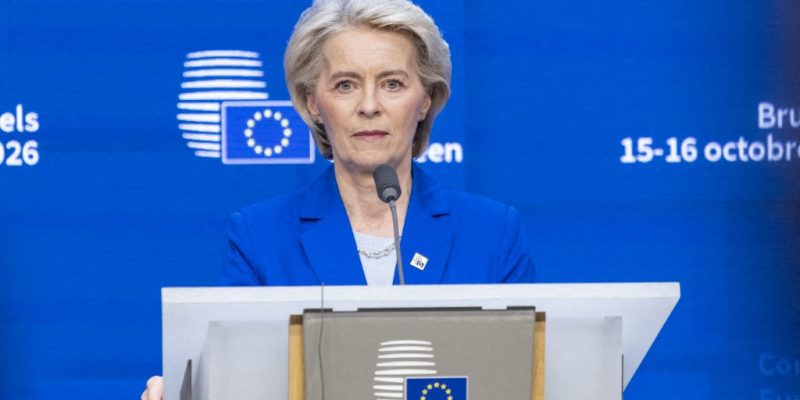
The European Federation of Journalists (EFJ), together with media outlets, journalist associations and press freedom organisations across Europe, has signed an open letter calling on European Commission President Ursula von der Leyen to increase transparency on EU decision-making by making necessary documents more accessible to media workers. This allows journalists and the public to follow the latest policy developments, public money spending and the exercise of power by EU institutions. It is crucial to democratic accountability, and a legal right under EU law. Yet journalists seeking information from the European Commission increasingly face long delays, extensive redactions and refusals to…

The Netherlands: the travel restriction law threatens media freedom

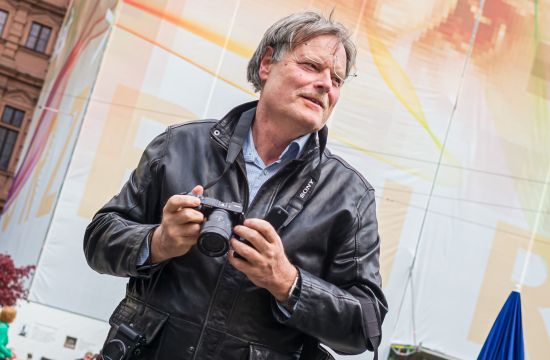
The European Federation of Journalists (EFJ) joins its Dutch affiliate Nederlandse Vereninging van Journalisten (NVJ) in condemning a new law under which Dutch citizens travelling to an area “controlled by terrorist groups” must request permission from the justice ministry. This new regulation threatens the freedom to inform, EFJ said, calling on the Dutch senate to make an exception for journalists or to withdraw the bill. The bill, proposed by the Dutch Minister of Justice and Security Ferdinand Grapperhaus (our picture), was approved by the Lower House on 10 September. Under the proposed law, failing to request the justice ministry’s permission before travelling…

Vigil for Daphne Caruana Galizia: No justice two years on

Wednesday 16 October 2019 will mark two years since the brutal assassination of Malta’s best-known investigative journalist and anti-corruption campaigner, Daphne Caruana Galizia. Although three men have now been formally charged with her murder, a date for their trial has yet to be set while those who ordered her killing remain at large. To honour Daphne Caruana Galizia’s memory and to continue calling for justice, the Committee to Protect Journalists (CPJ), the European Federation of Journalists (EFJ), the International Federation of Journalists (IFJ),  the Observatory for the Protection of Human Rights Defenders (a joint FIDH-OMCT programme), Reporters Without Borders (RSF)…

Poland’s ruling Law and Justice party aims to regulate journalists

Poland’s ruling Law and Justice (PiS) party wants to regulate the status of the country’s journalists, and to create a “new media order.” PiS is proposing a new regulatory framework for the conduct of journalism in its 232-page election manifesto,in preparation for the October 13 general election. The ruling party argues that the journalist profession is one which depends on public trust and should, therefore, be regulated in a similar way to that of the medical and legal professions. This would mean establishing a body to oversee ethical and professional standards, education and entry into the profession. The proposed reform…

Armenia: Journalists’ union denounced attack on online portal Hayeli.am

A group of government supporters attacked the offices of the online media Hayeli.am, highly critical of the Armenian authorities, on October 5. The group threw eggs and posted offensive posters at the entrance of the offices of the publication in Yerevan, the capital of the country. The four suspects are all known as ardent supporters of Armenian Prime Minister and were protesting against a headline that they consider pro-Azerbaijani published by the news website last week: “Aliyev’s belated but ‘strong’ response to Pashinian”. The article was about Azerbaijani President Ilham Aliyev’s public reaction a statement on Nagorno-Karabakh made by Armenian…

Kosovo: Serbian journalists detained and held up for several hours

Kosovo Police detained four Serbian journalists from Radio Belgrade at a police station in Southern Kosovska Mitrovica on Friday, 4 October for six hours. On the same day, Pink Television and Tanjug News Agency crews were held up for several hours at Jarinje administrative crossing. The European Federation of Journalists (EFJ) joins its Serbian affiliates the Journalists’ Association of Serbia (UNS), the Independent Journalists’ Association (NUNS) and the Journalists’ Union of Serbia (SINOS) in supporting their protest for the protection of journalists and the right of informing freely. The Radio Belgrade crew, which included journalist Nataša Aćimović, sound technician Aleksandar Bojović, producer Svetlana…

Spain: Madrid City Council ends local radio broadcasting

On 29 September, the Madrid radio M21 stopped airing its programmes following a decision from the newly elected city council of Madrid, leaving the thirteen media workers in an uncertain situation. The European Federation of Journalists (EFJ) joined its affiliates in Spain Federación de Asociaciones de Periodistas (FAPE) and Federación de Sindicatos de Periodistas (FeSP) in expressing solidarity with M21’s staff. They are calling on the new Mayor and the city council of Madrid to reconsider their decision. Madrid’s Mayor, José Luis Martínez-Almeida had been accusing repeatedly the radio to be the former mayor mouthpiece, renaming the station ‘Radio Carmena’…

Iran: EFJ calls for the immediate release of Russian journalist Yulia Yuzik

Russian journalist Yulia Yuzik was arrested on 3 October in her hotel room in the Iranian capital Teheran. The International and European Federations of Journalists (IFJ/EFJ) joined their Russian affiliates in urging Iran to clarify the reasons for her arrest. In the absence of evidence, the EFJ calls for the journalist’s immediate release. Yulia Yuzik had her passport confiscated by the police as she entered Teheran airport on 3 October and was told she would get it back on her return. She was arrested later in her hotel room by the Islamic Revolutionary Guard Corps (IRGC) for allegedly working for…

Growing concerns among European journalists on political interference on public service media

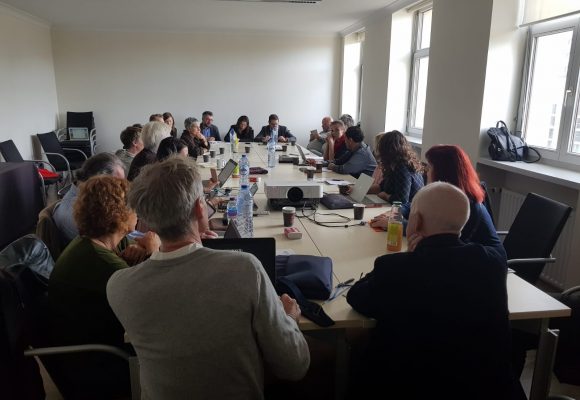
Twelve journalists working at the the public service broadcasters (PSM) in Austria, Bosnia & Herzegovina, Estonia, Finland, France, Germany, Greece, Spain, Serbia and the UK attended the first meeting of the Broadcasting Expert Group (BREG) has raised serious concerns over the increasing political interference on public service media. In the meeting held at the EFJ headquarters in Brussels, discussion over the development of the independence of PSM shows a worrying trend of political interference all over Europe, even in the “traditionally democratic countries” in Northern and Western Europe like Denmark and Austria. Particular attention was also paid to the situation of Poland,…

Bosnia and Herzegovina: harsh sanctions requested against Radio Sarajevo assailants

A journalist of Radio Sarajevo was attacked and several journalists were threatened by a group of fans of the Football Club Sarajevo on the evening of September 27. The European and International Federations of Journalists (EFJ/IFJ) joined its affiliate in Bosnia and Herzegovina, BH Journalists, in demanding harsh sanctions against the assailants. After breaking into the newsroom, a group of hooligans harassed for more than two hours, including death threats, a radio reporter to remove an article about a fan who had been convicted to a five-year prison sentence for drug possession. He was then forced to call other editorial…

UK: EFJ and NUJ renew appeal for O’Hagan investigation

The European Federation of Journalists (EFJ) joined today the National Union of Journalists (NUJ) in the UK and Ireland renewed call for an independent investigation into the murder of Sunday World journalist and union activist Martin O’Hagan. In a joint statement marking the anniversary of Martin’s murder on 28 September 2001, Michelle Stanistreet, NUJ general secretary and Séamus Dooley, NUJ assistant general secretary called for the appointment of an external investigator to carry out an independent inquiry into the murder and the subsequent failure of the police to secure conviction for the murder. The statement said: “The NUJ remains gravely concerned at…

Bulgaria: Independence of public service media BNR threatened

The European Federation of Journalists (EFJ) and the International Federation of Journalists (IFJ) joined their affiliate, the Union of Bulgarian Journalists (UBJ), to express support to the journalists of the Bulgarian National Radio (BNR) who are facing widespread pressure from their management.  The crisis in the Bulgarian public service media started with the dismissal of the longtime radio journalist and legal expert Sylvia Velikova and the five-hour broadcasting suspension of the BNR’s Horizont Channel on September 13.  During a hearing at the regulator (Council of Electronic Media – CEM) on the following days, the editorial board of the radio channel…

Ukraine: Media regulator revokes digital licences of independent TV channel

The National Television and Radio broadcasting council of Ukraine, the media regulatory authority, has revoked all digital licences granted to independent broadcaster Channel 112. The International Federation of Journalists (IFJ) and the European Federation of Journalists (IFJ/EFJ) joined their affiliate the National Union of Journalists in Ukraine (NUJU) in condemning a decision that threatens press freedom and the livelihood of hundreds of media workers. On 26 September, the Ukrainian media regulator revoked the digital licences of the 5 television companies belonging to Channel 112.  According to the regulator, they had violated the programming concept of broadcasting for several years, despite the fact that they had been warne Channel…

Russian journalist Svetlana Prokopyeva wrongly charged with justifying terrorism

On 20 September 2019, Russian journalist Svetlana Prokopyeva was formally charged with publicly justifying terrorism. The journalist was also asked to sign a non-disclosure agreement and a written undertaking not to leave the Pskov region. The European Federation of Journalists (EFJ) and the Russian Journalists’ and Media Workers’ Union (JMWU) are convinced of her complete innocence and call on Russian authorities to release her without any delay. Svetlana Prokopieva works for the local branch of the independent Moscow-based radio station Ekho Moskvy, in the northwestern city of Pskov. She was suspected of “justifying terrorism” following a radio commentary, on 7…

EFJ mourns sudden death of devoted union colleague and journalist

Sadness and dismay prevail in the European Federation of Journalists (EFJ) today after the sudden death of the chair of the EFJ’s Labour Expert Group, Rainer Reichert, in Brussels. “For decades, he has rendered outstanding services to journalism in both Germany and Europe,” said EFJ President, Mogens Blicher Bjerregård, paying tribute to the deceased. “Rainer was so committed to fighting for better working conditions of journalists throughout Europe. With his legal expertise and knowledge of many languages, he always volunteered to help improve the interests of journalists, be it in the Balkans, in Italy or anywhere in Europe. His death…

The EFJ will join the global climate strike this Friday

The European Federation of Journalists (EFJ) will join the global climate strike this Friday in Brussels to put pressure on world leaders to deliver urgent solutions to the worsening climate crisis. Demonstrations will take place around the world between September 20 and 27 to coincide with the United Nation’s climate summit in New York, where heads of governments must take concrete action to deliver on the promises of the Paris Agreement. That includes the commitment to a “just transition” – moving to a carbon neutral economy in a way that’s fair to people working in industries that will be required to…

Silence Hate: Young journalists published creative and innovative stories on migration

The #SilenceHate project kicked-off more than a year and a half ago, in April 2018, with a five-day ‘Media Camp’ in London. Thirteen young journalists were trained in the intricacies of how hate speech is used to target migrants, and what journalists can do to counter it. They went back to their home countries (Belgium, Cyprus, Greece, Italy, Poland and United Kingdom) with the objective to report and produced the stories that they pitched. Here are the journalists’ productions offering different formats such as photography, podcasts, videos, features, long form, and having a creative and innovative perspective of the migration…