Czech Republic: Public media funding bill raises concerns over compatibility with EMFA

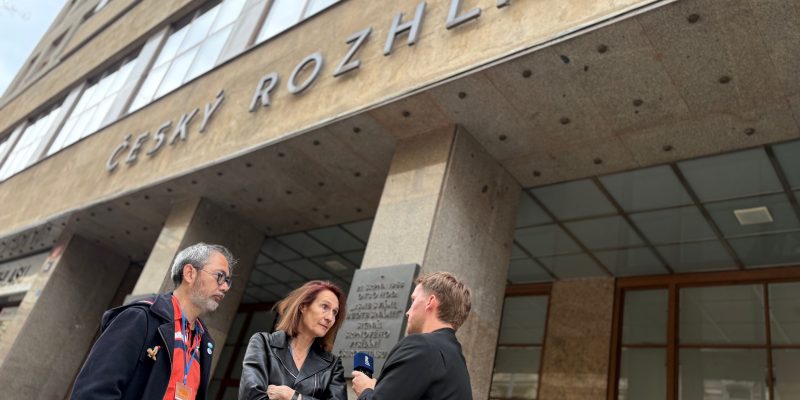
A new government bill which would overhaul the funding model for the Czech public media risks financially weakening the broadcasters, eroding safeguards for their financial independence and violating European Media Freedom Act (EMFA), the undersigned Media Freedom Rapid Response (MFRR) partners, the European Federation of Journalists (EFJ) and other media freedom, journalist and freedom of expression organisations warn today. Our organisations call on the European Commission to closely assess this bill regarding its compatibility with Article 5 of EMFA and to ensure that no reforms are undertaken which threaten the financial, editorial or institutional independence of the Czech public media.…

Ukraine: journalists’ union rejects new draft law on disinformation

On January 20, the Ukrainian Ministry of Culture, Youth and Sports has unveiled a draft law on combating disinformation and regulating media activity.  According to the minister of Culture, Volodymyr Borodyansky, the text aims to respond to Russian disinformation. However, the journalistic community believes that this initiative is likely to be used as a tool for harassing Ukrainian journalists. In particular, the Nation Union of Journalists of Ukraine (NUJU) warns that the law would legalise state interference in the journalistic profession and restrict media workers’ rights. The document outlines new rules on media regulation and journalistic activity. It foresees criminal…

The Press Freedom Police Codex launches in France

In recent weeks, there has been an escalation in the incidences of violence by police against journalists, especially in France. There could not be a better time to establish a dialogue between the groups and to work towards stopping the violence. This is why the European Centre for Press and Media Freedom (ECPMF) has joined the French Union of Journalists of the Confédération générale du travail (SNJ-CGT), to launch its Press Freedom Police Codex in Paris. The codex was developed by ECPMF and partner organisations based on research conducted across Europe on the situation of journalists. ECPMF teamed up with…

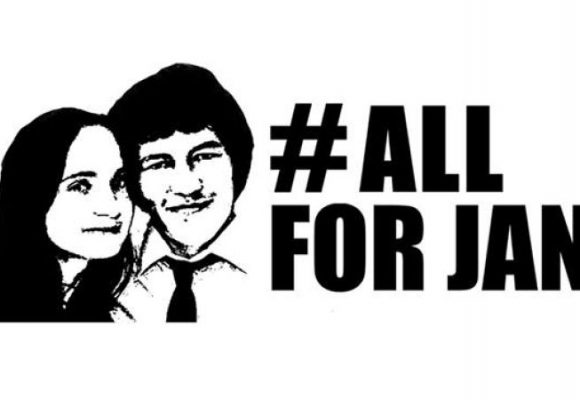
Journalists’ and press freedom organisations welcome start of trial in Kuciak murder

The undersigned international and regional press freedom and journalism groups welcome the start of the murder trial this week against the suspected killers of Slovak journalist Ján Kuciak and his fiancée, Martina Kušnírova. The suspects on trial at the Specialized Criminal Court in Pezinok, Slovakia, include the alleged mastermind, Slovak businessman Marian Kočner, who prosecutors say ordered Kuciak’s murder in retaliation for his journalistic work. A confidante of Kočner’s, Alena Zsuzsová, is charged with having arranged the murder via a middleman, Zoltán Andruskó, who in turn contracted two alleged hitmen, cousins Tomáš Szabó and Miroslav Marček. Andruskó previously admitted guilt…

Italy: Outrage over Sanremo festival presenter’s sexist comments on public TV

The presenter of the Italian Sanremo 2020 festival, broadcast by the Italian public television RAI, caused a wave of indignation in Italy after he praised his co-hosts with sexist comments. The presenter of the Sanremo music festival, Amedeo Umberto Rita Sebastiani, also known as Amadeus, introduced his co-hosts saying they were chosen for being “very beautiful” and referring to one of them as a “sexy icon”. He added that Francesca Sofia Novello, who is a model, is a “super beautiful” woman, and praised “her ability to be close to a great man (in reference to Valentino Rossi, her partner) by…

Albania: Journalists’ association pushes President to veto “censorship” law

The President of Albania, Ilir Meta, has vetoed a proposed law that would stifle online media following the pressure from the Association of Professional Journalists of Albania (APJA), who denounced the bill as “authoritarian”. The International and European Federation of Journalists (IFJ/EFJ) welcomed the decision, stressing that anti-defamation laws must not be used as tools to restrain press freedom. The proposed amendments to the Law on Audiovisual Media and the Law on Electronic Communications would have granted new government bodies such as the Albanian Media Authority (AMA) and Albanian Communication and Postal Authorities (AKEP), the power to instantly block media…

Getting real about diversity and talent: 10 recommendations

Europe’s newsrooms are still predominantly white and middle class, though societies are changing at rapid speed. How to better reflect all members of the increasingly diverse European societies within Europe’s Media and public sphere is crucial; the issue of diversity and gender is and important element in EFJ’s project work. The European Federation of Journalists has published a new report about how to get newsrooms and editorial teams more diverse. As part of the EFJ project ‘Managing change in media’, supported by the European Commission, one of its contributors, Alexandra Borchardt, drafted ten recommendations for newsrooms to be more diverse,…

UK: BBC journalist wins landmark equal pay case

BBC presenter and National Union of journalists (NUJ) member Samira Ahmed today won a landmark equal pay victory against the BBC. The European and International Federation of Journalists (EFJ-IFJ) congratulate her and the NUJ for its excellent and inspiring work and hope this victory will encourage all women journalists seeking equal pay to make sure they are in a union and media employers to learn the lessons. Journalist Samira Ahmed, backed by the NUJ, first appeared at The Central London Employment Tribunal on Monday 28 October to challenge unequal pay at the BBC. The journalist has been presenting the BBC…

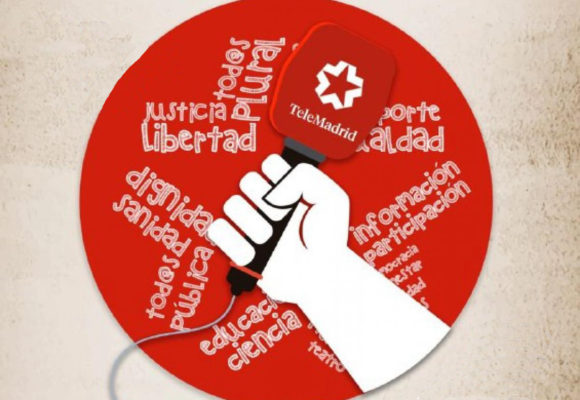
Spain: EFJ-IFJ stand for the defence of Madrid’s public broadcasting service

The European and International Federations of Journalists (EFJ and IFJ) join their Spanish affiliate Federación de Servicios a la Ciudadanía de CC.OO. in the call for the defence of Madrid’s public service broadcaster RTVM (Telemadrid and Onda Madrid) from the blocking situation its management is suffering by the regional government. The Government of the Community of Madrid has not been allowing the replacement of medical leaves for months, it has not yet authorised the broadcasting of women’s sport or second division football matches that have been taking place since 2017, nor has it approved the expense accepted in the Program Contract for…

How can journalists protect their mental health from online harassment?

Journalists have always been in the spotlight and now, with the rise of the use of social media, they are one of the main targets for online harassment. These attacks often includes threats to the journalists themselves and their families and are most commonly directed to women and their biggest consequences are psychological, according to an IFJ survey. Anxiety, stress and fear are, together with self-censorship, the main effects of online harassment on journalists. The Committee to Protect Journalists (CPJ) has published a short guide on how journalists should protect themselves from this harassment: prevention measures to take in advance, how to…

George Foulkes: “A free media is as important to democracy as regular elections”

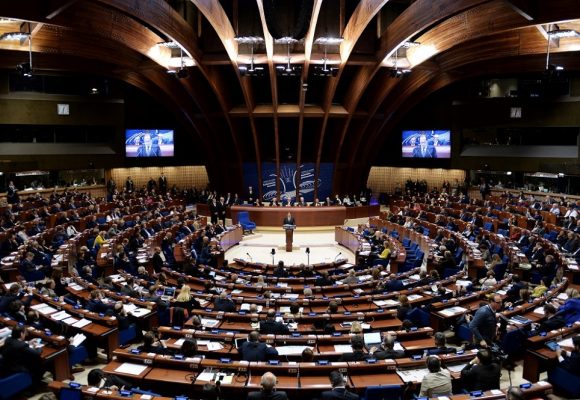
The European Federation of Journalists (EFJ) welcomes Council of Europe Rapporteur on media freedom George Foulkes‘ call for better protection for journalists in Europe. Over the past two years, George Foulkes, who is a British Labour Co-operative politician and former Scotland minister, has been investigating this issue as General Rapporteur on media freedom and the safety of journalists for the Parliamentary Assembly of the Council of Europe (Pace). His report points out that the Council of Europe Platform for the Protection of Journalism shows that the situation is getting worse in Europe. From 2015 to date, 26 journalists have been…

The arbitrary detention of Julian Assange set a dangerous precedent for journalists

Julian Assange, publisher of Wikileaks, is currently detained in Belmarsh high-security prison in the United Kingdom. He faces extradition to the United States and criminal prosecution under the US Espionage Act. He has been charged for publishing the Afghanistan and Iraq war diaries and US embassy cables, important documents that many journalists around the world used and helped to publicise. The “War Diaries” provided evidence that the US Government misled the public about activities in Afghanistan and Iraq and committed war crimes. “We believe that the arbitrary detention and criminal prosecution of Julian Assange set an extremely dangerous precedent for…

New EU Copyright Directive’s workshop: How to get a fair share for journalists

As part of the EU-funded project Trust and Quality in Journalism, the European Federation of Journalists and its Belgian affiliates (AJP/VVJ) are organising the first session of a series of five workshops that aim to promote best practices and exchange ideas about rebuilding trust and ensuring quality in journalism. The workshop taking place in Brussels on March 19-20 will gather experts of authors’ rights officer from the EFJ members, media stakeholders and EU policy makers to discuss national implementation of the EU Copyright Directive and how to guarantee a fair share for journalists. The new directive includes key provisions for the…

Expert Exchange Visit Programme: APPLY NOW!

Are you planning the next big move and in need of expert help? Whether it is about negotiating a new agreement, building recruitment and organising strategies to increase membership, or launching a campaign for journalists, the EFJ Expert Exchange Visit Programme can help you find the experts to share good practices among journalists’ organisations. As part of the EU-funded Trust and Quality in Journalism‘s project framework, EFJ members can request an expert from another affiliate for national training and coaching on union related subjects – collective bargaining, labour rights, authors’ rights, public broadcasting, recruitment and organising and more. The last…

EFJ mourns two killed journalists in Europe in 2019

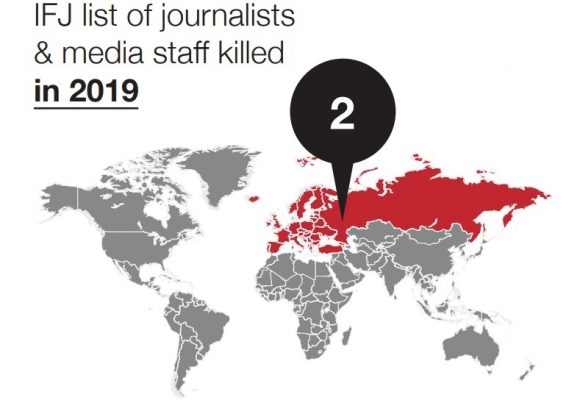
The International Federation of Journalists (IFJ) has recorded 49 killings of journalists and media professionals in 2019, including two in Europe, a significant drop from 95 posted last year. The IFJ says that, while the apparent decreasing bloodbath in the journalists’ community is a welcome relief, the spread of killings and the motives behind the killings are sobering reminders that violence against journalists is still rampant and the failure to combat impunity for these attacks remain a damning indictment on those in power. The IFJ lists 18 countries from the four corners of the world where journalist were killed since…

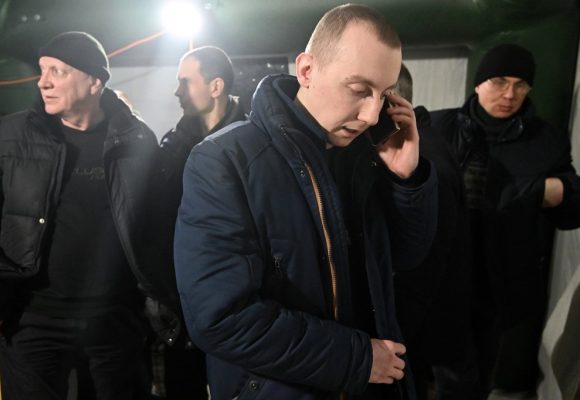
Picture credit: Genya Savilov / AFP.

Aseev is free but 122 journalists remain in prison in Europe

The European Federation of Journalists (EFJ) welcomes the release of Ukrainian journalists Stanislav Aseev and Oleh Halaziuk who suffered a long illegal custody in Donetsk. On Sunday, at a checkpoint near Gorlovka, pro-Russian separatists and Ukraine have concluded a long-awaited prisoner exchange of 200 prisoners, including the two journalists who contributed to the Ukrainian service of the US-funded Radio Free Europe/Radio Liberty. While welcoming these releases, the EFJ recalls that 122 journalists and media actors remain in prison in Europe: 108 in Turkey; 7 in Russia; 6 in Azerbaijan; 1 in the United Kingdom (Julian Assange, founder and publisher of WikiLeaks,…

Spain: no more press conferences without questions!

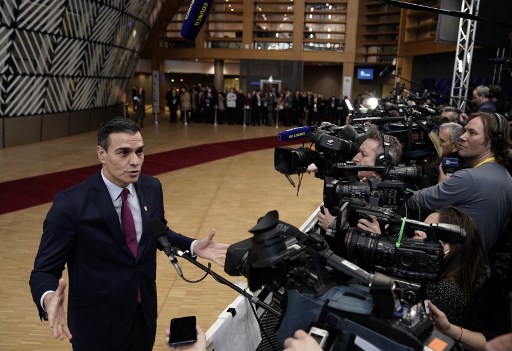
The European Federation of Journalists (EFJ) joined today its Spanish affiliates FSC-CCOO and FAPE in condemning the increasingly common practice of no-questions-asked press conferences, in Spain. On Wednesday, Pedro Sanchez (our picture), secretary general of the PSOE and candidate for investiture as president of the Government, invited journalists to attend a press conference, after confirming the King’s order to try to form a government and thus be invested president. Sanchez only allowed two questions, which was strongly criticized by journalists present. The Spanish Secretary of State for Communication, Miguel Ángel Oliver criticized journalists covering la Moncloa, the seat of government,…