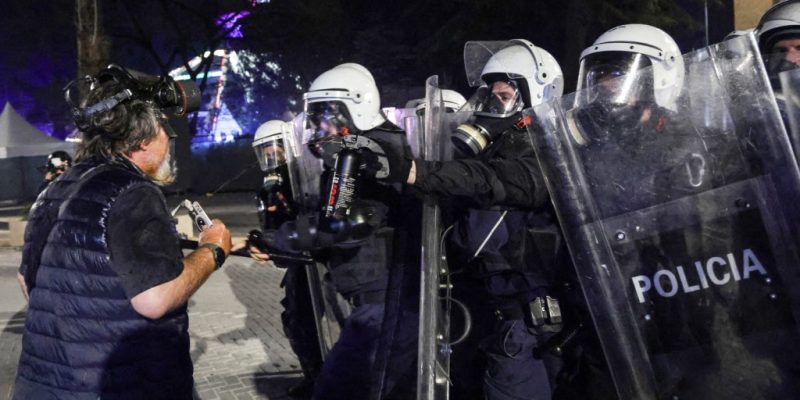
World Press Freedom Day: Six years of monitoring reveals emerging threats against media freedom in Europe

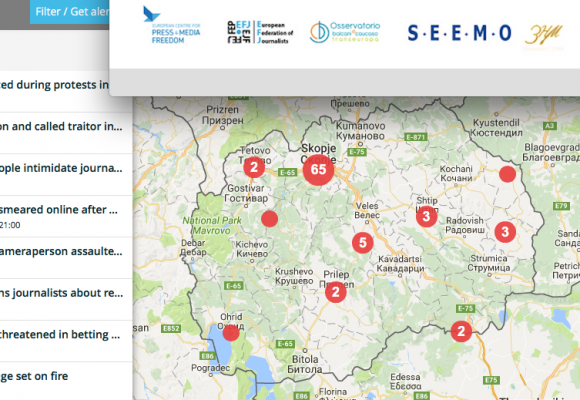
To mark World Press Freedom Day, the European Federation of Journalists (EFJ) and its partners from the Media Freedom Rapid Response (MFRR) are publishing today an analysis of six years of monitoring data that reveals, in granular detail, the most serious challenges and trends threatening freedom of the press in Europe. The MFRR consortium first began comprehensive monitoring in 2020 and has become the largest public database of media freedom violations in Europe. Our Mapping Media Freedom (MapMF) platform has now recorded 6092 media freedom violations in Europe affecting more than 10,200 different journalists and media-related entities in EU Member States…

Last chance to register for EIJC17 & Dataharvest 

Seven more days until the seventh ever EIJC & Dataharvest Conference. If you haven’t registered yet, you will want to do so soon. Here’s why. There are over one hundred sessions packed into two and a half days and spread over ten wildly interesting tracks: Cross-border, Data, Data Lab, Entrepreneurial & Funding, Online Research & Security, Tax & Finance, Algorithm Accountability, Journo-scholar collaboration and Wobbing. Check the programme here. Get your hands dirty at our hand-on Data Lab and dive into software like Excel, SQL, Python scraper, R for journalists with the help of experienced data trainers. There will be sessions for all levels: beginner, intermediate,…

Judicial harassment against journalists in Turkey

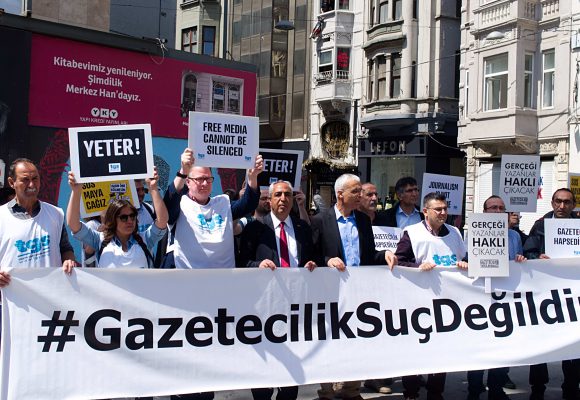
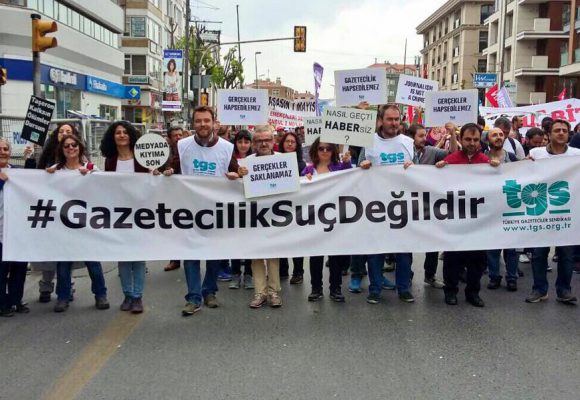
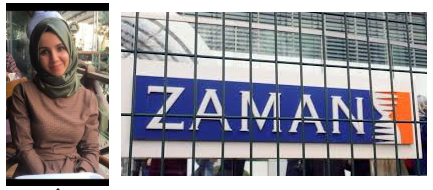
The European and International Federations of Journalists (EFJ-IFJ) are strongly concerned about the judicial harassment in Turkey against journalists and media workers detained for allegedly “being member” or “doing propaganda on behalf of an illegal organisation”. The EFJ-IFJ has received a detailed report about the critical situation of the young (27) female Turkish journalist and law student Aysenur Parildak, arrested for more than 9 months, released by court on 2nd of May 2017 and immediately re-arrested the same day with new charges related to the same facts (being correspondent for Zaman newspaper). Similarly mid-April 2017, 12 journalists (Gökçe Fırat Çulhaoğlu, Yakup Çetin, Bünyamin Köseli, Cihan…

Journalist in Hungary violently expelled from a forum by a local politician

Júlia Halász, a reporter of the Hungarian liberal 444.hu website, was violently expelled from one of the public party forums in Budapest last Thursday (04/05/2017). National Economy Minister Mihály Varga and National Defence Minister István Simicskó were explaining the dangers of the “Soros network” and the “Stop Brussels” campaign. Halász was reporting on the anti-Soros forums and started producing footage when she was approached by three men who told her to leave, as she could not record the event without registration. “I went back in the room, but no longer recorded the event with the camera. I just took some…

The battle between the media and politics in Europe

ita Increasing tensions between the interest of media and politics pose a serious threat for European democracy. An editorial by Mogens Blicher Bjerregård, President of the European Federation of Journalists (EFJ), originally published by the Osservatorio Balcani e Caucaso Across Europe, the political understanding of the impact of journalism and the importance of free media for democracy seems to be in decline. When we take a look around, we can only deplore the worsening discrepancy between the media as a fundamental pillar of our democracies and populist politicians increasingly criticizing or even violating media freedoms when they can’t use them as…

New study shows that media are under-resourced when covering migration

Media in many countries in the Euro-Mediterranean region don’t have enough resources and are unable to provide time, money and appropriate level of expertise needed to tell the migration story in context. This is the main finding of a recent study “How does the media on both sides of the Mediterranean report on migration?”, conducted by the Ethical Journalism Network (EJN) and implemented by the International Centre for Migration Policy Development (ICMPD). Journalists from 17 countries examined the quality of migration media coverage in 2015/2016 from a national perspective. The study covers nine European countries and eight countries in the…

Sharing practices to organise journalists in Turkey

The European and International Federation of Journalists (EFJ-IFJ) organised on 2nd of May 2017 a workshop for TGS trade unionists (Journalists Union of Turkey) in Istanbul with Tim Dawson (NUJ President) as the trainer. In the training, the NUJ example in the UK was discussed and TGS branch and national leaders debated various issues including collective bargaining, signing recognition agreements, recruiting members accross all sectors, the impact of social media, producing stress surveys, distributing flyers, proposing legal services and planning activities in the country. Have a look to the video report (activate subtitles in English by pressing on CC) about…

Pristina media days and protest for media freedom in Kosovo

The EFJ was invited to the Prishtina media days organised by the University of Prishtina in cooperation with the University of Vienna and the South East Europe Media Organisation (SEEMO) on 3-5 May. Under the motto of “Truth and wisdom in journalism. Media and social change”, experts on media and journalism discussed with a large group of  students of journalism the main challenges ahead of us: relationship between journalists and audience; role of media in societies of transition including the public service media and its specific challenges when it comes to financial sustainability and political independence. They also discussed how…

Finding the answer to fake news in ‘post-truth’ climate

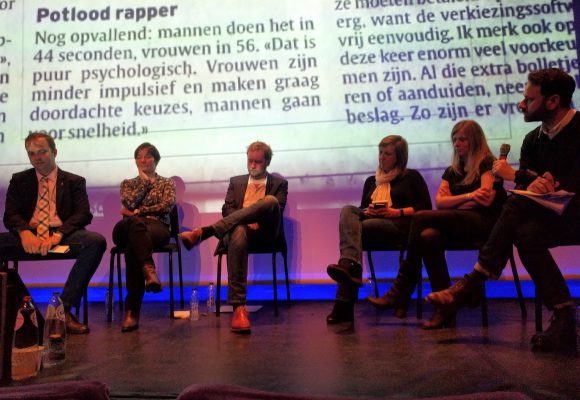
“A lie can travel halfway around the world while the truth is putting on its shoes,” says the quote by Mark Twain which speakers used as a starting point at the debate on journalism in ‘post-truth’ climate at Difference Day. The event was hosted by the Centre for Fine Art (BOZAR) in Brussels on the occasion of World Press Freedom Day (WPFD), which is celebrated May 3rd every year. One of the five panels on journalism and press freedom talked about the spread of misinformation, which is widely scattered through different platforms and an alarming phenomenon. Experts on the panel emphasized the…

Difference Day 2017: Quality journalism in the ‘post-truth era’ on the agenda

The European Federation of Journalists (EFJ) will join a group of media partners and NGOs to celebrate the World Press Freedom Day in Brussels on May 3 – declared “Difference Day” – at the Centre for Fine Art (BOZAR). Among a series of activities and debates organised throughout the world, BOZAR will host five panels on journalism and press freedom. The EFJ affiliate, the Association of journalists in Macedonia, will participate in the second session “Les Van de Eeuw” to talk about various current themes such as democracy, education, smart cities, World War II, Europe… Programme 9:30 (Terarken): Workshop session…

Workers’ Day: Media Freedom requires decent working conditions for journalists

“There can be no press freedom if journalists exist in conditions of corruption, poverty or fear”… On this Workers’ Day, the European Federation of Journalists (EFJ) strongly encourage journalists to share the motto of the International Federation of Journalists (IFJ). Guaranteeing fair and decent working conditions to journalists is a precondition for media freedom. The study “Journalists under pressure” published on 20th April by the Council of Europe, based on a sample of 940 journalists reporting from 48 countries, shows that journalists in Europe are often exposed to serious pressure in their work, including intimidation and violence. As a consequence, many…

Macedonia: two journalists injured during storming of the Parliament

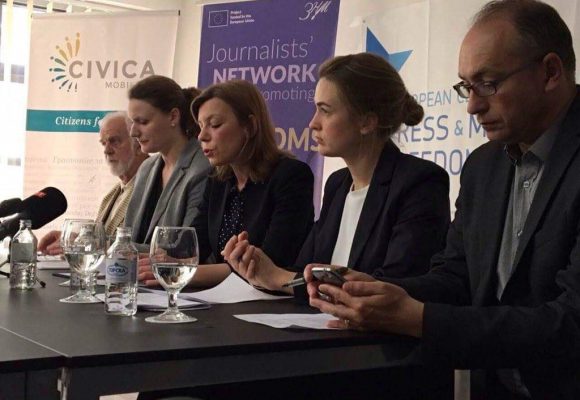
During a press conference today in Skopje (Macedonia), the European Centre for Press and Media Freedom (ECPMF), the European Federation of Journalists (EFJ), South East Europe Media Organisation (SEEMO) and Osservatorio Balcani e Caucaso Transeuropa (OBCT) called on the Macedonian authorities to investigate the attacks against 10 journalists and media workers, during last night’s storming of the Macedonian parliament building by nationalist demonstrators. At least two journalists were injured in the attack, according to reports from the Association of Journalists of Macedonia (ZNM). Dimitar Tanurov, a reporter for the independent online news agency Meta, was taking pictures inside the parliament. He…

Kosovo: Leaked draft law reinstates criminalisation of defamation

UPDATE (03.05.2017): The government withdraw the draft law on criminalisation of defamation.  The European Federation of Journalists (EFJ) backs its affiliate, the Association of Journalists of Kosovo (AJK), in opposing the draft law prepared by the Ministry of Justice aiming to criminalise defamation of the President and Kosovo state symbols. The amendments to Kosovo Criminal Code foresees that anyone who insults or expresses with ill intention contempt for the Republic of Kosovo, for its constitutional order or its anthem, is punishable up to three years of prison. In addition, the defamation of constitutional body, including the President, the Parliament, the…

How is the revision of AVMSD affecting media pluralism and press freedom?

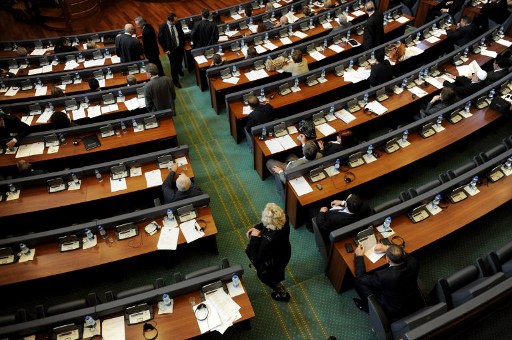
On Tuesday (25/04/2017) the European Parliament’s Committee on Culture and Education (CULT) voted in favor of the revision of the Audiovisual Media Services Directive (AVMSD). The revision acknowledges the emergence of new online platforms and enforces basic rules to better protect minors and combat hate speech. It adapts the definition of video-sharing platforms, applies qualitative advertising and sponsors rules for these platforms. Video sharing platform service is now defined as a service that consists of the storage of a large amount of programmes or user-generated videos. The video sharing platform provider does not have editorial responsibility for them. The revision…

Macedonia: It is high time to stop violence against journalists!

Following ECPMF-EFJ-SEEMO-OBCT fact-finding mission to Macedonia, on 25th-28th April 2017, the four organisations issued this statement today, regarding rising violence against journalists in Macedonia: We hereby express our deep concerns about the yesterday‘s violent attacks against journalists in the parliament of the Republic of Macedonia. From the beginning of 2016 until yesterday at least 21 attacks against journalists in Macedonia have been registered by the Association of Journalists of Macedonia (ZNM), out of a total of several dozens within the last years. All this clearly demonstrates a rising trend in violence against journalists. The state of media freedom in the…

How media can help to build democracy? Three initiatives for social change

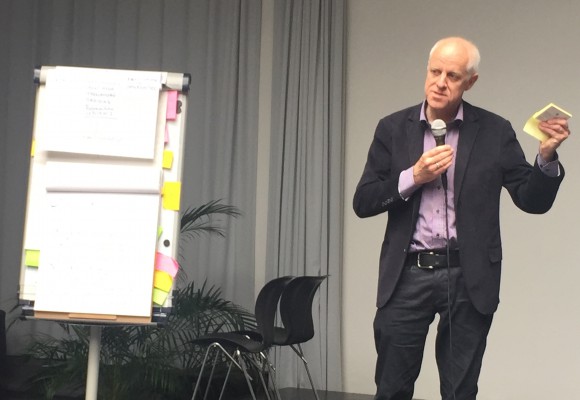
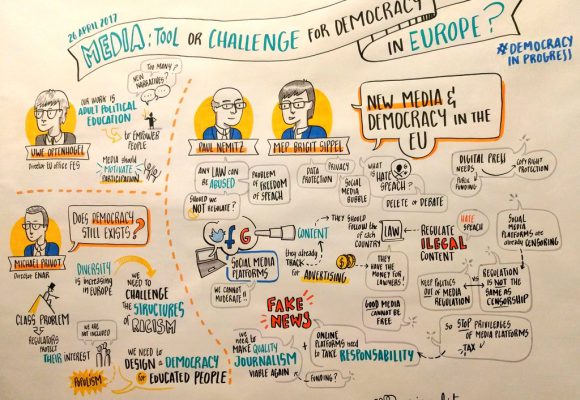
The European Network Against Racism (ENAR) and Friedrich-Ebert-Stiftung (FES) EU Office organised yesterday (26/04/2017) a meeting about media and its role for democracy in Europe. The international experts presented new initiatives for social change and talked about how media can help to build democracy and how to deal with hate speech, racism and lack of diversity in European newsrooms. “The misconception that news should be free is a great danger to democracy. News and journalists who write the news must be paid,” stressed Birgit Sippel, German member of the European Parliament. “If the media only relies on the advertiser’s funds,…

Germany: A draft law to counter hate speech would threaten freedom of expression

The German affiliates of the European Federation of Journalists, the Deutscher Journalisten-verband (DJV) and Dju in ver.di criticized the adoption of the Network Enforcement Law („Netzwerkdurchsetzungsgesetz”) by the German Federal Cabinet on April 5, 2017, supposed to be adopted by the German Bundestag in the summer. Dju in ver.di issued a statement on April 5: “Even if we strongly reject the use of fake news and hate speech in social networks, in case of doubt, the deletion of such content is not the right response,” said Cornelia Haß, national director of dju in ver.di. “Freedom of expression and diversity of opinions are fundamental to our…