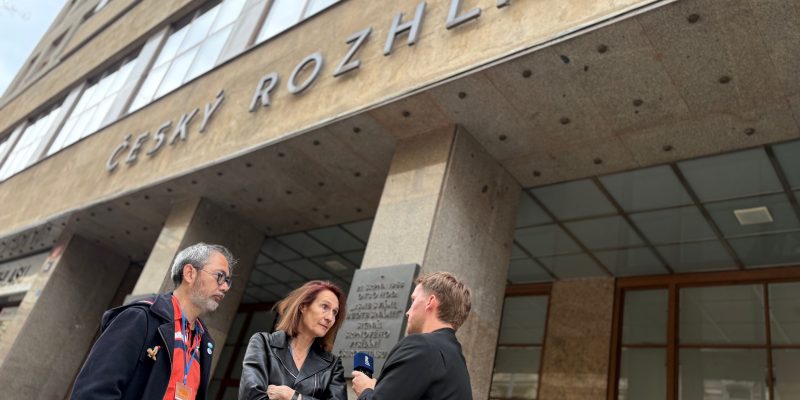
Czech Republic: Public media funding bill raises concerns over compatibility with EMFA

A new government bill which would overhaul the funding model for the Czech public media risks financially weakening the broadcasters, eroding safeguards for their financial independence and violating European Media Freedom Act (EMFA), the undersigned Media Freedom Rapid Response (MFRR) partners, the European Federation of Journalists (EFJ) and other media freedom, journalist and freedom of expression organisations warn today. Our organisations call on the European Commission to closely assess this bill regarding its compatibility with Article 5 of EMFA and to ensure that no reforms are undertaken which threaten the financial, editorial or institutional independence of the Czech public media.…
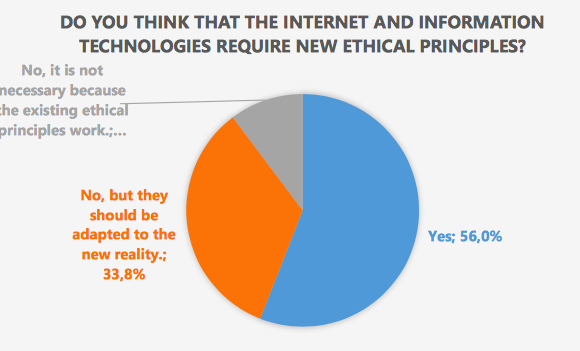
New reports highlight journalists’ ethical challenges in the digital age and need for enhanced dialogue with media councils

The Blanquerna School of Communication and International Relations and the four journalism schools in French-speaking Belgium today released two reports looking at journalists’ and journalism students’ perceptions of self-regulation bodies, ethical standards and challenges they face in the digital age. The findings show that more dialogue and awareness is needed to apprehend ethics in today’s journalism. The Blanquerna School of Communication and International Relations collected data on the perception of media councils by working journalists and how they adapt themselves to the challenges in the digital age. More than 400 working journalists from Austria, Belgium, Estonia, Finland, Hungary, Ireland, Italy,…

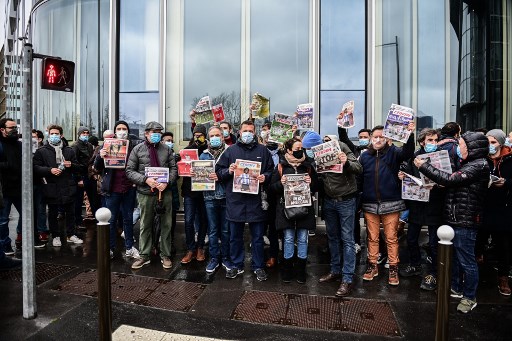
France: ‘L’Equipe’ and France TV journalists strike over working conditions and redundancies

Journalists at sports newspaper ‘L’Equipe’ and France TV channels have taken strike action in a dispute over a job protection plan and dismissals. The International and European Federation of Journalists (IFJ-EFJ) stand in solidarity with striking workers and their French affiliates. France’s public TV, France Télévisions, has seen strikes over the past two weeks at its headquarters in Paris, due to the unfair dismissal of four sound illustrators by video-conference, staff opposition to the arbitrary redefinition of working conditions and the excessive workload. In parallel, the unions are to hold a 24-hour strike on 18 January due to the regionalization project at the France 3 network, which was planned without prior consultation with the unions. ‘L’Equipe’…

EFJ demands immediate release of Andrei Alexandrov and other journalists imprisoned in Belarus

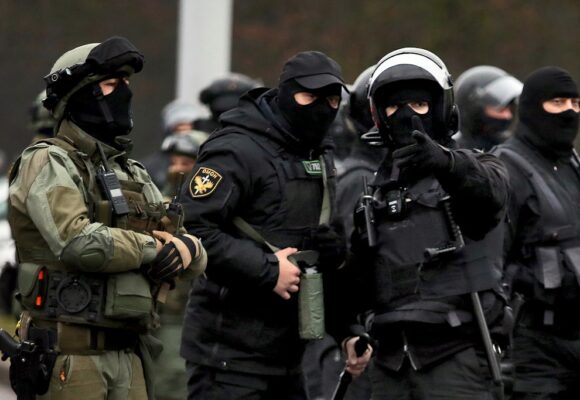
Criminal prosecutions of journalists are increasing in Belarus. Journalby editor Andrei Alexandrov was arrested on 12 January. Eight other journalists are still behind bars in Belarus, just for doing their job. The European Federation of Journalists (EFJ) once again calls on the OSCE, the Council of Europe and the European Union to intervene with the regime of disputed President Lukashenko to secure their immediate release. Andrei Alexandrov was detained as part of a criminal case initiated by the Minsk City Investigation Committee. He is considered as a suspect under article 342 of the Belarusian Criminal Code for “organization and preparation…

Germany: Expert report recommends class action lawsuits for copyright infringements of freelancers

The German Association of Journalists (DJV) and ver.di recently published an assessment report authored by law professor Caroline Meller-Hannich on possible instruments of collective legal protection in copyright law. The report concludes that, when implementing the EU directive on copyright and related rights in the Digital Single Market, German legislators should not renounce the instrument of a class action law suit or collective litigation.  A class action lawsuit of trade unions or associations is an important aspect of the copyright directive, and is particularly critical for the protection of freelance journalists. Authors regularly have difficulties in enforcing their legal claims to appropriate remuneration.…

Cyprus: Turkish Cypriot journalist harassed by the Turkish government

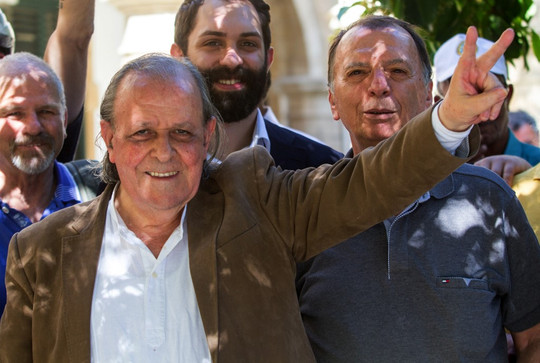
Turkish Cypriot journalist and publisher Sener Levent is the target of a harassment campaign by the Turkish authorities for his critical reporting on the Turkish government policies in Cyprus. The European Federations of Journalists (EFJ) and the International Federation of Journalists (IFJ) join their affiliates, the Union of Cyprus Journalists and the Turkish Cypriot Trade Union of Press Workers Basin Sen in condemning the Turkish attempts to shut down press freedom. Journalist Sener Levent, the editor-in-chief of Afrika newspaper, has been targeted by official and unofficial means by the Turkish government and faces numerous court proceedings because of his reporting. The Turkish government…

Portugal: four journalists under illegal police surveillance

UPDATE (14/01/2021): On 14 January, daily newspaper Sabado revealed that Lisbon prosecutor Andrea Marques also tried to identify the sources of two journalists from the Portuguese public broadcaster RTP. One of these journalists was heard as a witness by the prosecutor’s office in August 2020. —————————— Four Portuguese journalists have been placed under police surveillance, at the request of Lisbon public prosecutor Andrea Marques, as part of the investigation into leaks related to the “e-Toupeira” corruption case, launched in March 2018. Without prior authorisation from an investigating judge and in order to identify the sources of the journalists, Prosecutor Marques…

EFJ/IMS open letter to International Ice Hockey Federation President René Fasel

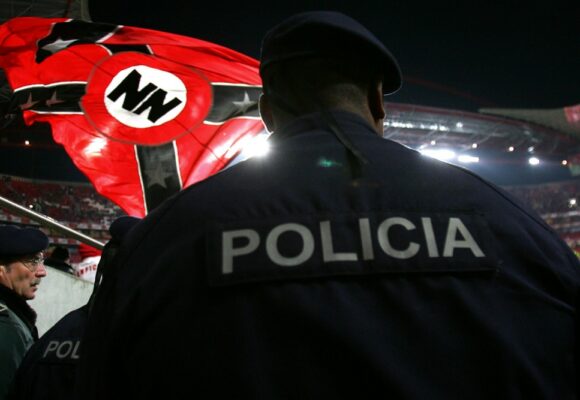
The 2021 Ice Hockey World Championship will be played in Minsk (Belarus), but the event should be held in an environment conducive to media freedom. Here is our open letter to International Ice Hockey Federation President René Fasel. Dear President Fasel, We, the undersigned press freedom and journalists’ organisations, are writing to express our deepest concern about the organisation of the 2021 Ice Hockey World Championship in Minsk, the city in Belarus which has become a centre of unspeakable repression, human suffering and human rights abuses. We welcome the statements from the Ice Hockey Championship participating countries, raising concerns over…

Slovenia: Radio Študent threatened to lose its funding

Radio Študent will lose funding of its founder the Student Organisation of the University of Ljubljana (ŠOU), the radio announced in a press release on 8 January 2021. According to Radio Študent, the reason put forward is the critical reporting on the ŠOU structure and management. Europe’s largest and oldest independent student radio fears for its existence. The European Federation of Journalists (EFJ) joined its affiliates, the Union of Slovenian Journalists and the Slovenian Association of Journalists, in condemning ŠOU’s withdrawal and supports Radio Študent’s calls for the provision of funding at least until 2022. This would enable a two-year…

Takeaways from webinar “Media councils in the digital age: how to regain trust and ethics in journalism”

After a successful year regarding the EU-supported Media Councils projects, the European Federation of Journalists (EFJ) hosted an online webinar on 11 January 2021 to talk about the achievements and the next phase. Three members of the European Parliament, Petra Kammerevert, Ramona Strugariu and Alexandra Geese, Deputy Head of Unit (DG Connect) Audrius Perkauskas and four consortium members discussed and exchanged respective insights and best practices. The EFJ is the coordinating partner bringing together several European press councils and two universities. Renate Schroeder, Director at the EFJ, moderated the event, which she kicked off by emphasising that self-regulation and press…

Journalists fight for decent conditions and media freedom in pandemic times

There can be no media freedom if journalists cannot work in decent conditions. 2020 has been a challenging year for many people from across all walks of life. This is particularly so for essential workers such as journalists. Across Europe, working conditions for journalists have declined drastically due to the Covid-19 pandemic. Many have lost their jobs while others have put their health at risk reporting from the frontline of the health crisis without adequate safety measures and equipment. Some have to adapt quickly to working from home without proper equipment and support of childcare. Thisreport, produced by the European…

Online webinar “Media councils in the digital age: how to regain trust and ethics in journalism”

As to discuss last year’s achievements regarding the EU supported EFJ Media Councils project and to talk about the next phase, on 11 January 2021, an informal online webinar will take place from 11 AM until 12:30 PM Brussels time. Together with three members of the European Parliament, Petra Kammerevert, Ramona Strugariu and Alexandra Geese, four consortium members will highlight some of their respective results in the panel. The European Federation of Journalists is the coordinating partner bringing together several European press councils and two universities. The speakers and their respective topics are listed in more detail in the agenda…

Women journalists imprisoned during protests in Ankara

Three women journalists were detained and another was beaten by police on 5 January during a protest in the Turkish capital Ankara against the disappearance of a Kurdish student a year ago. The International Federation of Journalists (IFJ), the European Federation of Journalists (EFJ) and their affiliate, the Journalists’ Union of Turkey (TGS) condemned the violence and demanded the immediate release of the imprisoned colleagues. Habibe Eren and Oznur Deger, journalists from feminist news agency Jin News, and freelance journalist Eylul Deniz Yasar, were among the 18 women detained while covering the rally that marked the first anniversary of 22-year-old Kurdish student…

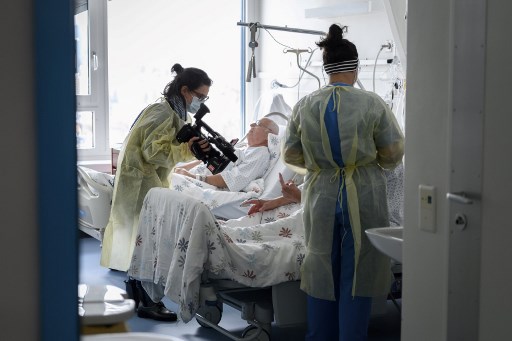
Almost 90 journalists’ deaths caused by Covid-19 in Europe

The Geneva-based non governmental organisation Press Emblem Campaign (PEC) said yesterday that more than 600 journalists died of COVID-19 in 59 countries worldwide since March 2020. In Europe, Italy has taken the heaviest death toll with 40 confirmed victims in the year, followed by 17 in Turkey, 13 in Great Britain, 8 in Russia, 6 in Spain, and 5 in France. In particular freelance journalists and photographers are in the forefront. The PEC identified at least one death in other European countries such as Austria, Azerbaijan, Belgium, Bulgaria, Germany and Switzerland. One of the fatalities is Italian journalist Livia Giustolisi, who was the…

Minsk/Warsaw: Belsat journalists need support

The satellite television channel Belsat reported on the grave situation that affects its journalists since the presidential elections in Belarus in August 2020. In total, Belsat journalists were detained 161 times, 27 were sentenced to 400 days in detention and they had to pay fines amounting to 23,514.57 USD in 2020 alone. Belsat was established in 2007 and as a multiplatform media outlet it is targeting Belarusians as well as the entire Russian language-speaking territory of the former USSR. It is a subsidiary of TVP, the Polish public broadcaster. Lukasz Byrski from Belsat TV shared synoptically: “During the crackdown on…

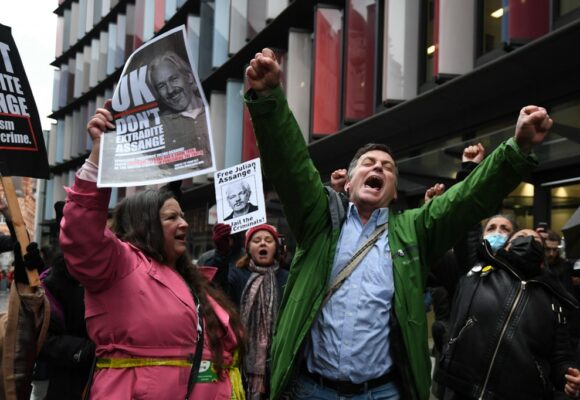
EFJ and IFJ welcome decision not to extradite Julian Assange

Judge Vanessa Baraitser today ruled against Wikileaks founder Julian Assange‘s extradition to the United States arguing it would be “oppressive by reason of Assange’s mental health”. The International Federation of Journalists (IFJ) and its UK and Australian affiliates, the NUJ and the MEAA, and the European Federation of Journalists (EFJ) welcome the decision and are urging the authorities to immediately release Julian Assange. The judge argued Assange suffers from depression and that there is a high risk of suicide. If extradited, she considered it likely the US would send him to prison under special administrative measures (SAMs) and wouldn’t prevent Assange from committing suicide. Therefore, she considered his…

60 journalists killed in 2020, including two in Europe

The International Federation of Journalists (IFJ) released its 2020 “killed list”. The year 2020 will go down in history as the year of an unprecedented global pandemic crisis, but also as the year of the resurgence of murders of journalists and media staff around the world. With 60 murders in 2020, including two in Europe, the macabre statistics are on the rise again compared to 2019 (49). IFJ records show that the current number of killings of media professionals are at the same levels as in 1990 when the IFJ started publishing annual reports on journalists and media staff killed,…