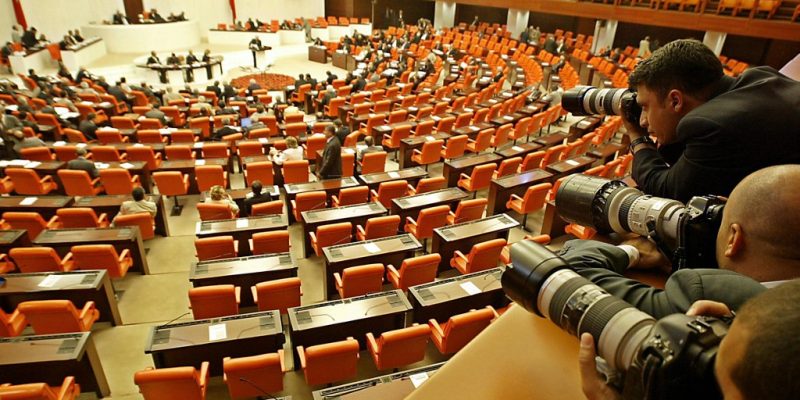
Turkey: EFJ and partner organisations condemn escalating use of “disinformation law” against journalists and call for its repeal

The European Federation of Journalists (EFJ) joins the undersigned organisations in strongly condemning the intensifying use of Article 217/A of the Turkish Penal Code — widely known as the “disinformation law” — to arrest, detain, and prosecute journalists, and calling on the government to repeal the provision immediately and release all journalists imprisoned under it. Since the law entered into force in October 2022, at least 83 journalists have been charged 114 times over disinformation according to news reports. The scale of Article 217/A’s use against journalists has been starkly illustrated in a recent article. The two journalists most frequently…
Turkey: Cumhuriyet journalists face trial on 24 July

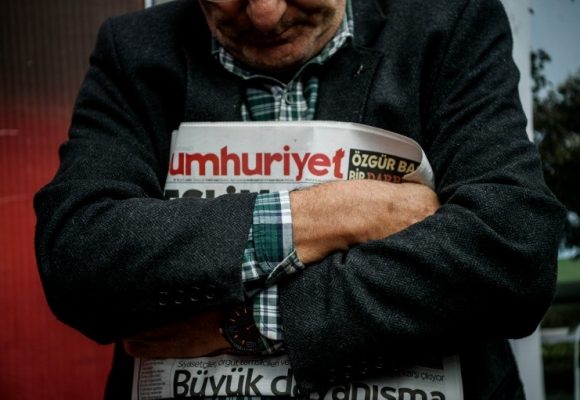
The trial involving 17 journalists and executives of Turkish newspaper Cumhuriyet will start on Monday 24 July at 9:00am in Istanbul’s Çağlayan Justice Palace. The trial is expected to continue until Thursday 28 July. The International and European Federation of Journalists (IFJ and EFJ) join their affiliates TGS and DISK Basin-Is  in condemning the trial which is based on unfounded accusations that the paper is secretly supporting the PKK – a militant Kurdish organisation and FETO, the group allegedly responsible for last year’s failed coup. EFJ president Mogens Blicher Bjerregård will be present at the trial on behalf of both…

Russia: journalist’s house attacked

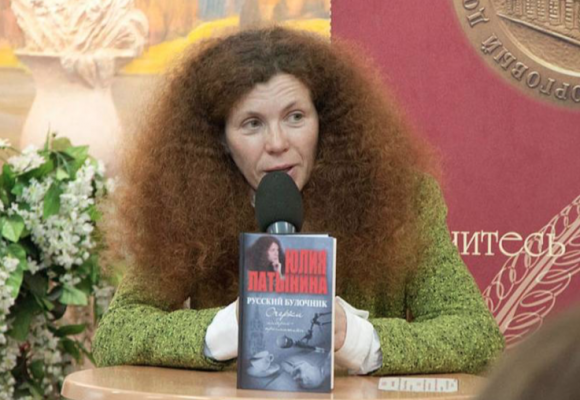
Russian journalist Yulia Latynina’s home in Moscow was attacked and sprayed with an unknown substance on Tuesday 18 July. The International and the European Federations of journalists (IFJ/EFJ) join their affiliates the Russian Union of Journalists (RUJ) in condemning the attack. On the evening of 18 July, a group of unidentified attackers covered the home of opposition journalist Yulia Latynia with a corrosive and odorous chemical compound that caused breathing problems for the occupants. The journalist reported to Ekho Moskvy radio station that 8 people including 4 elderly persons and 2 children were affected. Yulia Latynina, a prominent journalist and fierce critic…

Ukraine: IFJ and EFJ demand answers on Pavel Sheremet killing anniversary

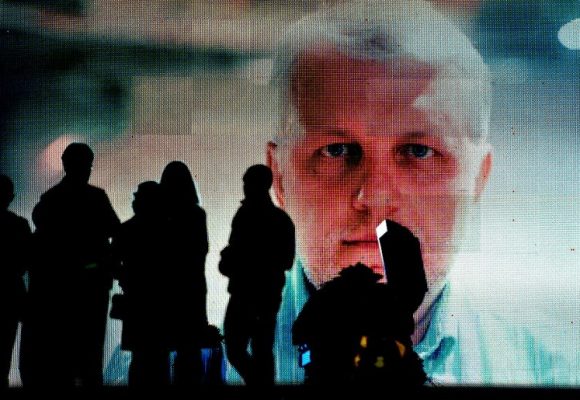
The International and European Federation of Journalists (IFJ and EFJ) have backed demands for the Ukrainian authorities to publish the results of their investigation into the killing of award-winning journalist Pavel Sheremet – a year after his murder in a car bomb on 20th July 2016. On the anniversary of the killing the IFJ/EFJ joined their affiliates the National Union of Journalists of Ukraine (NUJU) and Independent Media Trade Union of Ukraine (IMTUU) in condemning the grossly inadequate investigation by Ukrainian authorities. The EFJ/IFJ also call on Ukrainian President Petro Poroshenko to fulfill his promise of incorporating an independent international…

Azerbaijan offers journalists free apartments

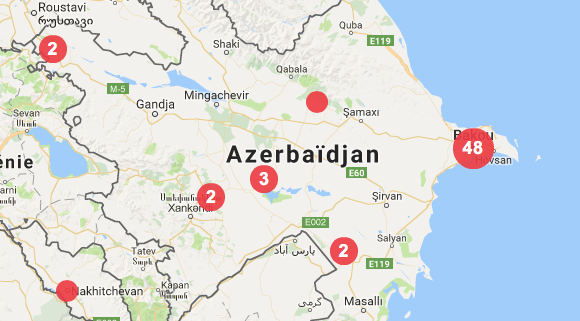
On 17 July 2017, the European and International Federations of Journalists submitted the following alert to the Council of Europe’s platform for the safety and protection of journalists The State Fund for the “Support of Mass Media Development in Azerbaijan” will provide to journalists free government housing grants on 22 July 2017, National Press Day in Azerbaijan. A first “Journalists’ House” built in the Bibiheybat settlement of Baku by state budget funds was commissioned in 2013. A total of 156 journalists were allotted apartments there. The second “Journalists’ House” will host 255 journalists. The apartments will be distributed on 22…

Polish journalist receives death threats after public Polish TV classifies her remarks as “harmful to Poland”

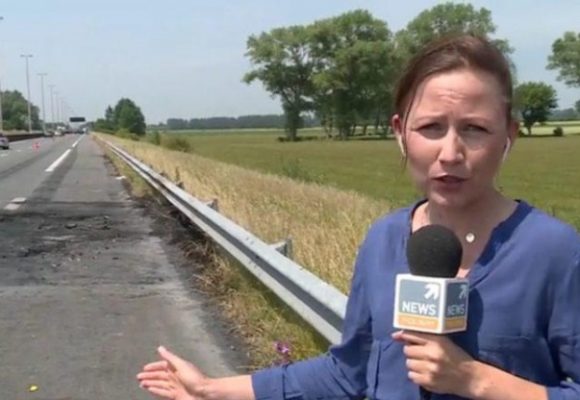
Dorota Bawolek, a Polish journalist working in Brussels for Polish private TV channel Polsat TV, was targeted by hundreds of hateful messages on social media after the Polish public TV station TVP reproached her of having asked the European Commission an “upsetting” question on Thursday 13 July 2017. That Thursday, during the daily press conference of the European Commission in Brussels, Dorota Bawolek asked for explanations on the state of democracy in Poland. On that same day, the Polish Parliament had adopted a draft law that would weaken the independence and impartiality of the judiciary and of the Supreme Court…

Media freedom NGOs and professional organisations ask Polish defence minister to drop complaint against journalist

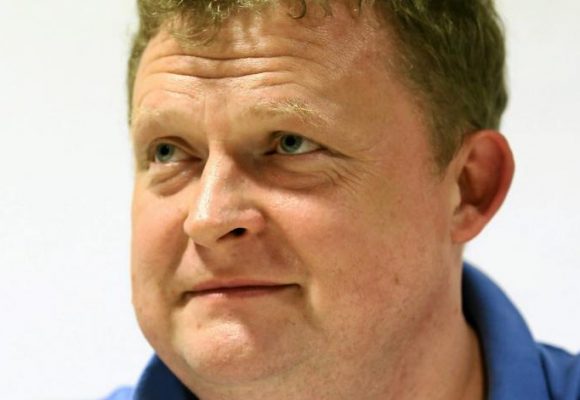
The European Federation of Journalists (EFJ), Reporters Without Borders (RSF), the European Magazine Media Association (EMMA), the European Newspaper Publishers’ Association (ENPA), the European Centre for Press and Media Freedom (ECPMF), Freedom house, Global Editors Network (GEN), Index on Censorship, International Press Institute (IPI) and South East Europe Media Organisation (SEEMO) have written to Polish defence minister Antoni Macierewicz urging him to withdraw his criminal complaint against Tomasz Piatek, the author of a new book about the minister’s alleged network of questionable Russian contacts. An investigative reporter for the independent newspaper Gazeta Wyborcza, Piatek is facing a possible two to…

Vesti’s Media office in Kiev raided by national police and military prosecutors

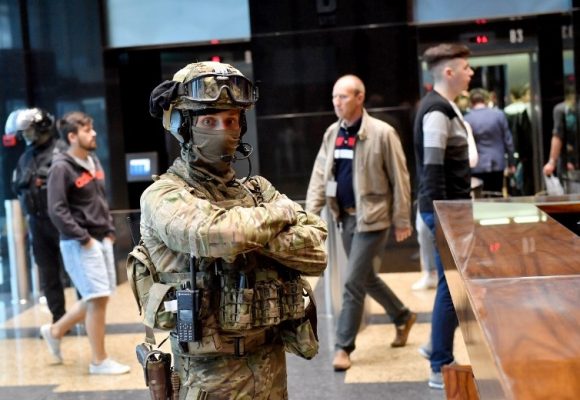
On July 14, the prosecutors General’s office and the national police searched the offices of Ukraine’s Vesti media group in Kiev which holds Radio Vesti, the daily newspaper Vesti, and the news website Vesti-ukr.com. The raid was conducted as part of an embezzlement case against ex-Tax and Revenue Minister Oleksandr Klymenko. The whole quarter was blocked off, units of special troops and armored vehicles surrounded the building. Police officers completely obstructed the work of the editorial board. The chair of the Board of Directors of the Media Holding Vesti Ukraine, Olga Semchenko, explained on a Facebook post that the radio…

Russian TV presenter Alexander Batmanov detained by police in unlawful conditions

Alexander Batmanov, presenter for Volgograd based channel NGO TV, was detained by Russian police on the suspicion of theft from a grocery store on Friday July 7. Mr Batmanov was summoned by the police several weeks ago on suspicion of having stolen food from a grocery store but never responded to the summons. On Friday 7th, he was arrested by the police. Due to the police’s dissatisfaction with their discussions with him, Batmanov remained detained over the weekend in an office on the police station’s third floor without any food or water. In an attempt to escape, Batmanov jumped out…

EP hearing: “Media pluralism essential element for democracy”

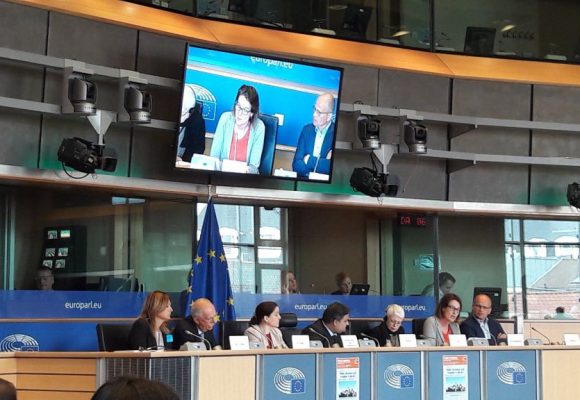
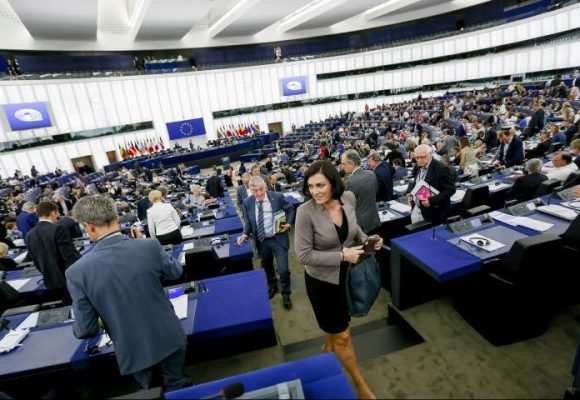
Citizens’ fundamental rights to freedom of expression and information can only be guaranteed through media freedom and pluralism. Even though that is enshrined in Article 11 of the Charter, the reality is different. “Since our last report in 2013, plurality has just gotten worse,” stressed Italian MEP Barbara Spinelli in her opening remarks at the “Media Pluralism and Freedom in the EU” hearing, which took place in the European Parliament on Tuesday (11/07/2017). Organised by the Civil Liberties, Justice and Home Affairs (LIBE) Committee, it reflected the media situation in EU, with the experts presenting the most alarming issues. Spinelli…

Former French minister Harlem Désir is the OSCE’s new representative on freedom of the media

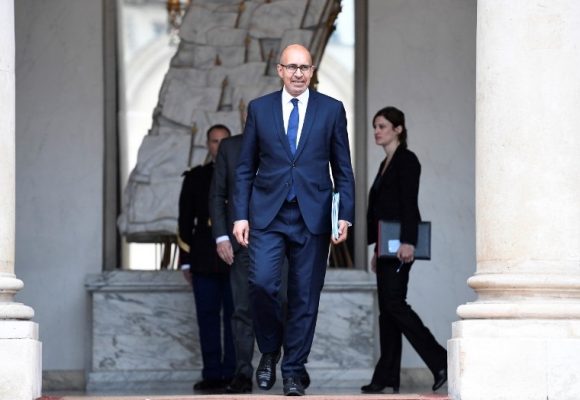
Update (18/07/2017): The new OSCE Representative on Freedom of the Media Harlem Désir has just been appointed by the OSCE Foreign Ministers. He will start his mandate tomorrow. ——————– The European Federation of Journalists (EFJ) welcomes the deal reached on Tuesday by Austrian Foreign Minister Sebastian Kurz to ensure the appointment of the new Representative for Freedom of the Media in the Organization for Security and Cooperation in Europe (OSCE). The position, vacant since March 10, will be assumed by the former French Secretary of State for European Affairs, Harlem Désir. His appointment should be formalized on 18 July. The…

Press accreditations stripped and violence against journalists at G20 protests in Hamburg

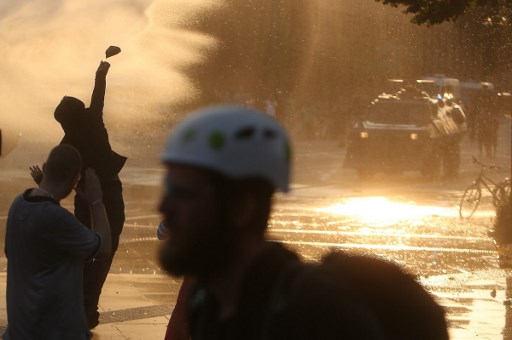
At least 32 journalists have been deprived of their press accreditations by the German government during the G20 protests in Hamburg held on 7 July. The European and International Federations of Journalists (EFJ-IFJ) join their German affiliates DJV and dju in ver.di in condemning the attacks against the press. Nine journalists have had their accreditations revoked with an additional 23 placed on a list detailing them as a security concern. Those listed were not present at the G20 Press Center, according to EFJ affiliates. Government spokesperson Steffen Seibert confirmed the removal of the accreditations but didn’t provide any justification for…

EU Parliament urges Turkey to release arrested journalists immediately

The European Federation of Journalists (EFJ) welcomes the resolution of the European Parliament calling for the immediate release of arrested journalists in Turkey. The European Parliament called on Thursday for Turkey’s European Union accession talks to be suspended if Ankara fully implements plans to expand President Erdogan‘s powers. The resolution passed by parliament in Strasbourg (477 in favour, 64 against and 97 abstentions) “calls on the Commission and the member states… to formally suspend the accession negotiations with Turkey without delay if the constitutional reform package is implemented unchanged.” The European Parliament reminds its previous resolution on the situation of journalists…

#ECPMF conference e-book: how to improve freedom of expression

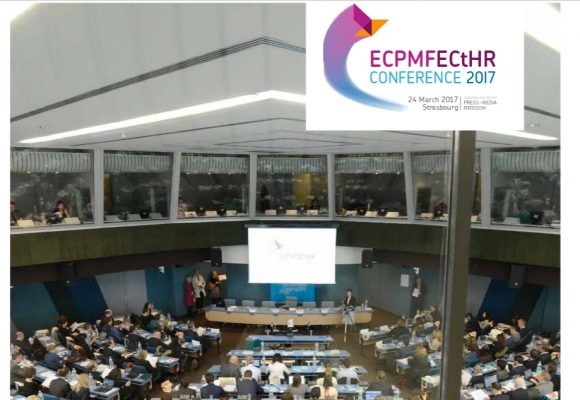
The European Centre for Press and Media Freedom (ECPMF) issued an e-book with proceedings and conclusions of their recent conference, organised on 24 March in Strasbourg. Carried out with the support of the Council of the Europe (CoE), the event promoted the dialogue between the European Court of Human Rights (ECtHR) and media freedom groups, especially on the ECtHR’s recent case law relating to freedom of expression, media and journalism. The speakers at the conference presented their views on three main themes, now summed up in the e-book: defamation, privacy and the processing of personal data; investigative journalism in relation…

German parliament adopts controversial law on social media threatening media freedom

The German parliament voted last Friday on 30 June a law on social media forcing online platforms like Facebook and Twitter to remove illegal hate speech posted by users. The European Federation of Journalists (EFJ) expressed concerns regarding the adoption of the law warning that the law would lead to widespread online censorship and limit media freedom. The law on “respect of the law by social network” has raised criticism regarding the excessive and hardly controllable infringement to freedom of speech. In April, the EFJ together with its German members (DJV and dju in ver.di) protested against the draft law and…

Which are the challenges and solutions for public service media?

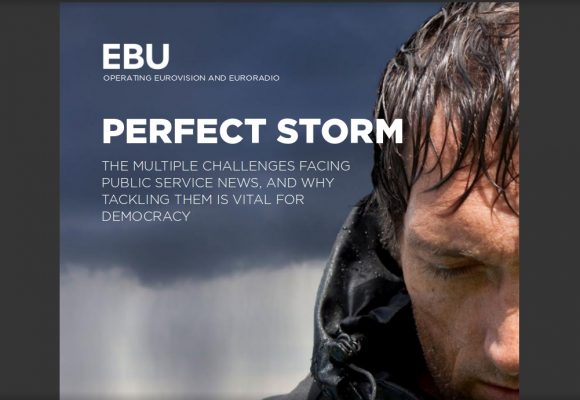
Politicians with an agenda, managements on tight budgets and industry competitors under existential threats to malicious disseminators of falsehoods – it is a “perfect storm” of challenges for today’s public service news providers. The European Broadcasting Union (EBU)’s new study addresses those changing demands, much of which were researched during a rapid tour of small group of European broadcasters in the spring 2017. The report highlighted some key trends. Economic pressure Broadcasters have to reallocate resources for new platforms in order to stay relevant, but at the same time their public funding is being squeezed. Pressure can be also put on…

Urgent need for states to step up efforts to address safety of journalists

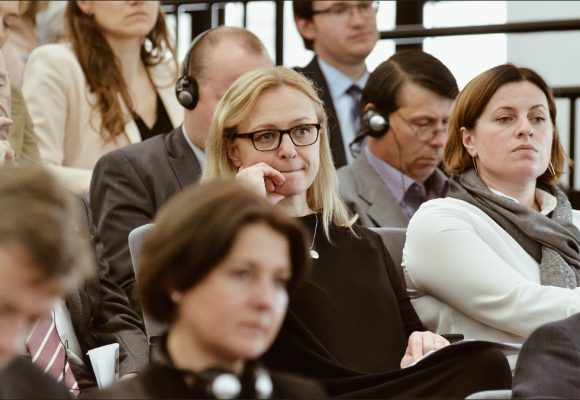
Journalists and human rights defenders, academics and civil society representatives gathered in Vilnius (Lithuania) on Monday to discuss with state officials and decision-makers how to guarantee the safety of journalists. The conference, The Safety of Journalists – New Challenges and Responses, was opened by Lithuania’s Foreign Minister Linas Linkevičius. The European Federation of Journalists (EFJ) was represented by its General Secretary Ricardo Gutiérrez. “We should be far away from any censorship or prohibitions. We have to create conditions and we have to protect journalists because safety is important not only for the journalists themselves, but also for the statehood, for…